

Illustrative patient and hygienist discussing cleaning tools for an implant restoration
Restorative Dentistry

Implant Hygiene Appointments in Oakville

An implant that feels perfectly fine can still collect plaque in places you never see. Implant hygiene appointments for people coming from Oakville pair careful professional cleaning with guidance shaped around your crown, bridge, or overdenture.

When nothing hurts

Why book a cleaning for a tooth that feels fine?

Comfort is not the same as cleanliness. An implant restoration can feel completely normal while plaque settles along a margin, beneath a bridge span, or around the attachments of an overdenture. Each design has its own awkward angles, and those spots are easy to miss when everything seems to be going well.

This kind of visit looks past the surface you see in the mirror. The team examines the gum tissue, notes deposits, and asks which areas you find tricky. If a finding suggests a dentist should take a closer look, or that a separate treatment plan is needed, it should be explained as its own matter rather than folded into routine cleaning.

Coming up from Oakville, you probably want each appointment to count. Start by describing an ordinary day of cleaning, even the shortcuts. Bring the brushes and floss you actually use, point out what catches or stings, and ask to try any suggested technique while someone can watch and adjust it.

Schedule implant hygiene care
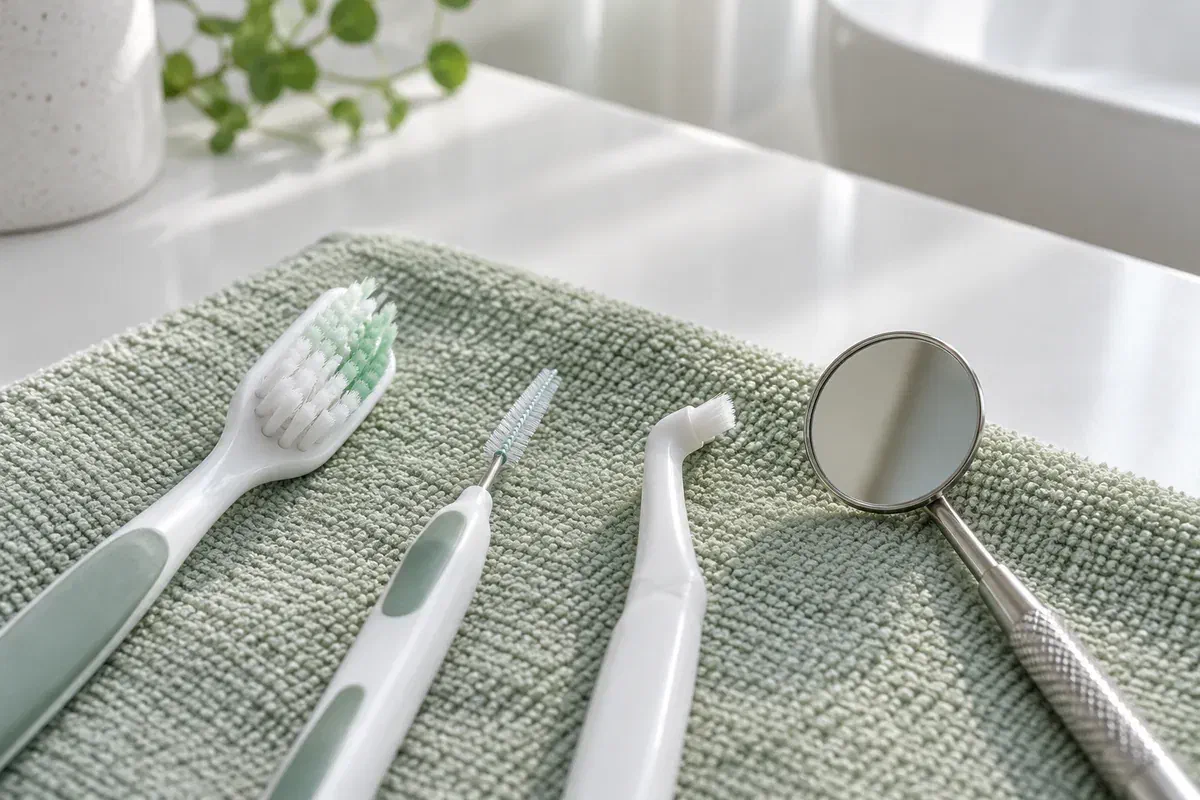
Soft toothbrush, interdental brush, single-tuft brush and dental mirror on a pale towel
Small things worth mentioning

The area you skip is the one to show us.

Specific details produce specific advice. If a brush won’t go through, a bridge hides its underside, or one patch of gum stays sensitive, mention it at the start rather than quietly avoiding it.

Unsure what fits between the implants

Different gaps may call for different aids, from interdental brushes to threaders. Bring the options you have tried and explain how they feel, so the advice can reflect reach, comfort, and the contour of the restoration.

Tartar that returns between cleanings

Hardened deposits need professional care and a discussion of why they keep forming in one place. Avoid digging at them with household tools or picking up a do-it-yourself scaler online.

Past appointments left you uneasy

Let the team know about tender areas, dental anxiety, trouble keeping your jaw open, or a strong gag reflex. Plan breaks and comfort measures ahead of time so the visit is built around what you need.

Pain that is new, swelling, bleeding that continues, or a restoration that moves should be assessed. Mention any of these when you book so the appointment type fits the concern.

The purpose behind maintenance

Prevention you can’t do alone.

Professional hygiene care allows deposits to be removed in an appropriate way and shows whether your cleaning reaches every surface it should. You can also ask about products and methods while the clinician points to your own restoration, which tends to be more useful than general advice that may not match your mouth.

Home care stays essential. Even well-timed visits cannot keep making up for a margin that is out of reach or a routine that is too complicated to repeat each night. What you want to leave with is fitting professional care, a routine you understand, and a clear step forward for anything still uncertain.

Patient information: European Federation of Periodontology — implant care and prevention

Access without force

Ask for the suggested method to be demonstrated and for your attempt to be checked. Good cleaning reaches the surface without jamming a brush in, missing important areas, or turning a simple routine into a long one.

Linking gum findings to care

How the tissue looks and responds helps guide decisions. If an area bleeds or remains sore, ask what the finding suggests and whether it calls for monitoring, more assessment, or a specific plan.

Routines that fit a changing life

New glasses, reduced grip, less dexterity, or a different caregiver arrangement can change how cleaning goes. Mention these openly so the team can suggest a workable method and suitable professional support.

A typical maintenance visit

Listen, look, clean, then coach.

The steps and how long each takes depend on your restoration and findings. Feel free to ask what is included, whether an exam is booked separately, and how any tender spot will be handled.

  1. A conversation about your implant

    Your health details, implant history, and current routine are reviewed. Let the team know about recent repairs, changed attachments, or guidance from a specialist that could shape the approach.

  2. An examination of tissue and access

    The implant sites and other areas are looked at as appropriate. This shows where buildup forms, whether your cleaning reaches it, and whether the dentist should arrange further assessment.

  3. Cleaning matched to the materials

    The clinician uses instruments and methods that suit the surfaces involved. Say when anything is uncomfortable and use the pause signal you agreed; your care may not look like another person’s.

  4. Hands-on practice and a return date

    Try the recommended aids with the team checking your technique. Confirm what to use, where to concentrate, and when to come back, along with any separate follow-up for something found today.

Following through in Oakville

Simple, repeatable, and done most evenings.

Use the guidance meant for your own restoration. If a new aid proves awkward at home, call the clinic and ask, rather than forcing it repeatedly or giving up on that spot.

Match the aid to the gap

Every cleaning tool is meant for a certain space and angle. A larger size does not mean a better clean, and an aid that works beneath one bridge may need a different technique elsewhere.

Look after natural teeth too

Natural teeth and implants sit together but are structured differently. Keep up fluoride toothpaste and your regular tooth care alongside the implant-specific methods you were shown.

Report soreness that sticks around

Ask what to expect once you leave. Get in touch about symptoms that persist or worsen, and attend planned reassessments instead of waiting to raise an unresolved issue at a routine visit.

Which appointment fits

Three needs that look similar at first.

A maintenance visit can reveal a concern, but some findings need more than one appointment. The team should make clear what is ongoing hygiene care and what needs its own assessment.

For steady professional support

Routine maintenance

Appropriate cleaning and coaching help care for an established restoration. Your interval and what each visit emphasises are set by your needs and earlier findings.

When tissue changes need answers

Gum tissue evaluation

Continued bleeding, swelling, or other changes may need a diagnosis and treatment plan. Routine cleaning should not take the place of investigating concerns about implant support.

When something feels loose or damaged

Restoration check or repair

A crown that rocks, a denture attachment that has changed, or a damaged bridge may need repair planning. Describe the mechanical problem so it can be assessed rather than treated as a cleaning issue.

Asked by people from Oakville

Answers for the questions you meant to ask last time.

Practical details shape whether a routine works. Ask for a second demonstration, a slower explanation, or tell the team why an earlier suggestion didn’t suit you.

(905) 876-4488
If my implant never bothers me, do I really need hygiene appointments?
Yes. An implant can feel comfortable while plaque collects around it, so regular professional care and checks are generally recommended. Ask the team how often you should come in based on your restoration and findings.
Can a general dental clinic handle implant maintenance, or do I need a specialist?
Many general practices provide implant hygiene care. If something needs a specialist’s input, the dentist can explain that and coordinate. Let the clinic know who placed your implant and share any records you have.
What should I tell the clinic when I book an implant cleaning?
Mention the type of restoration, roughly when it was placed, and any symptoms such as bleeding or looseness. That helps the team allow suitable time and decide whether an examination should be included.
Are there toothpastes I should avoid around implant restorations?
Ask the team which toothpaste suits your restoration and natural teeth. Fluoride toothpaste is generally recommended for natural teeth, and the clinician can advise if anything abrasive should be avoided on your restoration.
How do I clean under a fixed implant bridge?
It depends on the bridge design and space available. Options may include threaders, specific interdental brushes, or other aids. Ask to have the method shown in your own mouth and practise it before you leave.
Can I schedule implant cleanings around a weekday commute?
Ask about available times when you call. The clinic is open Monday to Thursday from 11am to 7pm, with Friday to Sunday by appointment only, so later weekday slots may suit people travelling from Oakville.
Oakville implant hygiene bookings

Plan your next implant cleaning.

Reserve a time at our Bronte Street practice and leave with a cleaner restoration plus a daily routine you can realistically follow. Bring your cleaning aids and a list of questions so the visit stays focused on your concerns.

Tell us what implant restorations you have and if you have noticed bleeding, discomfort, or movement.

Visit Milton Dental Clinic
Unit 1, 342 Bronte St. S, Milton, ON L9T 5B7
Get directions Clinic hours
Monday–Thursday
11am–7pm
Friday–Sunday
By appointment only

Areas we serve

  • Milton
  • Oakville
  • Mississauga
  • Georgetown
  • Halton Hills
  • Acton
  • Campbellville
  • Brampton
  • Burlington
  • Puslinch
  • Rockwood
  • Erin
  • Caledon
  • Etobicoke
  • Old Milton
  • Bronte Meadows
  • Timberlea
  • Dorset Park
  • Dempsey
  • Clarke
  • Beaty
  • Coates
  • Harrison
  • Scott
  • Willmott
  • Ford
  • Bowes
  • Cobden
  • Walker
  • Mountain View
  • Milton Heights
  • Hawthorne Village
  • Valley View
  • Fallingbrook
  • Nassagaweya
  • Trafalgar
  • Esquesing
  • Nelson
  • Brookville
  • Moffat
  • Glen Williams
  • Norval
  • Limehouse
  • Stewarttown
  • Ashgrove
  • Hornby
  • Silver Creek
  • Speyside
  • Scotch Block
  • North Oakville
  • River Oaks
  • Glen Abbey
  • West Oak Trails
  • Palermo
  • Bronte Creek
  • College Park
  • Joshua Creek
  • Uptown Core
  • Preserve
  • Iroquois Ridge
  • Lisgar
  • Meadowvale
  • Meadowvale Village
  • Churchill Meadows
  • Erin Mills
  • Central Erin Mills
  • Streetsville
  • East Credit
  • Creditview
  • Heartland
  • Sheridan
  • Mount Pleasant
  • Credit Valley
  • Huttonville
  • Churchville
  • Springbrook
  • Northwest Brampton
  • Bram West
  • Fletcher's Meadow
  • Fletcher's Creek South
  • Alton Village
  • Orchard
  • Millcroft
  • Headon Forest
  • Tansley
  • Brant Hills
  • Tyandaga
  • Kilbride
  • Lowville
  • Aberfoyle
  • Morriston
  • Arkell
  • Hillsburgh
  • Freelton
  • Carlisle
  • Waterdown
  • Flamborough
  • Mountsberg

How can we help?

Milton Dental Clinic

Have a question about your smile? Choose the option that works best for you.

For urgent dental concerns, please call.
Messages are reviewed during clinic hours.