Not sure which home tool is kindest
Some aids feel rougher than others in a tender mouth. Bring those you have and describe what happens with each, so recommendations reflect comfort as well as reach and the shape of your restoration.


Dreading the scraping sounds and the gag reflex? Implant hygiene visits for people from Puslinch are paced around your comfort, with agreed breaks, a careful clean around your crown, bridge, or overdenture, and calm coaching for home.
Plenty of adults put off hygiene appointments because of how earlier ones felt. A sensitive gumline, a jaw that aches when held open, or a gag reflex that triggers at the back of the mouth can make the chair feel like an endurance test. With an implant crown, bridge, or overdenture to look after, skipping maintenance carries its own concerns.
That’s why the conversation starts before any instrument comes out. You and the team agree on a signal for stopping, talk through which areas are tender, and decide how breaks will work. Then the tissue around each implant is assessed, deposits are found, and cleaning goes ahead at a pace you can manage. Anything needing the dentist’s examination or a separate plan is explained plainly.
Making the trip from Puslinch, you might prefer to tell us about your worries when booking rather than on arrival. On the day, bring your usual cleaning aids, mention what has been uncomfortable in the past, and ask to practise home techniques slowly. You set the tempo for questions, too.
Precise information makes for a gentler appointment. Say which side is sensitive, when gagging tends to start, or what about earlier visits stays with you, and the team can plan around it.
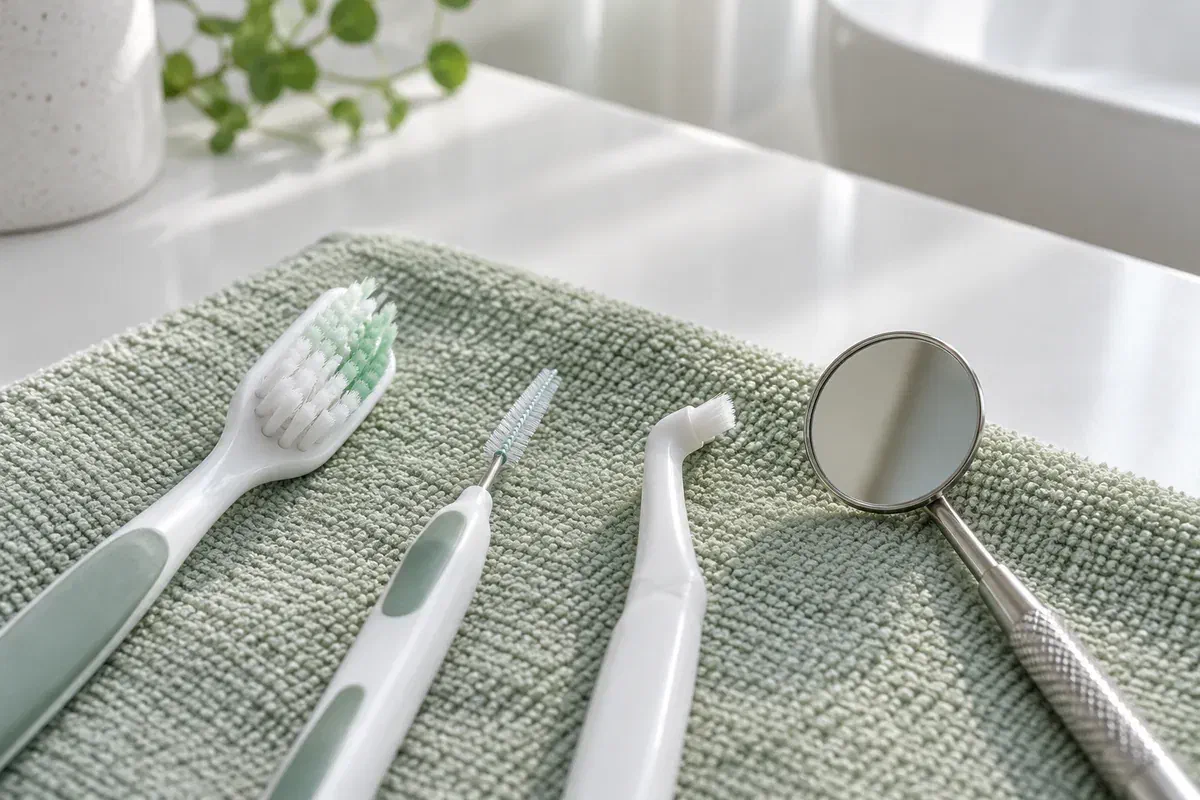
Some aids feel rougher than others in a tender mouth. Bring those you have and describe what happens with each, so recommendations reflect comfort as well as reach and the shape of your restoration.
Calculus needs professional cleaning, and the team can talk you through how it will be done. Please don’t try to remove it yourself with sharp objects or a home scaling tool, which risks harming the tissue.
These are common and worth mentioning before anything starts. Agreeing on pauses, positioning, and comfort measures in advance helps the appointment feel more predictable and more manageable.
Increasing pain, swelling, persistent bleeding, or any movement of the restoration needs assessment rather than waiting. Describe these when you call so the appropriate appointment can be arranged.
Professional cleaning makes it possible to remove deposits with suitable techniques and to see whether your daily routine reaches the right surfaces. Because the pace is agreed with you, there’s also time to ask about products and technique while looking at your own restoration, rather than nodding along to advice that doesn’t match your mouth.
Home care continues to matter most between visits. Even well-planned appointments can’t make up indefinitely for an area that’s too uncomfortable to clean or a routine that’s too much to face each night. The goal is gentle, suitable care in the chair, a home method you feel confident with, and a clear next step for any concern.
Patient information: European Federation of Periodontology — implant care and prevention
Ask to try gentler options, and have the team watch your technique. You want good access without forcing anything, skipping key areas, or choosing a method so soft it misses the point.
The gum around an implant tells the team a lot. If a spot bleeds or stays tender, ask for an explanation and whether watching, further assessment, or a specific treatment plan is suggested.
Changes in sensitivity, eyesight, hand strength, or help at home can affect what’s practical. Mention them so the team can propose a manageable routine and appropriate support.
The steps depend on your restoration, findings, and comfort. Ask what will happen and in what order, whether a separate exam is planned, and what options exist for tender areas.
The team reviews your health history, implant background, and routine, and discusses your concerns. Mention anxiety, past difficult visits, repairs, attachment changes, or advice from another clinician.
The implant areas and other parts of your mouth are checked as appropriate. The findings point to where deposits form and which spots your routine misses, and they help decide if more assessment is needed.
Instruments and techniques are chosen for the surfaces involved. Mention discomfort immediately and use your signal to pause whenever you need; your visit is planned around you.
Try the recommended aids with guidance, taking your time. Confirm which products to use, where to concentrate, and when to come back, plus any separate follow-up that has been suggested.
Follow the advice for your own restoration. If a technique feels uncomfortable once you’re home, contact the clinic rather than forcing the aid or avoiding the area altogether.
Every aid is chosen for a particular space and angle. A larger brush isn’t necessarily better and may feel worse, and an aid suited to one bridge may need a different approach elsewhere.
Implant restorations and natural teeth differ in structure. Keep using fluoride toothpaste and your tooth-cleaning routine alongside the implant-specific methods you were shown.
Ask what’s normal after your care. Contact the team about discomfort or bleeding that persists or gets worse, and attend any reassessment instead of waiting for the next routine visit.
Details make a big difference to comfort. Ask for an explanation before each step, request a break, or tell the team what made earlier visits hard.
Contact our Bronte Street practice to arrange implant hygiene care paced around your comfort. Bring your usual aids and any concerns about past visits so the appointment can be planned with you in mind.
Mention your implant restorations, any comfort concerns, and whether you’ve noticed bleeding, discomfort, or movement.
