Old denture tools don’t fit the new teeth
A denture brush can’t reach under a fixed bridge. Bring what you’ve tried and describe what happens, so the team can suggest aids that account for access, comfort, and the shape of the restoration.


Went from a removable denture to teeth fixed on implants? The old habit of taking everything out to scrub no longer applies. Implant hygiene visits for people from Rockwood clean the new restoration and teach a routine for teeth that stay put.
For years you may have lifted out a denture, brushed it at the sink, and rinsed your gums. A fixed implant bridge changes that. The teeth stay in place, and the surface facing your gum becomes something you have to reach from inside your mouth. Single crowns and clip-in overdentures bring their own adjustments, but the switch to fixed teeth is often the biggest.
Professional maintenance can ease that transition. The team checks the tissue under and around the restoration, looks for areas where plaque and food collect, and asks which parts feel impossible to reach. If a finding suggests the dentist should take a closer look or a separate plan is needed, it should be explained clearly rather than treated as routine.
Travelling from Rockwood, bring the tools you’ve been trying, even if they feel clumsy, and describe how your evenings go now that nothing comes out. Show where a threader gets stuck or where food seems to hide. Practising under the bridge with guidance usually feels far more manageable than working it out alone.
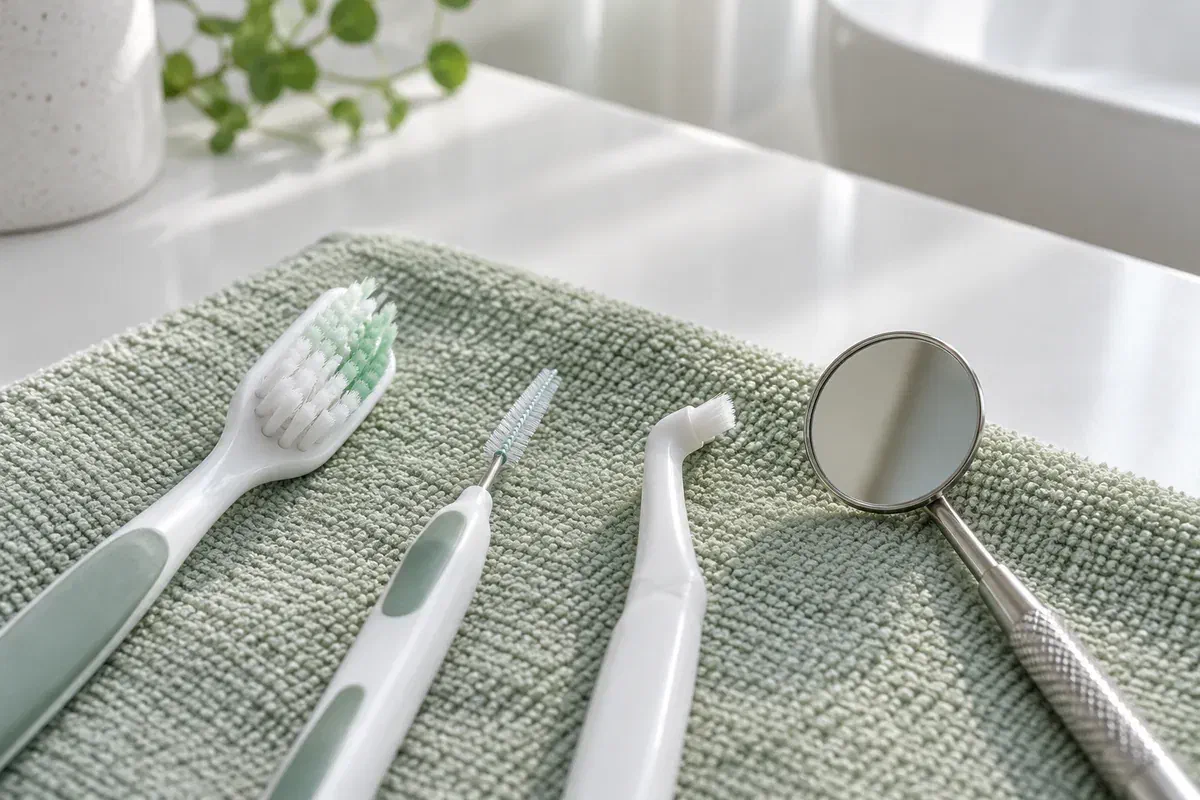
Describing the exact frustration helps. Explain where food gathers, which aid won’t pass beneath the bridge, or which part of the gum feels tender, and the advice can match your situation.
A denture brush can’t reach under a fixed bridge. Bring what you’ve tried and describe what happens, so the team can suggest aids that account for access, comfort, and the shape of the restoration.
Buildup on the underside of a bridge needs professional cleaning and some thought about why it’s collecting. Avoid poking at it with household tools or buying a scaling instrument online.
Fixed teeth can feel different when cleaned. Mention sensitivity, anxiety, jaw fatigue, or gagging, and agree on pauses and comfort measures in advance so the appointment can be planned around them.
Any looseness in the bridge, swelling, persistent bleeding, or new pain needs assessment. Mention these symptoms when booking so the appropriate appointment can be arranged.
Professional hygiene care allows deposits to be removed from surfaces you can’t easily see, using methods suited to the restoration. It also gives you the chance to ask about aids and technique with your own bridge in view, which is far more practical than trying to follow instructions written for natural teeth or removable dentures.
What you do at home each day is still essential. Regular visits can’t keep compensating for an underside that never gets cleaned or a method too complicated to repeat. A good result is suitable professional care, a routine that makes sense for fixed teeth, and an agreed plan for whatever still needs attention.
Patient information: European Federation of Periodontology — implant care and prevention
Ask the team to demonstrate threaders, interdental brushes, or other aids they recommend, and to watch your attempt. The aim is good access without forcing anything or leaving important surfaces untouched.
The tissue beneath a fixed bridge guides decisions about care. If an area bleeds or stays sore, ask what the finding suggests and whether it needs monitoring, more assessment, or a particular plan.
Changes in vision, grip, coordination, or support at home can make cleaning beneath a bridge harder. Raise them so the team can suggest an easier method and suitable professional support.
Exactly what’s done depends on your restoration and findings. Ask what’s included, whether a separate examination is planned, and how any sensitive areas will be managed.
The team reviews your health details, implant treatment history, and how you clean now. Mention recent adjustments, changes to the bridge, or instructions from the clinician who placed it.
The bridge, the gum beneath it, and the rest of your mouth are checked as appropriate. Findings show where food and deposits collect, whether your routine reaches those spots, and if further assessment makes sense.
The clinician selects instruments and methods suited to the restoration’s surfaces. Mention discomfort straight away and use the pause signal agreed at the start; care is tailored to your mouth.
Work through the recommended aids with guidance until the movement feels familiar. Confirm what to use, which areas need most attention, and when to come back, along with any separate follow-up.
Follow the advice for your restoration. If cleaning under the bridge is still a struggle after you get home, call the clinic for help rather than forcing an aid or giving up on that surface.
Each cleaning aid is chosen for a particular space and path. A thicker brush isn’t automatically better, and the approach that works at the front may need changing near the back.
If you still have natural teeth, they’re built differently from your implant work. Keep up fluoride toothpaste and regular tooth care alongside the bridge-cleaning steps you were shown.
Ask what to expect after your care. Get in touch if symptoms persist or worsen, and keep any reassessment booked rather than waiting until your next routine cleaning.
Small details make the new routine stick. Ask to have a technique shown again, ask about a term you didn’t follow, or explain why an earlier tip didn’t help.
Arrange a visit at our Bronte Street practice for professional cleaning around your fixed restoration and coaching on a routine you can manage. Bring the aids you’ve been using so we can build on what you already do.
Let us know what kind of implant restoration you have and if you’ve noticed bleeding, discomfort, food trapping, or movement.
