You are ready for something fixed at last
When neighbouring teeth have been missing and implants can still be planned to support them, a fixed bridge may be worth discussing. Ask how a fixed design changes daily care and future visits.


Lived with a gap for years and only now thinking about filling it? An implant-supported bridge may still be possible, though the bone and gums need a careful look first. Adults from Acton can read how a long-standing space is assessed, how treatment is staged and what upkeep follows.
Plenty of people adapt to missing teeth. They chew on the other side, avoid certain foods and stop thinking about it, until a neighbouring tooth starts to drift or a new filling reminds them of the space. An implant-supported bridge is one way to revisit that decision: a connected row of fixed replacement teeth anchored to implants, standing apart from the natural teeth nearby.
Time does matter, though not in the way many people fear. After teeth are lost, the bone and gum in that area can change shape, and nearby teeth may shift. Those changes affect where implants can go, whether preparation is needed and how the finished bridge looks. Bite, span length and cleaning access complete the picture that decides the implant layout.
Coming in from Acton, your opening appointment with us focuses on what is there now. Tell us how long the teeth have been missing, what you have been avoiding at meals and whether you have ever worn a partial. We will explain what the current tissue allows and what a bridge would ask of you long term.
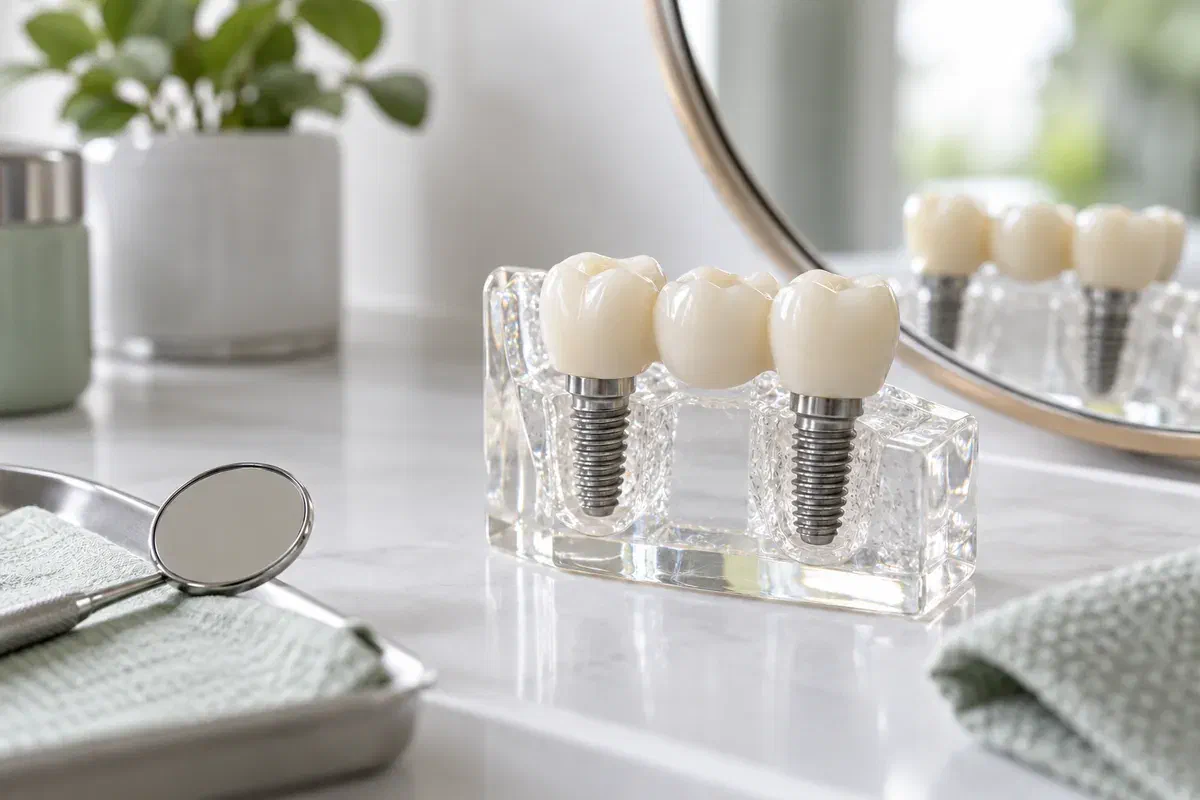
The position of the space and the condition of the mouth around it decide which choices are realistic. Bring your own priorities, and we will weigh chewing, appearance, timing and day-to-day care together.
When neighbouring teeth have been missing and implants can still be planned to support them, a fixed bridge may be worth discussing. Ask how a fixed design changes daily care and future visits.
Teeth beside a long-standing gap can tip or drift. An implant design does not use them as anchors, but they are still examined, and their position may shape the plan and the comparison with alternatives.
Tell us why it stopped being worn, whether it was loose, bulky or uncomfortable. A new plan should answer those specific reasons rather than assume an implant bridge resolves everything.
If any teeth remain in the span being considered, they need a proper diagnosis and a fair discussion of keeping them before extraction becomes part of the plan.
If the tissue allows it, an implant bridge gives a fixed replacement for several neighbouring teeth. It is designed around the current shape of the space and your bite, and it leaves the adjacent teeth out of its support. Ask your dentist to describe what improvement is realistic given the changes since the teeth were lost.
Treatment comes with stages, and sometimes with extra preparation for a site that has changed. Implant surgery carries risks, healing has to be confirmed, and the bridge may need work in future. Compare that with a well-made partial, a tooth-supported bridge, or continuing as you are.
Patient information: American Academy of Periodontology — multiple-tooth implant replacement
The teeth, implants and biting forces are planned together around the bone you have now. Ask why the suggested arrangement fits your span, instead of judging it by how many implants are included.
Changed gum contours can affect the visible result. Ask which aspects of size, shade and tissue appearance can be previewed during planning or a provisional, and what may be limited.
Daily cleaning around each support and under the joined teeth is part of owning a bridge. Seeing that routine demonstrated first helps you decide whether it suits your hands and habits.
A site that has changed over the years may need an extra step, so timelines differ. Request one written outline that lists the visits, how the space is covered meanwhile, who will treat you and what each phase costs.
Your dentist examines teeth, gums, bite and medical history, then selects imaging to show the bone available. Options, limits and whether a specialist assessment would help are discussed.
Any groundwork needed for the bone or gum is explained, along with proposed implant positions and the surgical approach. Healing and support must be confirmed before moving to the bridge.
Impressions or scans guide fabrication. Fit, tooth arrangement, bite and the relationship to the gums are assessed, with a provisional or extra check when it adds useful information.
The finished bridge is reviewed and secured using the planned method. You receive cleaning instructions, guidance on adjusting to chewing on that side again, and a review schedule.
Surgical healing instructions and long-term bridge care are separate. Follow your team’s guidance on eating, cleaning and return visits as you move through each stage.
Ask for a demonstration with threaders or small brushes that suit your bridge, then practise. Ordinary floss generally cannot pass through joined teeth as it would between separate ones.
After years of avoiding one side, chewing there can feel unfamiliar. Report any soreness, clicking, movement or a bite that feels uneven, and never use glue on a loose part.
The bridge, its joins and the gum around each implant need ongoing review. Ask what interval suits you, particularly if gum disease was part of why the teeth were lost.
Revisiting a long-standing gap raises questions about tissue, support and timing. These answers can help you prepare without assuming one design fits every space.
Schedule an assessment at our Bronte Street clinic to discuss the long-standing gap. We will look at what the area offers today, describe how implants could hold a bridge there, and weigh that against other suitable replacements.
If you still have an old partial, bring it along, together with any records of the original extractions.
