You want something that stays in
A row of lost teeth with enough room and bone for implants is the classic case for a fixed span. Ask how a fixed result changes your daily cleaning and future appointments.


Replacing teeth with an implant-supported bridge is rarely a single appointment. It is a sequence of assessment, surgery, healing and restorative visits that replaces several neighbouring teeth with one fixed span. For adults coming from Brampton, here is what each stage involves, what an estimate should cover, and how the bridge is cared for.
People are often surprised by the calendar. Between the first examination and the day a finished bridge is fastened in, there may be imaging, preparatory care, surgery, a healing interval and several restorative visits. The end product is a connected row of replacement teeth held by implants in the jaw, independent of the natural teeth around the gap.
Each stage exists for a reason. The team needs to know how much bone is present, how long the space is, how your bite works, what the visible result should be and whether you can clean beneath the finished piece. Those findings decide how many implants are proposed and where, which is why no two plans look quite alike.
If you are travelling from Brampton, ask early for a written outline of the visits so you can fit them around work and family. Tell us how the missing teeth affect eating, speech and confidence, and whether you already wear a partial. We will connect your goals to a realistic timeline and an honest description of long-term care.
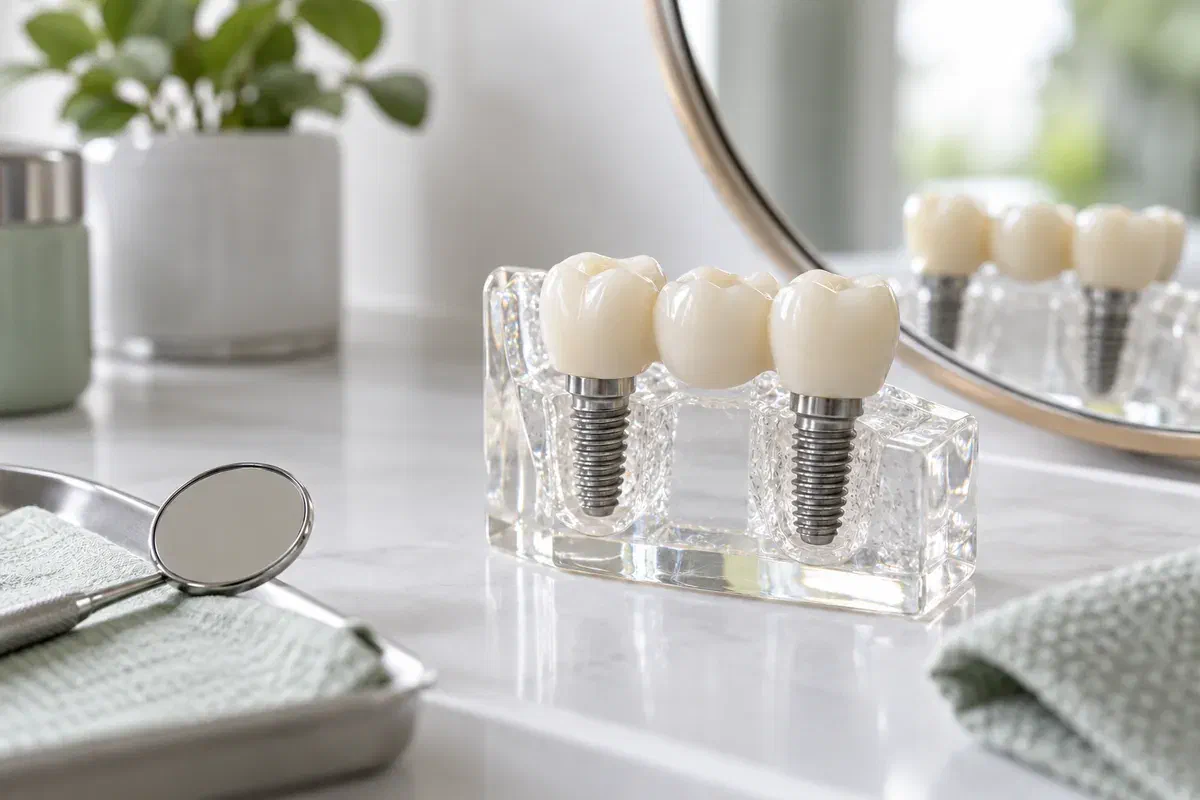
The location of the space and the health of the surrounding mouth decide what is realistic. Share your priorities so we can balance function, appearance, timing and everyday practicality with you.
A row of lost teeth with enough room and bone for implants is the classic case for a fixed span. Ask how a fixed result changes your daily cleaning and future appointments.
Because implants carry the bridge, adjoining teeth need not be prepared as anchors. They still receive a careful exam, and anything found there may alter the plan or the comparison with alternatives.
Describe whether the problem is rocking, sore spots, bulk or food collecting beneath it. An implant bridge should be measured against those frustrations rather than presented as a cure-all.
Any teeth still standing in the proposed span should be properly diagnosed, and realistic ways to keep them explored, before extraction is added to a bridge plan.
For a suitable mouth, the result of all those stages is a fixed replacement for a span of missing teeth. The bridge is shaped to your space and bite, and the teeth beside it keep their independence. Ask your dentist what level of improvement is reasonable to expect, given your particular situation.
The commitment does not end at the final fitting. Implant surgery has risks, healing has to be confirmed, and the bridge or its parts may need maintenance in later years. Compare that path with a removable partial, a bridge on natural teeth, or a decision to wait until timing suits you better.
Patient information: American Academy of Periodontology — multiple-tooth implant replacement
Teeth, implants and chewing forces are planned as a whole. Ask why the proposed number and spacing suit your gap, rather than assuming a plan with more implants must be stronger or better.
Tooth size, colour, the gumline and how the bridge meets natural tissue all show in a smile. Ask what can be reviewed during planning or with a provisional and what your gums may limit.
The underside of the bridge and each support need daily care. Seeing that routine demonstrated early helps you decide whether the design fits your dexterity, schedule and habits.
Exact timing depends on the site, any preparation needed first and how you heal. Ask for the expected number of visits, the temporary tooth plan, the clinicians involved and the estimate, all explained together.
The dentist examines your teeth, gums, bite and health history, then arranges the imaging needed for planning. Alternatives, limitations and the possible need for another clinician’s input are discussed.
You hear where the implants are proposed, whether preparatory work comes first, and how the surgery is done. The healing interval varies, and stable support must be confirmed before the bridge stage begins.
Impressions or scans guide the laboratory. Fit, tooth arrangement, bite and gum relationship are evaluated across one or more visits, with provisional teeth or extra checks if the case benefits.
The completed bridge is checked and attached using the planned method. You receive cleaning guidance and tips for adapting, and a review is booked to check the bridge and its implant supports.
Healing instructions after surgery are not the same as everyday care for a finished bridge, so keep them separate. Follow your team’s advice on eating, cleaning and return visits throughout.
Ask for a demonstration with threaders, small brushes or a water flosser suited to your bridge. Ordinary floss generally cannot pass between connected teeth as it would between natural ones.
Movement, clicking, a chipped surface or a bite that feels altered should be examined. Try not to test the bridge repeatedly, and never use household adhesive if a part loosens.
The bridge teeth, connections and gums around each implant need ongoing checks. Ask about the right maintenance interval for you and how any past gum disease affects it.
An implant bridge involves decisions about support, appearance and schedule. These answers can help you plan the conversation without assuming one standard sequence fits every gap.
Arrange a consultation at our Bronte Street practice to discuss replacing several neighbouring teeth. We will hear your priorities, explain the support and timeline an implant bridge would involve, and compare it with the other suitable options.
If you have them, bring records of past extractions, implants or appliances in the area.
