You would like a fixed solution
Where neighbouring teeth are missing and both your health and the site allow implants, a fixed span may be discussed. Ask how a fixed bridge fits your daily routine and what reviews it needs.


Your general health, medications and other appointments all play a part in implant treatment. For adults from Bolton and the villages of Caledon, this page explains how a fixed bridge on implants for several neighbouring missing teeth is assessed, coordinated with your medical care, staged and maintained.
A medication list can matter as much as an X-ray. Conditions such as diabetes, treatments that affect bone, blood thinners and smoking can all influence how implant surgery is timed and how healing goes. That is the backdrop to any discussion of an implant-supported bridge: one fixed, joined restoration for several neighbouring missing teeth, carried by implants rather than by the natural teeth beside the gap.
With your health understood, the mouth itself guides the design. The dentist weighs the bone available, the length of the space, how your teeth meet, what will be visible and whether you can comfortably clean beneath the span. Those findings decide the number of implants and their positions, and they vary from one person to the next.
Coming from Caledon, bring a current medication list and the name of your family physician to your first visit at our Bronte Street practice. Describe how the gap affects meals, speech and confidence, and whether you wear a partial. We will explain the treatment, any coordination with your doctor and the care that follows, so the plan fits your health as well as your mouth.
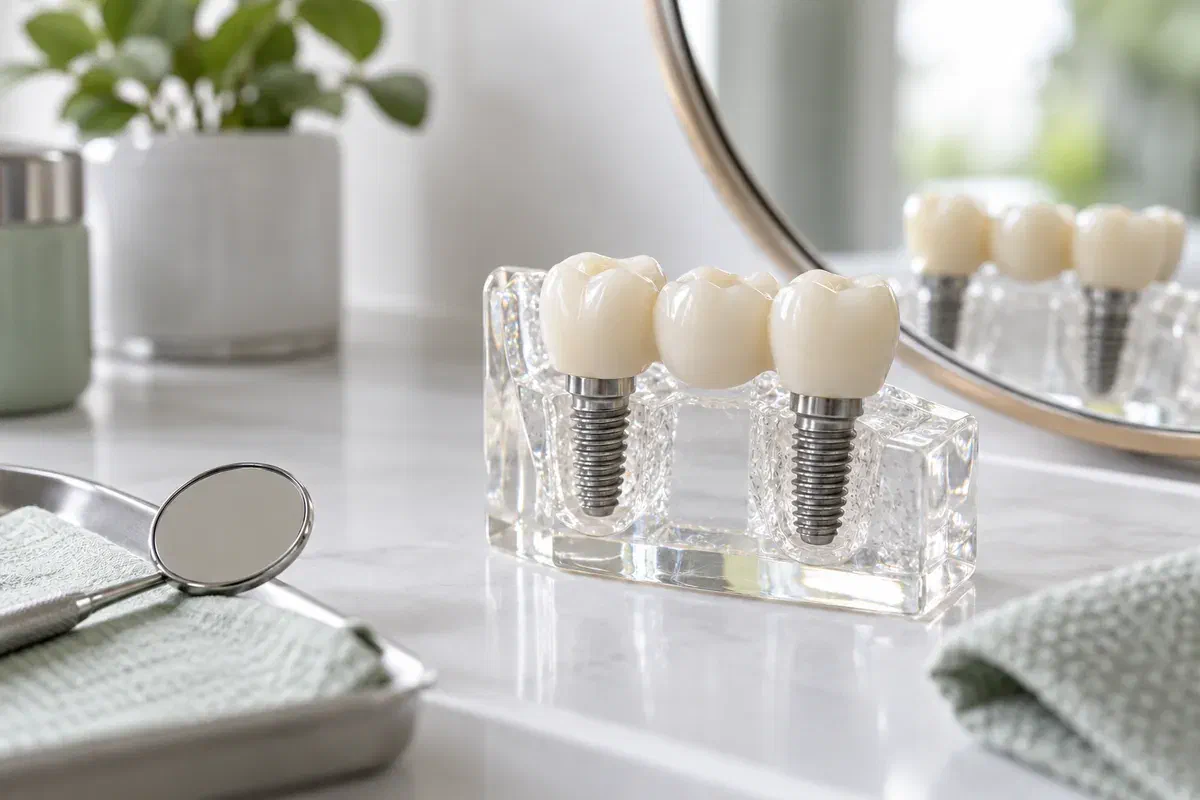
What is realistic comes from three things together: general health, the gap’s position and the state of nearby teeth and gums. Share your priorities so comfort, function, appearance, timing and upkeep are balanced.
Where neighbouring teeth are missing and both your health and the site allow implants, a fixed span may be discussed. Ask how a fixed bridge fits your daily routine and what reviews it needs.
Because implants carry this kind of bridge, the bordering teeth are not crowned to support it. They are examined all the same, and their health can still reshape the plan.
Perhaps arthritis makes it fiddly to remove, or it never sat comfortably. Describe the specific difficulty so an implant bridge is assessed against it, keeping in mind that a fixed bridge needs careful cleaning too.
Teeth still present in the area need diagnosis and a fair look at keeping them before extraction is included. If extraction is needed, your medical history also shapes how and when it is done.
If health and site both cooperate, implants give a joined row of replacement teeth a fixed home, sized to your gap and matched to your bite, with the nearby natural teeth left out of the support. Ask your dentist what improvement is realistic in light of both your mouth and your general health.
There is a cost in time and effort. Surgery carries risks that may be higher with some medical conditions, healing is monitored, and the bridge may need repair later on. Compare that path with a partial, a bridge resting on natural teeth, or postponing until a health issue is better controlled.
Patient information: American Academy of Periodontology — multiple-tooth implant replacement
The spacing of implants should reflect your bone, bite and span, not a standard formula. Ask your dentist to explain why the proposed arrangement suits you before agreeing to it.
Tooth shape, colour and the way the bridge meets the gum are easier to adjust in planning. Ask whether a temporary version will let you judge them first, and what your tissues may limit.
If dexterity is a concern, say so. There are aids designed for easier grip, and seeing them demonstrated before treatment helps you decide whether the routine is realistic.
Timing depends on your health, the site, any groundwork and your healing. Ask for a written outline of visits, interim tooth arrangements, who is involved, any physician coordination and the estimate for each phase.
Your dentist goes through your medical history and medications, examines teeth, gums and bite, and orders imaging for planning. Alternatives, limits and whether your physician or a specialist should be consulted are discussed.
Implant positions, preparatory work and the surgical approach are explained, along with any medication guidance agreed with your doctor. The bridge stage waits until healing is confirmed.
Records go to the laboratory, and try-in visits check seating, tooth arrangement, bite and the gum line, sometimes with a temporary bridge before the final one is made.
The bridge is fastened with its planned connection and checked. You receive cleaning instruction suited to your hands, guidance on adjusting and a recall schedule for the bridge and implants.
Post-surgery instructions are short-term and may reflect your medical needs; long-term bridge care is ongoing. Follow your team’s advice for each phase and keep your physician informed where agreed.
Ask to try threaders, small brushes with larger handles or a water flosser. The joined teeth stop ordinary floss passing through, so the under-bridge clean needs a dedicated tool.
A new diagnosis or medication can matter for implant care, so mention it. Also call if the bridge moves, clicks, chips or meets your other teeth differently, and leave any repair to the team.
Implants, joins and gum health need ongoing checks, especially if you have diabetes or a history of gum disease. Ask what recall interval suits your situation.
An implant bridge involves decisions about support and appearance, and sometimes about medical coordination. These answers can help you prepare without assuming one design fits every gap.
Book an assessment to talk about the missing teeth and how your general health affects the options. We will explain the support an implant bridge would need, any coordination with your physician and how it compares with other suitable choices.
Bring a current medication list, your physician’s contact details and any records of past extractions or appliances.
