You want a fixed result across the gap
Both bridge types are fixed. An implant bridge may be considered when several adjoining teeth are missing and implants can be planned to carry them. Ask how each design is cleaned and maintained.


Been told a regular bridge would mean shaping the teeth next to your gap? An implant-supported bridge is one alternative that leaves those teeth out of the support. Adults from Mississauga can read how suitability, staging, appearance and long-term upkeep are worked out.
A traditional bridge borrows strength from the teeth at each end of a gap. Those teeth are shaped and crowned so the replacement can hang between them. An implant-supported bridge takes another route: the joined replacement teeth sit on implants placed in the jaw, so the healthy teeth nearby keep their own enamel and are not asked to hold anything up.
That does not make the implant version automatically better. It brings surgery, healing time and its own maintenance, and the plan has to suit your bone, the length of the space, your bite, the look you want and your ability to clean beneath it. The number of implants is chosen from those facts, not from a rule of one per tooth.
For people in western Mississauga neighbourhoods such as Meadowvale or Churchill Meadows, our Bronte Street practice is a manageable trip for a planning visit. Tell us what any previous dentist has suggested, how the gap affects eating and speaking, and whether you wear an appliance now. We will set out both bridge types fairly so you can compare them.
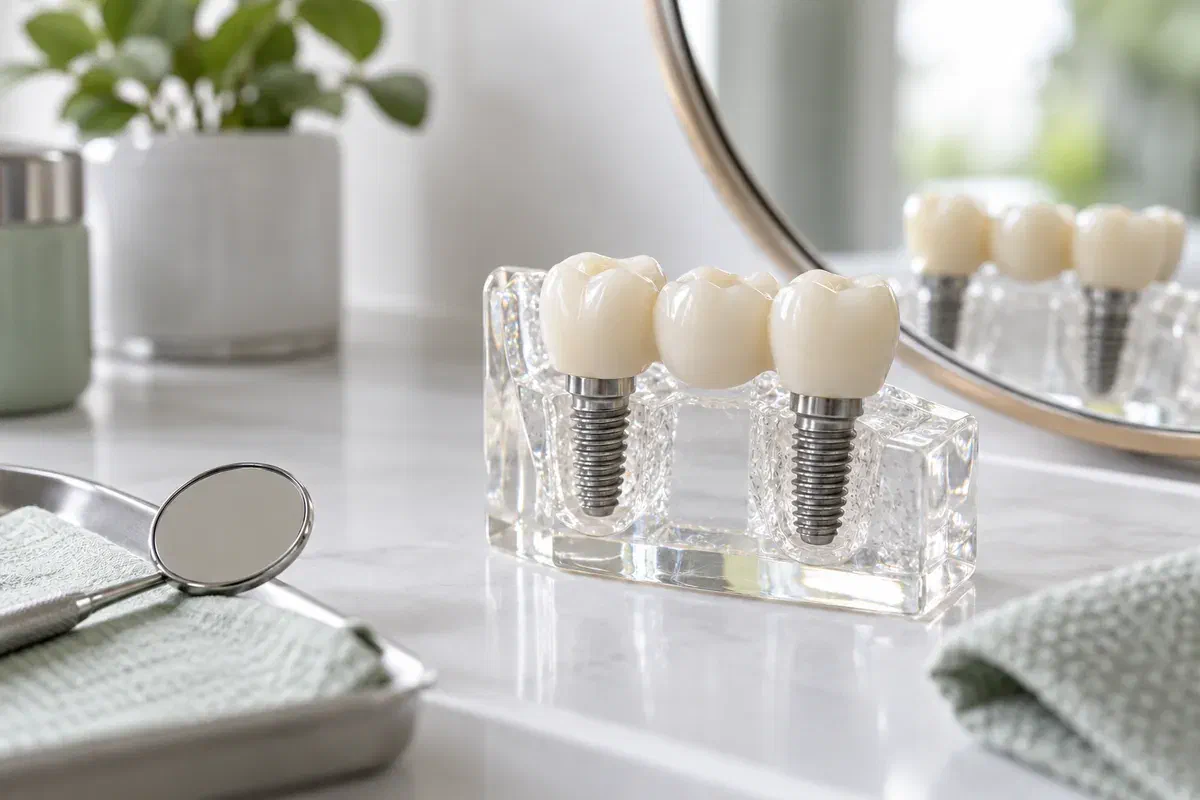
Which teeth are missing and how healthy the surrounding ones are both narrow the choices. Bring your own priorities, and we will consider chewing, appearance, timeline and practical care together.
Both bridge types are fixed. An implant bridge may be considered when several adjoining teeth are missing and implants can be planned to carry them. Ask how each design is cleaned and maintained.
Some people are reluctant to have sound teeth shaped for crowns. Implant support avoids that, though those teeth are still assessed, and their condition can still shift the overall recommendation.
Explain what went wrong, whether a partial that moved, an old bridge that failed or trouble cleaning. The new plan should answer those specific problems rather than promise to solve everything.
If any teeth remain within the planned span, they deserve a careful diagnosis and an honest look at keeping them before extraction becomes part of the bridge proposal.
In a mouth that suits it, an implant bridge gives a fixed replacement for several consecutive teeth without relying on the natural teeth nearby. The design follows your gap and bite. Your dentist should describe a realistic result for your case rather than the best one possible.
Choosing implants trades one set of demands for another. There is surgery with its own risks, a healing period that must be checked, and components that may need attention later. Weigh that against preparing teeth for a conventional bridge, using a removable partial, or postponing.
Patient information: American Academy of Periodontology — multiple-tooth implant replacement
Replacement teeth, implants and the pressure of chewing are planned together. Ask why the suggested arrangement fits your span instead of judging the proposal simply by its implant count.
Size, shade, gum outline and the transition to natural tissue all affect appearance. Find out which can be reviewed during planning or a provisional phase and what limits your gums may set.
Each support and the underside of the joined teeth need daily attention. Learning the routine before treatment helps you decide whether the design suits your hands and schedule.
Steps and timing depend on the site, any groundwork and how you heal. Ask to see the expected appointments, interim teeth arrangements, the clinicians involved and the costs as one plan.
Your dentist examines teeth, gums, bite and health history and chooses imaging for planning. Both bridge types, a partial and any limitations are discussed, along with whether another opinion would help.
Proposed implant positions, preparatory steps and the surgical method are explained. The timeline depends on your situation, and support has to be confirmed before the restorative work begins.
Impressions or scans guide the lab. Fit, tooth layout, bite and gum relationship are assessed, using a provisional or additional try-in when it adds useful information.
The finished bridge is reviewed and secured with the planned attachment. You receive cleaning guidance, advice on adjusting, and a timetable for reviewing the bridge and implants.
Healing advice after surgery is separate from the long-term care of a finished bridge. Follow your team’s guidance on eating, cleaning and return visits as each stage arrives.
Ask for a demonstration with aids shaped for your bridge, and try them yourself before you leave. Floss that slides easily between natural teeth often will not pass under joined ones.
A loose feeling, clicking, a chipped tooth or a bite that seems different needs a check. Avoid repeatedly pressing on the bridge, and never use glue on anything that comes loose.
The bridge teeth, joins and gums around the implants need regular assessment. Ask what interval suits you and whether a history of gum disease calls for closer follow-up.
Comparing bridges means looking at support, appearance and upkeep. These answers can help you ask better questions without assuming one design fits every gap.
Book a consultation at our Bronte Street practice to discuss replacing a row of missing teeth. We will explain what implant support would involve, how it differs from a bridge on natural teeth, and which options suit your mouth.
Bring any treatment plans, X-rays or notes from previous dentists about the area if you have them.
