You would like a replacement that does not come out
When neighbouring teeth are missing and implants can be planned to carry them, a fixed bridge may be on the table. Ask what being fixed means for cleaning and for maintenance years from now.


How many implants does it take to replace three or four teeth in a row? Often fewer than people expect, though the answer depends on your jaw and bite. If you are coming from Oakville, see how we judge suitability, stage treatment and plan appearance, cleaning and upkeep.
The question we hear most often comes before anything else: one implant per tooth, or fewer? An implant-supported bridge links several replacement teeth into a single fixed piece that rests on implants in the jaw. Because the teeth are joined, they can span between supports, and the natural teeth next to the space are not drafted in as anchors.
So the count follows the design, not the other way round. Your dentist considers how much bone is available, how long the space is, how your upper and lower teeth meet, what will show when you smile, and whether you can clean beneath the bridge comfortably. Two people with the same number of missing teeth can end up with quite different layouts.
From Oakville, a first visit to our Bronte Street practice is mostly a conversation. Explain how the gap affects eating, speech and confidence, and mention any appliance you wear now. We will tie those concerns to an honest description of the treatment and what looking after the result involves.
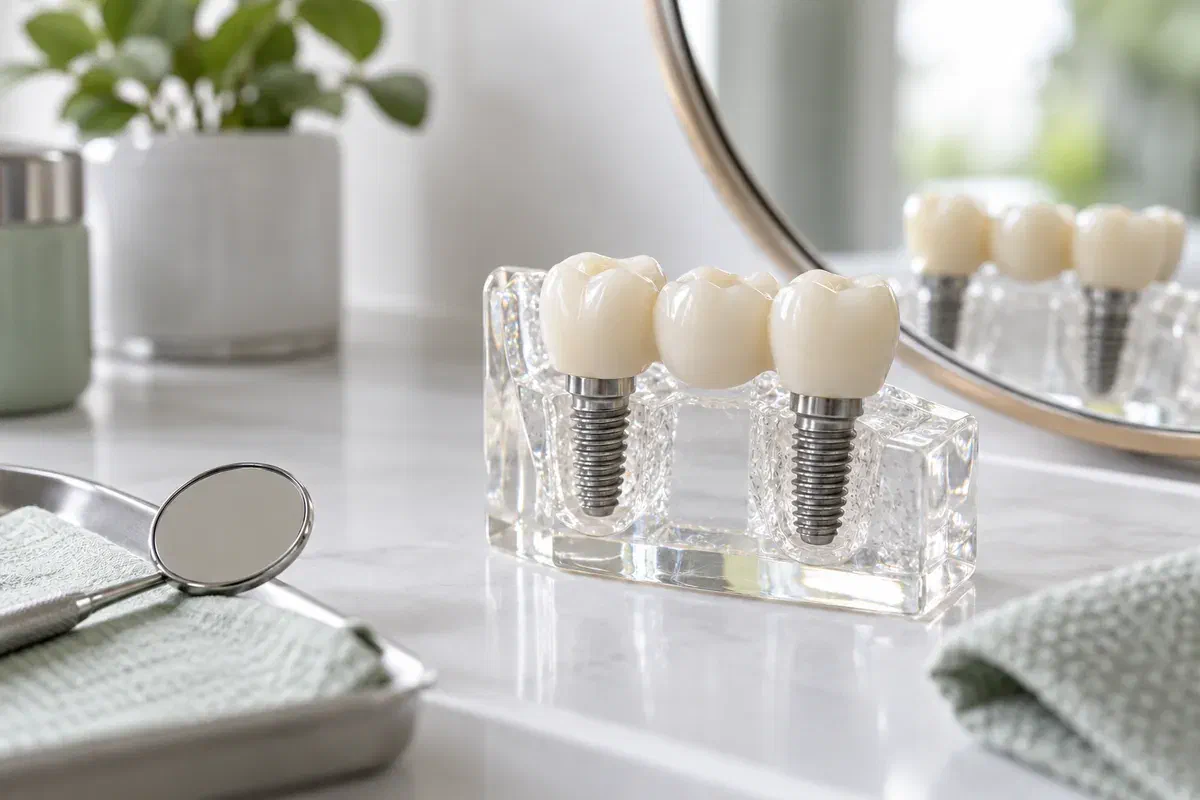
Where the space is and how healthy the surrounding mouth is set the possibilities. Share your priorities so we can weigh function, appearance, timing and day-to-day care together.
When neighbouring teeth are missing and implants can be planned to carry them, a fixed bridge may be on the table. Ask what being fixed means for cleaning and for maintenance years from now.
Implant support means the teeth beside the gap need not be prepared as bridge anchors. They will still be examined, and their health can influence both the plan and how it compares with alternatives.
Tell us exactly what is wrong, whether that is shifting, bulk or awkward cleaning. An implant bridge should be assessed against those problems, rather than presumed to solve every one of them.
Teeth that remain in the area under discussion deserve a proper diagnosis and a look at whether they can reasonably be kept before any extraction is folded into a bridge plan.
When the mouth suits it, an implant bridge gives a fixed replacement for several missing teeth in a row. It is designed around the space and your bite, and the natural teeth on either side stay independent of its support. Your dentist should be clear about the level of improvement you can reasonably expect.
These advantages come with stages and ongoing care. Implant surgery has risks, healing must be confirmed, and the bridge or its components may need attention in future. Set that against a removable partial, a tooth-supported bridge, or choosing to wait.
Patient information: American Academy of Periodontology — multiple-tooth implant replacement
Replacement teeth, supports and biting forces are planned together. Ask your dentist to explain why the proposed spacing suits your gap, instead of using the implant total as a shortcut for comparing plans.
Tooth width, colour, gum contours and the visible edge where the bridge meets tissue all matter. Find out what can be reviewed in planning or with provisional teeth, and what your existing gums may constrain.
Fixed does not mean maintenance-free. Each support and the area under the joined teeth need daily cleaning, so understanding the routine beforehand helps you judge whether the design is practical for you.
The sequence varies with the site, any preparatory treatment and how healing progresses. Ask for the expected visits, temporary arrangements, the clinicians involved and costs, presented as one coordinated plan.
Teeth, gums, bite and medical history are examined, and imaging is chosen to support planning. You discuss alternatives, likely limitations and whether a referral or second assessment would help.
The team explains proposed implant positions, any preparatory steps and the surgical approach. Timing depends on your case, and healing and support need to be established before the restoration moves ahead.
Impressions or digital scans guide fabrication. Fit, tooth arrangement, bite and the relationship to the gums are evaluated, with provisional teeth or extra try-ins when they are useful.
The finished bridge is assessed and attached with the planned system. You receive cleaning instructions, guidance on settling in, and a plan for reviewing the bridge and implants.
Post-surgery healing advice and everyday bridge care are separate instructions. Follow the team’s guidance on food, cleaning and review visits for whichever stage you are in.
Ask for a demonstration with aids that match the bridge’s shape, then practise. Standard floss cannot usually slip between the joined teeth of a bridge the way it does between separate teeth.
Movement, clicking, a chip or a bite that feels changed should be checked by the team. Do not keep testing the bridge with your tongue or fingers, and do not use glue on a loose part.
The teeth, joins and gums around the implants need ongoing assessment. Ask what interval suits you and whether earlier gum problems or cleaning challenges change it.
An implant bridge raises questions about both what holds it and what shows. Use these to guide your discussion rather than assuming one standard design fits every space.
Reserve a consultation with Dr. Anjum’s team and talk through replacing a row of missing teeth. You will hear what support an implant bridge would require, how many visits to expect, and how it stacks up against the other options that suit you.
Any records of previous implants, extractions or appliances in the area are helpful to bring.
