

Illustrative patient and dentist reviewing an implant denture teaching model
Restorative Dentistry

Implant-Supported Dentures

Implants may provide additional retention or support for a denture, with removable and fixed designs serving different needs. Explore implant-supported dentures in Milton and compare comfort, handling, treatment stages, cleaning, and future maintenance before choosing a plan.

A closer look at implant-supported dentures

Think about how the denture will fit into your day.

An implant denture uses implants in the jaw to help retain or support a replacement for multiple missing teeth. The arrangement can be removable by the patient or fixed for professional removal when required. Those designs differ in how they connect, how you clean them, and what maintenance they may need.

The terms used for these appliances can be confusing. Some removable overdentures obtain retention from implants while also resting on the tissues; other restorations rely more fully on implant support. Ask the dentist to show you the proposed design and explain where its support comes from rather than choosing from a label alone.

At Milton Dental Clinic, we can discuss what you want to change about your current situation. Perhaps the lower denture moves, removal is difficult, or you are preparing for extensive tooth loss. Your priorities belong alongside the assessment of bone, tissues, health, and practical care when comparing the available options.

Explore implant denture options
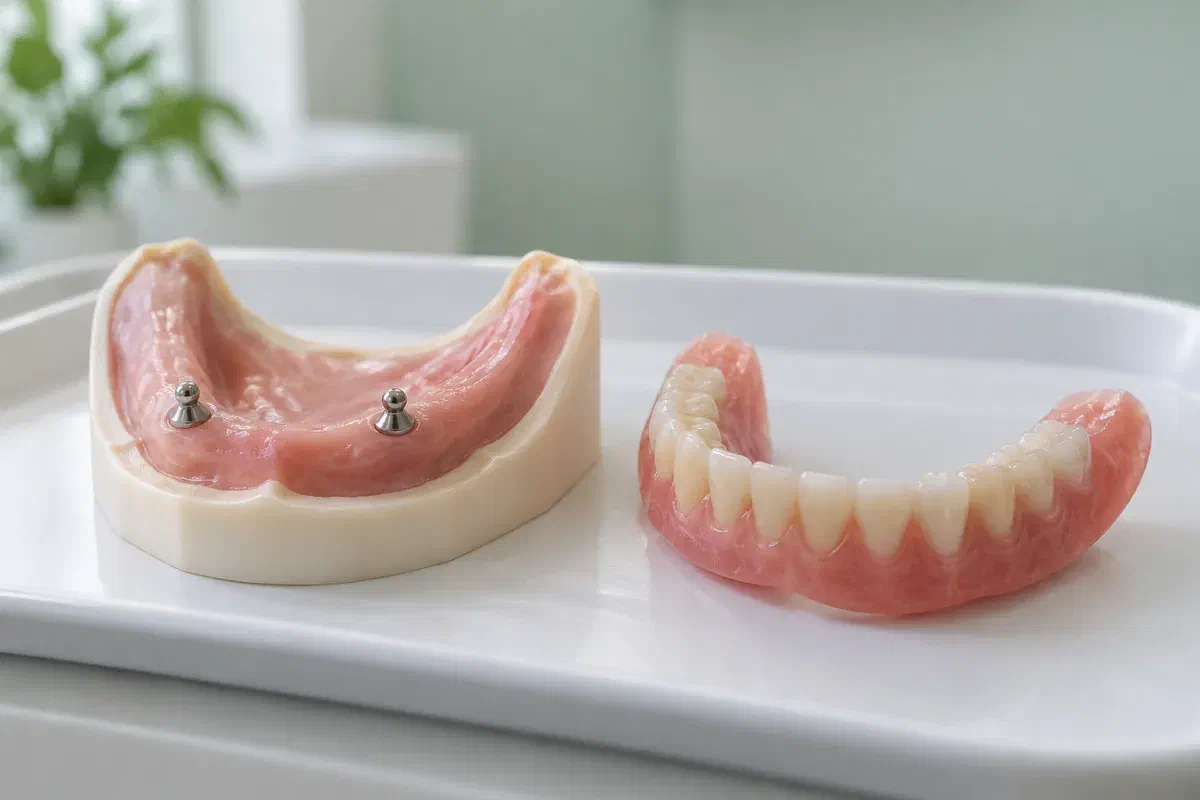
Lower removable overdenture beside a teaching model with two implant attachment heads
Questions that shape the choice

Begin with the problem you want the appliance to solve.

Implants may help with selected denture concerns, but the existing appliance and supporting mouth still need assessment. Understanding the source of discomfort or instability helps avoid choosing a treatment for the wrong reason.

Your current denture moves during everyday use

Explain when movement occurs and what adjustments have already been tried. The assessment can consider whether a conventional denture improvement, an implant approach, or another response addresses the underlying problem.

You are weighing removable against fixed teeth

Both approaches have care requirements. Discuss removal, cleaning access, hand strength, the feel of the appliance, and professional maintenance rather than assuming that fixed automatically means simpler or more suitable.

You need a plan for a larger change in your mouth

If several teeth may be lost, ask about their prognosis and reasonable alternatives before committing to removal. A replacement plan should explain the transition, temporary arrangements, and the stages beyond the first fitting.

Implant treatment is not suitable for every person or site. The examination should explain the relevant limitations and compare options that are realistic for your health and circumstances.

What suitable implant support may offer

More security can matter in ordinary moments.

For an appropriate patient, connecting a denture to implants can improve its retention or stability compared with relying on the tissues alone. The intended benefit should be described in everyday terms: how the appliance is expected to sit, what adaptation may be needed, and which current concerns it may address.

That improvement does not remove the need for care or guarantee unrestricted function. Surgery, healing, appliance maintenance, and possible future repairs belong in the decision. Discuss the likely benefits alongside these commitments so the plan fits both your clinical needs and the way you want to live with it.

Patient information: Cleveland Clinic — removable and fixed implant-supported dentures

Choose a design with a clear purpose

A removable attachment system and a fixed restoration solve the support problem differently. Ask why the recommended arrangement suits your mouth and what would change if you chose the other approach.

Bring appearance and speech into planning

Tooth position, the amount of material replacing lost tissue, and lip support can affect how the appliance feels and looks. Ask which features can be reviewed during fabrication and where adaptation may still be needed.

Plan for future handling and maintenance

Consider not only what you can manage today but also the assistance you may need later. Cleaning access, component replacement, and professional review should be understandable parts of the plan from the beginning.

Your implant denture planning sequence

Connect the assessment, implant stages, and appliance fitting.

Treatment may involve several appointments and more than one clinician. Ask for the sequence to be explained clearly, including any preparatory care, temporary appliance, healing checks, final fitting, and ongoing review.

  1. Assess the mouth and everyday priorities

    The dentist reviews the remaining teeth, supporting tissues, health history, and current appliance. Records and imaging help assess suitability, while your concerns about eating, speech, handling, and cost guide the discussion.

  2. Compare designs and agree on the treatment plan

    Discuss removable and fixed approaches where appropriate, the proposed implant arrangement, and relevant alternatives. Clarify surgical risks, additional treatment, temporary replacement arrangements, and which parts of the estimate may change.

  3. Complete the planned implant and restorative stages

    The treating team carries out the agreed sequence and assesses healing before progressing. Records, fabrication, and fitting appointments develop the appliance around the established support; the timing depends on the clinical situation.

  4. Check function and demonstrate daily care

    At fitting, the team assesses the appliance and explains its use. Practise any removal and insertion required, learn the cleaning method, and confirm the early review and longer-term maintenance arrangements.

Caring for your implant denture

Match the routine to the appliance you actually have.

Your instructions should distinguish the first healing period from care of the finished restoration. Keep written guidance and ask for clarification about wearing, cleaning, food choices, and contact arrangements at each stage.

Learn removable or fixed care correctly

A removable overdenture is taken out as instructed for cleaning and tissue care. A fixed restoration is cleaned around and beneath in place; do not try to release its connections at home.

Use compatible products and safe handling

Ask which brushes, cleaners, and storage routine suit the denture materials and attachments. Avoid using very hot water, household chemicals, or improvised tools simply because they seem effective on another type of appliance.

Keep fit and attachment reviews on the calendar

Report pressure areas, renewed movement, difficulty removing the appliance, or a changed bite. Components and denture materials can wear, and maintenance may be needed even when the implants themselves remain stable.

Choosing the right denture approach

Compare the whole daily routine, not just how the teeth attach.

The options differ in support, removability, treatment requirements, and upkeep. The most useful choice is the one that is clinically appropriate and practical for you, with its limitations explained in advance.

When patient removal is part of the design

A removable implant overdenture

Attachments help retain the appliance, and you remove it for the prescribed care routine. Discuss how it rests on the mouth, the effort needed to handle it, and attachment maintenance.

When a fixed design is suitable

A fixed implant restoration

The replacement remains attached during daily use and cleaning. Planning needs to account for implant support, hygiene access beneath the appliance, and professional maintenance or removal when indicated.

When an approach without implants is preferred

A conventional denture plan

A new denture or appropriate work on an existing one may remain a reasonable option. Ask what improvement is expected, which limitations remain, and how it compares with implant treatment.

Questions about implant-supported dentures

Understand what changes when implants join the plan.

Bring questions about the design and the practical stages, even if you have worn dentures for years. An implant connection introduces new decisions about treatment, handling, and the support needed afterward.

(905) 876-4488
Does the phrase implant-supported denture always mean a fixed appliance?
No. The phrase is used for different arrangements, including removable and fixed designs. Ask the dentist to show the proposed appliance and explain whether you remove it, how it receives support, and what its daily care would involve.
Can implants be added to help retain the denture I already wear?
Sometimes an existing appliance can be adapted, but this depends on its condition, design, fit, and the planned implant arrangement. A new denture may be more appropriate. Have the appliance assessed before assuming it can be converted.
Will both my upper and lower dentures need implants at the same time?
Not necessarily. Each arch and the way the teeth meet need assessment, but the plan may address different needs in different ways. Ask whether staged treatment is reasonable and how an implant appliance would work with the teeth or denture in the opposing arch.
Can I choose the number of implants based on an advertised denture package?
The number and positions should follow the examination and restoration design. An advertised arrangement does not establish suitability for your bone, bite, or appliance. Ask why the proposed support is appropriate and what alternatives the assessment allows.
Will a removable implant denture still need its attachments maintained?
Yes. Retentive components may wear, and the appliance’s fit can also change. Ask what maintenance is expected for the selected system, which changes to report, and how future component work or denture repairs would be arranged.
How should I compare the cost of removable and fixed implant dentures?
Compare the complete proposed sequence, including assessment, preparation, implant stages, temporary and final appliances, and expected follow-up. Ask about future maintenance as well as initial fees. The least expensive first stage may not describe the full commitment of either option.
Implant-supported dentures in Milton

Let’s compare the options around your everyday needs.

Book a consultation at our Bronte Street clinic to discuss your current denture or plans for replacing multiple teeth. We can review suitable designs, explain the treatment sequence, and help you understand the care each option requires.

Bring your current dentures and available information about previous implants or restorative treatment.

Visit Milton Dental Clinic
Unit 1, 342 Bronte St. S, Milton, ON L9T 5B7
Get directions Clinic hours
Monday–Thursday
11am–7pm
Friday–Sunday
By appointment only

How can we help?

Milton Dental Clinic

Have a question about your smile? Choose the option that works best for you.

For urgent dental concerns, please call.
Messages are reviewed during clinic hours.