Adhesive, slipping and constant fiddling
Describe when your denture moves and what has been adjusted so far. From there we can decide whether a refitted conventional denture, implant attachments or something else addresses the source.


Brushing, soaking, unclipping, threading floss under a bridge: every implant denture comes with a daily routine. From Acton, you can sit down with our Milton team to see what each design asks of you at the sink, morning and night, before you decide which one to pursue.
Most brochures show the finished teeth. Few show the toothbrush. Yet an implant denture, which relies on implants in the jaw to help retain or support a replacement for many teeth, is something you care for twice a day for years, and the routine is very different from one design to the next.
With a removable overdenture, you unclip the appliance, clean it and the attachments, and look after the gum tissue it partly rests on. With a fixed restoration, which depends more fully on implants and only comes off at the clinic, you clean around and under it while it stays in your mouth, often with special brushes or floss.
For people travelling from Acton, a clear picture of that daily routine is a good way to compare options. We ask what you want to change, examine bone, gums and health, and let you try handling a model, so the choice reflects what you will actually be doing each evening.
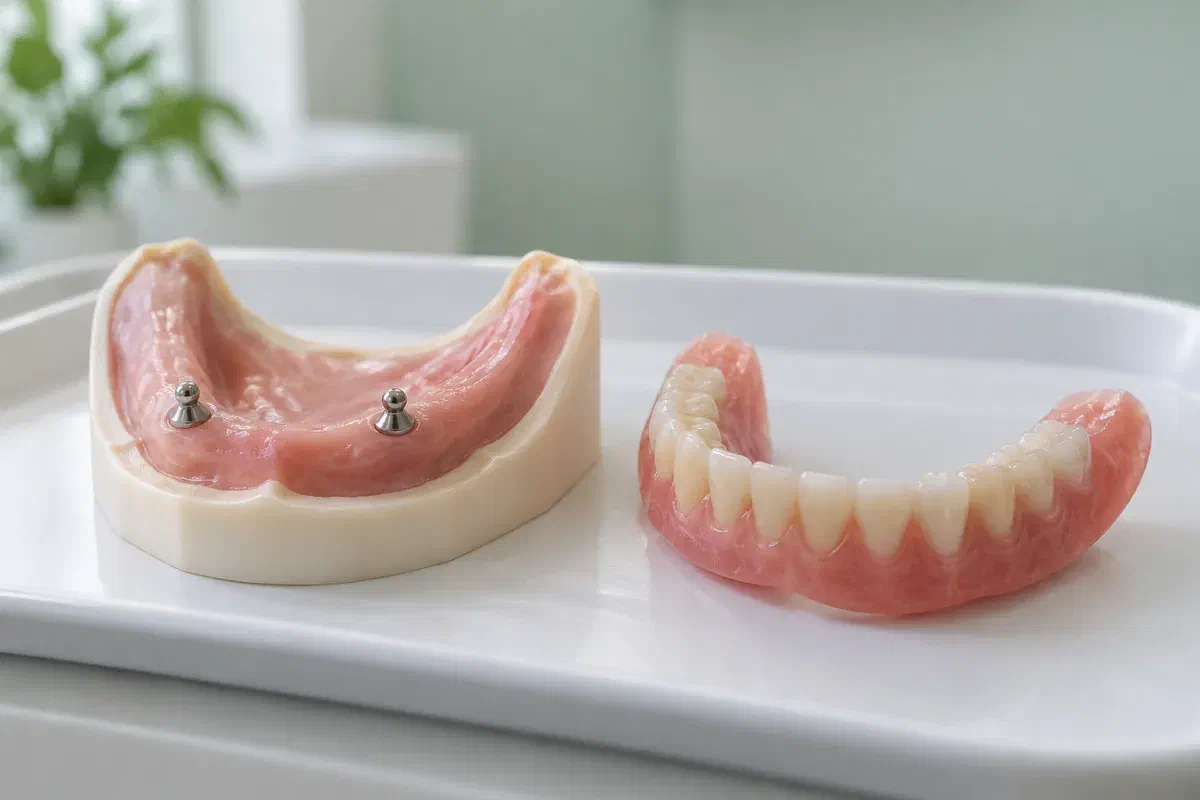
Implants help with certain denture concerns and not others, so the current appliance and the tissues under it still deserve examination. Knowing the true reason for looseness or soreness keeps the choice grounded in your mouth.
Describe when your denture moves and what has been adjusted so far. From there we can decide whether a refitted conventional denture, implant attachments or something else addresses the source.
Removing and cleaning a clip-in denture takes grip and some care; cleaning beneath fixed teeth takes patience and the right tools. Compare both honestly, along with feel and professional servicing.
Find out what the outlook is for those teeth and whether keeping them is realistic. If replacement is planned, it should cover the in-between period, temporary teeth and the steps after fitting.
Implants are not a match for everyone or every site. Your examination should explain your specific limitations and compare options that suit your health and the care you can give.
In a suitable mouth, an implant connection may hold a denture more securely or steadily than gum support alone. Ask what that would mean practically: how firmly it should sit, how long it may take to adapt, and whether it might reduce the adhesive and adjusting you do now.
More stability does not mean less cleaning, and it cannot guarantee you will chew anything you like. Surgery, healing, maintenance appointments and possible repairs are part of the deal. Considering them with the benefits helps you choose a plan that fits both your mouth and your day.
Patient information: Cleveland Clinic — removable and fixed implant-supported dentures
Clip-in attachments and fixed restorations distribute support differently and are cleaned differently. Ask why one is recommended and how your routine would change with the other.
Tooth position, the material replacing lost gum and bone, and lip support influence how you look and talk. Ask which details can be reviewed at try-in and where adapting may take a little time.
Think about your abilities today and what might help later on. Access for cleaning, replacement of parts and professional checks should all make sense to you before you agree to treatment.
Treatment generally takes several visits, and a surgeon or another clinician may share the work. Ask for the order of steps, covering preparation, any temporary teeth, healing checks, the final fit and regular reviews.
The dentist checks your remaining teeth, gums, medical history and current appliance. Records and imaging help determine suitability, and your thoughts on eating, speaking, handling and cost guide the conversation.
Removable and fixed designs are compared where suitable, along with the implant layout and alternatives. We go over surgical risks, extra treatment, interim teeth and which parts of the estimate might change.
The treating team works through the agreed sequence, confirming healing before each step. Impressions, fabrication and try-ins develop the appliance around its support, at a pace set by your clinical needs.
At fitting, the appliance is checked and explained. You practise taking it out and putting it in if needed, rehearse the cleaning routine with the tools you will use, and book your early and long-term reviews.
Healing-stage instructions are separate from long-term care of the finished appliance. Keep the written guidance near the bathroom sink, and ask whenever wear, cleaning, diet or contacts are unclear.
Take the overdenture out as instructed, clean it and the attachments, and care for the gums underneath. Fixed teeth are cleaned where they sit, around and beneath; never try to unfasten them.
Ask which brushes, interdental aids, soaks and storage suit your materials and attachments. Scalding water, bleach-based products and improvised tools can damage denture parts.
Tell us about sore spots, the denture loosening again, difficulty removing it or a change in your bite. Components and materials wear over time, even when the implants stay healthy.
Ask anything about design or routine, however long you have worn dentures. Implants bring new choices about treatment, handling and the care that follows.
Book a visit to our Bronte Street practice to talk about the denture you have or teeth you may need to replace. We will show how each design is cleaned, explain the treatment stages and outline the upkeep involved.
Bring your current dentures and the cleaning products you use now, plus any past implant or restorative records.
