A denture that lifts or slides at meals
Describe when it moves and what has already been done. We can then weigh a better-fitting conventional denture, implant attachments or a different approach against the true cause.


A clip that suddenly feels weak, a sore spot under the base, a screw cover that falls out on a Sunday: knowing what to do matters when you live a drive away. For households in Caledon, we explain implant denture designs with an eye on what can go wrong and how follow-up works.
Even a well-made appliance has small parts that can loosen or wear. That is easier to accept when you understand the design from the outset. An implant denture uses implants set into the jaw to help retain or support teeth that replace many missing ones, and its connection type decides what can go wrong.
On a removable overdenture, attachments grip the appliance while the gums still carry part of the load, and you lift it out daily to clean. Retentive inserts are the usual wear point. A fixed restoration leans more fully on the implants, stays in until a clinician removes it, and has screws or components that are checked professionally.
Caledon covers a lot of largely rural ground, from Bolton to smaller villages, so knowing when to phone before driving in is useful. At the first visit we talk about your goals, review bone, gums and health, and explain each realistic option along with how problems would be handled.
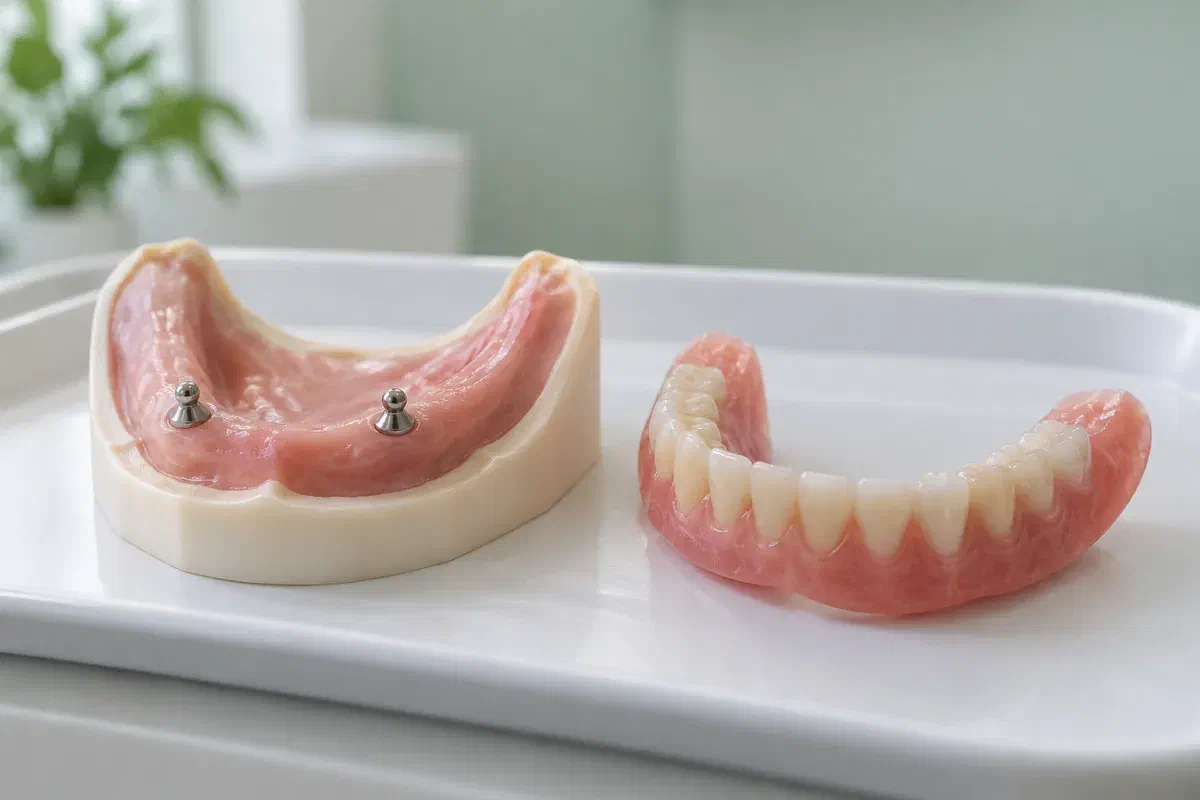
Implants can address some denture complaints, though the existing appliance and the tissues under it still deserve a careful exam. Identifying the real cause of soreness or movement helps you invest in the right solution.
Describe when it moves and what has already been done. We can then weigh a better-fitting conventional denture, implant attachments or a different approach against the true cause.
A fixed appliance swaps daily removal for careful cleaning beneath it and periodic professional servicing. Consider grip, cleaning, comfort and the follow-up each design is likely to need.
Ask how long they might last and whether any are worth keeping. A replacement plan should explain what you would wear in between, the temporary stage and each step after the first fitting.
Implants are not right for every person or every part of the jaw. The examination should describe your particular limitations and compare the choices realistically open to you.
When implants suit your mouth, connecting the denture to them may improve retention or stability compared with gum support alone. Ask how that should feel in daily life: how firmly it ought to sit, how long settling in might take and which of your current problems it is designed to reduce.
No implant denture is free of care, and none guarantees you can eat without limits. There is surgery, a healing period, ongoing maintenance and the chance of repairs. Thinking about those commitments now means fewer surprises later and a plan you are ready to live with.
Patient information: Cleveland Clinic — removable and fixed implant-supported dentures
Clip-in attachments and a fixed restoration support teeth differently and fail in different ways. Ask why one is proposed for you and how the other would differ in daily use and repairs.
Tooth position, material replacing lost gum and bone, and support for the lips shape how the appliance looks and sounds. Ask which features can be reviewed during try-in and where adapting may take time.
Think about what you handle now and what a family member might help with later. Cleaning, replacing worn components and professional checks should be explained clearly before treatment.
Implant denture treatment usually takes several appointments and may include a surgeon or another clinician. Ask for the order of events, from preparation and interim teeth to healing reviews, final fitting and a plan for maintenance and problems.
The dentist checks any natural teeth, the gum tissue, your health history and the appliance you wear. Records and imaging help gauge suitability, while your priorities for eating, speech, handling and cost shape the discussion.
Where both apply, removable and fixed designs are weighed with the implant layout and alternatives. Surgical risks, any extra treatment, temporary teeth and parts of the estimate that might change are explained.
The team follows the plan you agreed, confirming healing before progressing. Once the implants are ready, records and try-in visits let the laboratory shape your new teeth to suit them, and the pace depends on how your mouth responds.
On fitting day, we check the bite and comfort and show you how the appliance works. Rehearse taking it out and seating it if your design allows, go over cleaning, book your reviews and note what to do if something loosens.
Healing-period care differs from looking after the finished appliance. Keep written guidance handy and check with us on wearing time, cleaning, eating and contact details, including what to do on days we are closed.
An overdenture is lifted out as instructed so it and the gums beneath can be cleaned. Fixed teeth stay in and are cleaned around and under them; leave their screws and connections to the clinic.
Find out which brushes, soaks and storage are safe for your materials. Don’t use glue, very hot water, bleach or improvised tools, and don’t try to refit a loose part yourself.
Tell us if the denture loosens, a pressure spot develops, removal gets harder or your bite shifts. Inserts and denture materials wear, and catching it early can make servicing simpler.
Ask about design, stages and what happens if something goes wrong, however long you have worn a denture. Choosing implants means new decisions about surgery, daily handling and the help you will want after fitting.
Book an appointment at our Bronte Street practice to discuss your current denture or replacing many teeth. We will look at suitable designs, explain the stages and walk you through upkeep and what to do if something changes.
Bring your dentures, any loose or broken parts and details of past implant or restorative treatment.
