Speech that clicks, whistles or slurs
Note which sounds are affected and when the denture shifts. That helps us decide whether a better-fitting conventional denture, implant retention or another change would make the difference.


A whistle on certain words, lips that look sunken, a smile you hide in photos: these matter as much as chewing. From Campbellville, talk with our Milton dentist about how implant-supported dentures are designed for appearance and speech, and the care and stages they involve.
Talk to denture wearers and you hear about more than food. A loose appliance can click while speaking, and lost gum and bone can change how the lips and cheeks are supported. Implants set into the jaw can add retention or support to a denture replacing many teeth, which may help it stay steady as you talk.
The design affects appearance too. An overdenture clips onto implant attachments, rests partly on the gums and comes out for cleaning; its flange can help support the lips. A fixed restoration relies more completely on implants and is removed only in the clinic, and how much material it carries varies with your anatomy.
Coming from Campbellville, you may prefer to keep trips purposeful, so we use the first visit well. We ask what bothers you about your smile, speech or comfort, review bone, gums and health, and talk through which designs could realistically address those priorities.
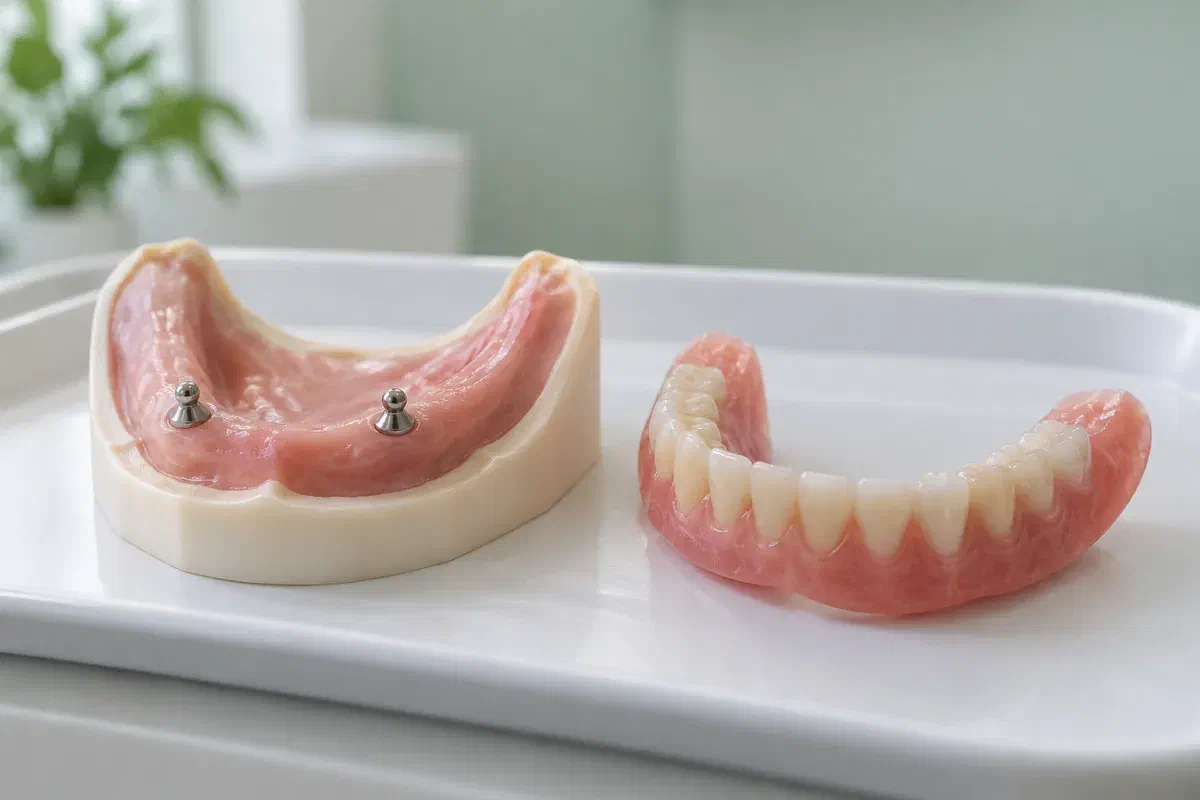
Implants can help with some issues and not others, so the existing appliance and the mouth supporting it need a thorough look. Knowing why a denture moves, rubs or changes your appearance points treatment at the actual problem.
Note which sounds are affected and when the denture shifts. That helps us decide whether a better-fitting conventional denture, implant retention or another change would make the difference.
A fixed design is not automatically more natural in appearance or easier to live with. Compare lip support, cleaning access, removal, grip and the professional care each option needs.
Ask how much longer those teeth are expected to last and whether keeping some is practical. A good plan covers how you will look and speak during the transition, as well as after the first fit.
Implant treatment is not possible for every person or every site in the jaw. Your examination should explain the constraints you face and compare realistic options for your health.
When implants are appropriate, connecting a denture to them may help it stay more securely in place than gum support allows. Ask what that might mean for you, such as whether it may reduce movement during speech, how long adapting could take and what to expect at mealtimes.
Implants don’t take away the need for daily care or guarantee you can bite into anything. There is surgery and healing to consider, regular maintenance and occasional repairs. Thinking about those together with the potential gains helps you settle on a plan that suits you.
Patient information: Cleveland Clinic — removable and fixed implant-supported dentures
An attachment-retained overdenture and a fixed restoration support teeth and soft tissues differently. Ask why one is recommended for you and how appearance or care would differ with the other.
Tooth shade, shape and position, plus the material that replaces lost tissue, are often checked at try-in. Ask which features can be adjusted at that stage and which may need time to feel natural.
Think about what you manage today and what help might be useful later. Cleaning access, part replacement and professional reviews should be understood from the first conversation.
Expect several appointments, possibly with a surgeon or other clinician. Ask for the order of visits, including preparation, interim teeth, healing reviews, try-ins, the final fitting and ongoing checks.
The dentist reviews remaining teeth, gums, health history and your present denture. Records, photos and imaging help judge suitability, and your concerns about appearance, speech, chewing and cost guide the talk.
Removable and fixed designs are compared where they apply, with implant arrangement and alternatives. Surgical risks, extra treatment, temporary teeth and parts of the estimate that could change are discussed.
The treating team follows the agreed sequence and confirms healing before moving on. Try-ins let you see and hear the developing appliance, with timing set by your clinical situation.
At fitting, the team checks the bite and how the denture looks and sounds. Practise any removal and insertion, learn to clean it and arrange your first review and maintenance.
Healing guidance differs from long-term care of the completed denture. Keep the written instructions and ask about wear time, cleaning, eating and contact arrangements as you move through each stage.
An overdenture comes out on the routine you are given for cleaning and gum care. A fixed restoration is cleaned in position, around and beneath; its connections are not for releasing at home.
Ask which brushes, cleaners and storage suit your denture and attachments, to protect the surface and shade. Avoid boiling water, harsh household products or improvised tools.
Report sore spots, renewed looseness, difficulty removing the appliance, a bite that changes or speech that worsens. Attachments and materials wear, so servicing may be needed even with stable implants.
Bring any questions about design and stages, whatever your history with dentures. Implants add decisions about treatment, appearance, handling and aftercare.
Arrange a consultation with our team on Bronte Street to talk about your current denture or replacing a number of teeth. We will discuss appearance, speech and stability, explain the stages and outline the care involved.
Bring your dentures and, if you like, an older photo of your smile to help guide the discussion.
