Your denture moves, and you take several medications
List your medications and describe when the denture shifts. That helps us weigh a refitted conventional denture, implant support or other steps against what your health allows.


Diabetes, blood thinners, bone medications or a history of smoking can all shape whether implants are suitable and how healing is planned. If you’re coming from Erin or Hillsburgh, our Milton dentist reviews your health first, then explains realistic denture options and their care.
Implants involve a surgical step and a period of healing, so your general health matters from the start. Placed in the jaw, implants can help retain or support a denture that replaces many teeth. Conditions, medications and habits that affect healing or bone are weighed carefully before anything is recommended.
Once suitability is clear, the design question follows. A removable overdenture clips to implant attachments and still rests partly on the gums, coming out for cleaning. A fixed restoration is carried more fully by implants and taken off only at the clinic. The surgery and upkeep involved can differ between them.
Erin is a rural town, and planning around a medical appointment or a ride can take effort. We keep that in mind. After hearing what you want to change, we review your health history and medications, examine bone and gums, and say plainly whether we need input from your physician. Sorting that out early tends to prevent delays once treatment is under way.
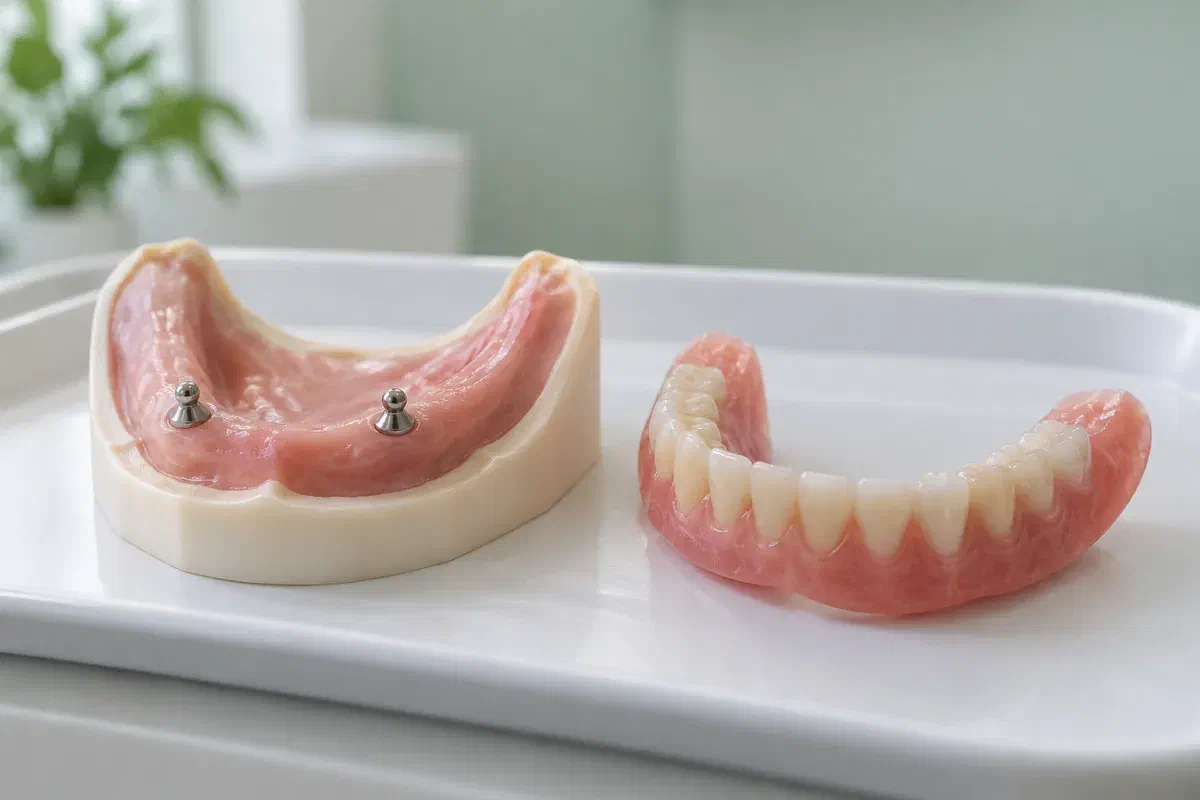
Implants may help with certain denture problems, but your health, current appliance and supporting tissues all need assessing. Knowing why a denture is unstable, and whether implants are safe for you, keeps the choice well founded.
List your medications and describe when the denture shifts. That helps us weigh a refitted conventional denture, implant support or other steps against what your health allows.
Different designs can involve different amounts of surgery and different home care. Discuss cleaning access, removal, grip, comfort and professional maintenance in light of your medical needs.
Ask about their outlook and the alternatives, and whether your health affects how extractions should be handled. The plan should describe the transition, temporary teeth and what follows the first fit.
Implant treatment is not suitable for everyone. Some health conditions or treatments may make it unwise or require extra precautions. Your examination should explain this and compare realistic alternatives.
If implants suit your health and your jaw, connecting a denture to them can make it more retentive or stable than gum support alone. Ask how the expected benefit would show in daily life: how securely it should sit, how long you may take to adapt and which concerns it may help.
Implants bring responsibilities and cannot promise unrestricted eating. Surgery, healing, regular upkeep and possible repairs are part of the commitment, and some health conditions can affect how the gums around implants respond. Weigh those alongside the benefits.
Patient information: Cleveland Clinic — removable and fixed implant-supported dentures
A removable attachment denture and a fixed restoration handle support differently. Ask why the recommended design suits your mouth and health, and what the alternative would involve.
Tooth position, the material replacing lost tissue and lip support affect look and feel. Ask which features can be checked at try-in and where some adaptation will still be normal.
Consider what you manage now and how changes in health or dexterity might affect care later. Cleaning, component replacement and reviews should be clear from the start.
Expect several visits and possibly a surgeon or specialist. Ask for the order of treatment in writing, including any medical coordination, preparation, temporary teeth, healing checks and the final fit. Stages may be spaced further apart if your health calls for it.
We go over your medical history, medications and habits, and examine any teeth, the gums and your current denture. Imaging helps assess bone, and we may ask to coordinate with your physician.
Where appropriate, removable and fixed designs are compared, along with the implant arrangement and alternatives. Surgical risks in your case, precautions, extra treatment and estimate changes are explained.
The treating team follows the agreed sequence with any precautions your health requires, checking healing before the next step. Fabrication and try-ins follow, with timing based on how you heal.
At fitting, the team checks the appliance and explains its use. Practise any removal and placement, learn the cleaning routine and set dates for early review and maintenance.
Post-surgical instructions are different from everyday care of the finished denture. Keep your written guidance, follow advice about medications, and ask about wear, cleaning and diet at each stage.
An overdenture comes out on the schedule provided for cleaning and to rest the gums. A fixed restoration is cleaned around and below while it stays put; do not try to release it.
Ask which brushes, soaks and storage suit your appliance and attachments. Avoid boiling water, harsh household products and improvised tools that could damage it.
Report sore areas, renewed looseness, trouble removing the appliance or a changed bite. Let us know about changes in your health or medications too, since they can matter for implant care.
Ask anything about health, design or stages. Implants add decisions about surgery, healing and the care needed afterwards, and your medical history is part of every one.
Make an appointment with us on Bronte Street and bring your medication list. We will review your health and current denture, discuss suitable designs, explain the treatment steps and outline the care involved.
Bring your dentures, a complete medication list and contact details for your physician.
