A partial denture that no longer copes
Tell us when it shifts and what has been tried. We can then consider whether reworking it, a full conventional denture, implant attachments or another option best addresses what is happening.


Told that several of your remaining teeth may not last? Before anything is removed, it helps to understand every route forward. Our Milton team walks people from Halton Hills through keeping teeth where reasonable, temporary arrangements, and how an implant denture might fit later.
Hearing that you may lose most of your teeth raises urgent, personal questions. What will I wear in the meantime? Will I be able to eat at a family dinner? An implant denture is one possible destination, using implants in the jaw to retain or support an appliance that replaces many teeth, but the path there matters just as much.
There are two broad designs at that destination. An overdenture clips to implant attachments, still rests partly on the gums, and you take it out for cleaning. A fixed restoration is carried more fully by the implants and is removed only by a clinician. The choice affects the steps leading up to it as well.
From Georgetown, Acton, Glen Williams or the smaller hamlets of Halton Hills, people often want the outline before any extraction is booked. That is the right instinct. We start with what matters to you, assess each tooth’s outlook along with bone, gums and health, and only then talk about replacement.
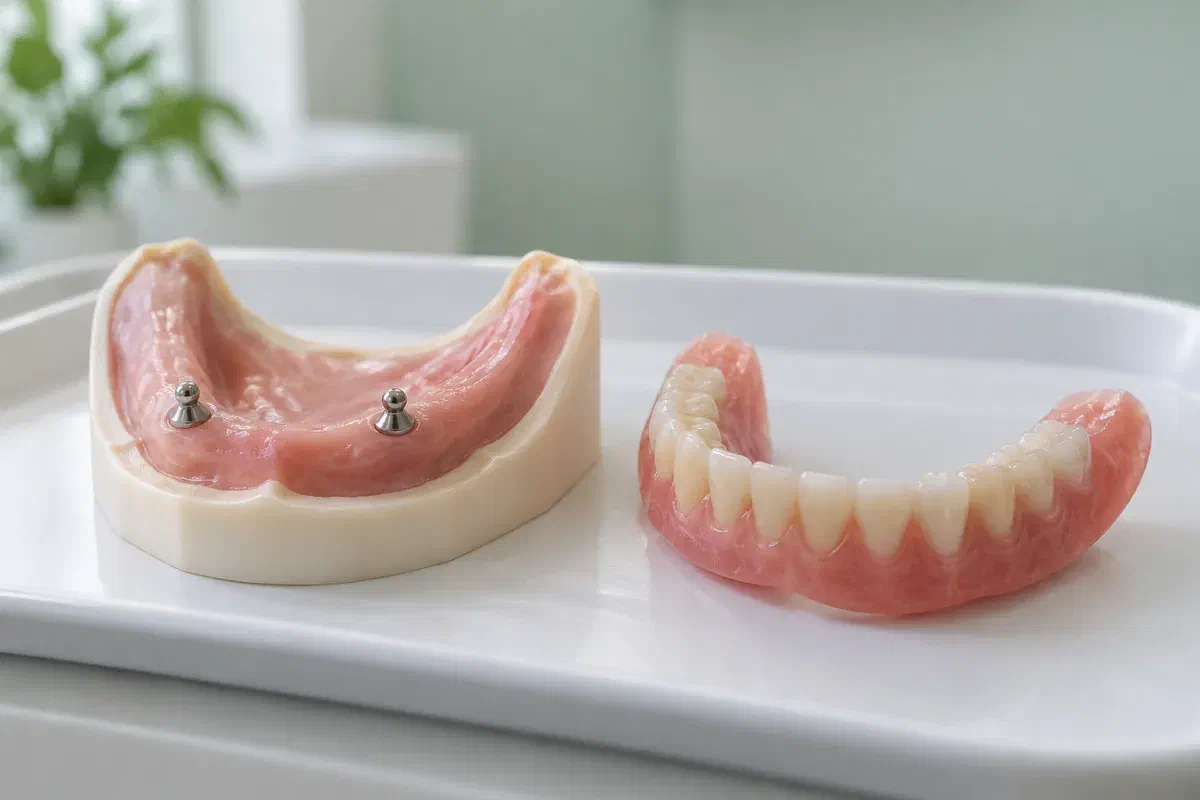
Implants may suit some situations and not others, and the teeth or appliance you have now still need careful assessment. Knowing the real reason for discomfort, looseness or failing teeth helps you avoid a decision made for the wrong reasons.
Tell us when it shifts and what has been tried. We can then consider whether reworking it, a full conventional denture, implant attachments or another option best addresses what is happening.
Each has demands. Think about removing and cleaning an overdenture, reaching beneath a fixed design, the hand strength involved, how each feels and the professional upkeep both carry.
Ask how long each is likely to last and whether any could reasonably be saved. A sound plan explains the transition, what temporary teeth you would wear and each stage after the first fit.
Implants are not appropriate for every person or every area of the jaw. Your examination should explain the limits in your case and compare the alternatives you can realistically choose.
If implants suit your mouth, connecting the final denture to them can improve its retention or stability compared with gum support alone. Ask how that would feel in practice: how it should sit while eating, how long adjusting might take and which worries it could address.
Even the best outcome still depends on care, and implants do not promise unrestricted chewing. Surgery, healing, upkeep and future repairs all come with this kind of treatment. Hearing about those alongside the benefits helps you decide whether the whole journey is right for you.
Patient information: Cleveland Clinic — removable and fixed implant-supported dentures
An attachment-retained overdenture and a fixed restoration provide support in different ways. Ask why one is proposed for you, and what the alternative would change about treatment and daily life.
Tooth position, material replacing lost gum and bone, and lip support all affect appearance and speech. Ask what will be reviewed during the try-in stages and where some adjustment period is normal.
Consider your current abilities and what help may be useful later on. How you will clean the appliance, which parts may be replaced and how often it should be reviewed belong in the plan from the beginning.
The journey usually takes several appointments, and other clinicians may be involved. Ask for an outline that includes extractions or preparation, temporary teeth, healing reviews, the final fit and ongoing care.
The dentist reviews your remaining teeth, gums, medical history and any appliance you wear. Records and imaging inform suitability, while your concerns about eating, speaking, handling and cost guide the discussion.
Where appropriate, removable and fixed designs are compared alongside implant layout and alternatives. We clarify surgical risks, extractions, temporary arrangements and which estimate items may shift.
The treating team follows the agreed sequence and confirms healing at each point. Impressions, lab work and try-ins develop the final appliance, with timing that depends on how your mouth responds.
At fitting, the team checks the appliance and explains its use. You practise any removal and insertion, learn the cleaning routine and arrange your early review and maintenance.
What you do while extraction or implant sites heal is different from caring for the finished appliance. Keep your written guidance, and ask about wearing temporary teeth, cleaning, food and contacts at each stage.
An overdenture is taken out as directed for its own cleaning and to care for the gums. Fixed teeth are cleaned in the mouth, around and beneath them, and should never be released at home.
Ask which brushes, cleansers and storage suit the denture and its attachments. Boiling water, harsh cleaners and makeshift tools can do harm, even if they once worked on a partial.
Mention pressure spots, movement returning, trouble removing the appliance or a bite that feels different. Attachments and materials wear, so servicing may be needed with healthy implants.
Ask about design and stages, whether this is your first denture or not. Implants add decisions about treatment, temporary arrangements and the care needed afterwards.
Book an appointment at our Bronte Street practice to talk about teeth that may need replacing or the appliance you wear now. We will explain your options, the transition and the care each path involves.
Bring any current denture or partial and recent dental records, if you have them.
