A denture that floats or tips
Say when it moves and which adjustments have already been tried. With that history, we can consider whether a better conventional denture, an implant approach or another option deals with the real cause.


Snap-on, all-on, overdenture, hybrid: the names for implant dentures can blur together. If you are coming from Mississauga, our Milton dentist can explain what a proposed appliance actually is, where its support comes from, and how it compares with the alternatives before you choose.
Ads and brochures use many names, and they do not always mean the same thing from one office to the next. Underneath the marketing, an implant denture is simply a replacement for multiple missing teeth that relies on implants in the jaw for added retention or support. The useful questions are how it connects and who removes it.
Some designs, often called overdentures or snap-on dentures, click onto implant attachments yet still rest on the gums; you take them out to clean. Others are fixed and depend more completely on the implants, coming off only when a clinician removes them. Each one has its own cleaning method and maintenance pattern.
From Mississauga, including western neighbourhoods such as Meadowvale and Churchill Meadows, people often arrive with a printout or a quote. Bring it. We can talk through what it describes, then examine your bone, gums and health and discuss what you actually want to change about your teeth.
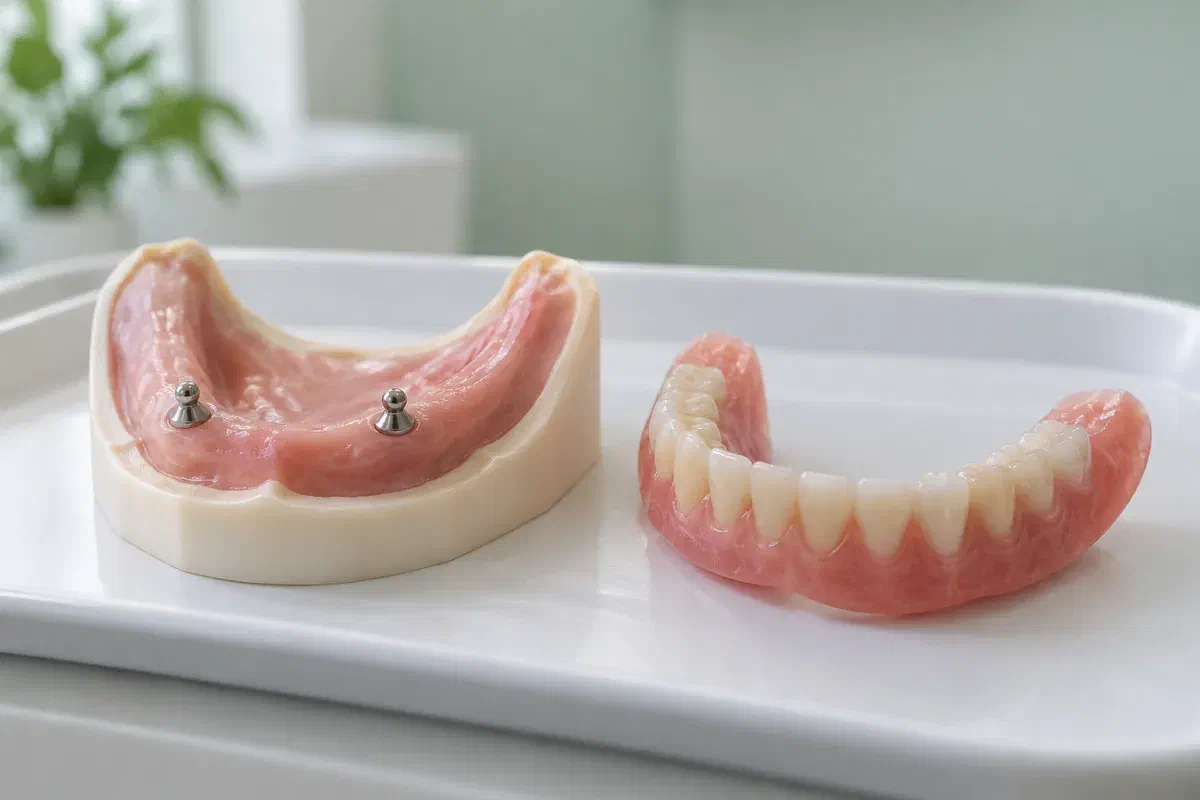
Implants can address selected denture issues, but the present appliance and the tissues supporting it still need a proper exam. Identifying the actual source of instability or soreness helps you avoid buying a solution to a different problem.
Say when it moves and which adjustments have already been tried. With that history, we can consider whether a better conventional denture, an implant approach or another option deals with the real cause.
The two are not like-for-like products. Weigh removal, how you would clean, the dexterity required, how each feels and the professional upkeep involved, rather than assuming fixed is the simpler or better option.
Ask about the prognosis of the teeth in question and any reasonable way to keep them. Any replacement plan should set out the transition, temporary teeth and what comes after the first fitting.
Implant treatment cannot be offered to everyone or at every site. The examination should explain the constraints that apply in your case and compare choices that are genuinely available to you.
For a suitable candidate, joining a denture to implants may improve its retention or stability compared with gum support alone. Ask for the expected improvement in concrete terms: how the appliance should sit, what adaptation may be involved and which current complaints it is designed to help.
Implant support does not end the need for care, nor does it guarantee you can eat anything. Surgery, healing, maintenance and potential repairs come with the territory. Hearing about those alongside the benefits helps the plan fit your clinical needs and the way you want to live.
Patient information: Cleveland Clinic — removable and fixed implant-supported dentures
A removable attachment denture and a fixed restoration approach support differently. Find out why the proposed one suits your mouth and what you would gain or lose with the other approach.
Tooth arrangement, the amount of material standing in for lost tissue and how the lips are supported affect look and feel. Ask which features can be reviewed during fabrication and where adaptation may still be needed.
Think about what you can manage now and what support may help later. Cleaning access, component replacement and professional review should all be clearly part of the plan from day one.
This is rarely a single-visit treatment, and more than one clinician may be involved. Ask for the order of appointments, including preparatory work, any interim appliance, healing checks, final fitting and long-term reviews.
The dentist reviews remaining teeth, gum tissue, health history and your present denture. Records and imaging help determine suitability, and your concerns about chewing, speech, handling and budget guide the conversation.
Removable and fixed designs are discussed where appropriate, with the proposed implant layout and alternatives. Surgical risks, additional treatment, interim teeth and which parts of the estimate could change are explained.
The treating team carries out the agreed sequence and confirms healing before moving forward. Impressions, fabrication and try-ins develop the appliance around the established support, with timing set by your situation.
At the fitting, the appliance is checked and its use explained. Practise any removal and insertion, learn how to clean it, and confirm your early review and future maintenance appointments.
Care during the healing period differs from care of the completed appliance. Keep the written instructions and ask whenever you need clarity on wear, cleaning, diet and who to contact.
An overdenture comes out as directed for cleaning and so the gums can be cared for. A fixed restoration is cleaned in place around and underneath; don’t attempt to undo its connections yourself.
Ask which brushes, cleaners and storage suit the denture materials and attachments. Steer clear of very hot water, household chemicals and improvised tools, whatever works on other appliances.
Report sore spots, renewed movement, trouble removing the appliance or a change in your bite. Components and denture materials wear, so maintenance may be required while the implants stay stable.
Bring your questions about design and stages, whether you are new to dentures or have worn them for years. Implants add decisions about treatment, handling and aftercare.
Book time at our Bronte Street practice to discuss your current denture, a quote you have received or plans to replace multiple teeth. We will review suitable designs, explain the sequence and outline the care each one involves.
Please bring your dentures, any quotes or treatment plans, and information about past implants or restorative work.
