The crown rocks or lifts slightly
Tell the team whether the movement is new or has happened before. Do not pull or twist the crown to find out how loose it is; its relationship to the tooth needs professional assessment.


A crown that rocks, shifts, or feels different when you bite needs an assessment of both the restoration and its supporting tooth. Arrange loose dental crown treatment in Milton to understand the cause and whether resecuring, repairing, or replacing the crown is appropriate.
A crown covers a prepared natural tooth and depends on a suitable fit and attachment to stay in place. When it begins to move, the problem may involve the cement, the crown itself, or the tooth and any foundation beneath it. The feeling of movement tells you something needs checking, but it does not identify the repair.
A crown can look intact while the supporting tooth needs attention. Equally, a loose crown does not automatically mean the tooth is beyond repair or that a new crown is necessary. The dentist needs to assess the restoration and what holds it, including any decay, fracture, or change in fit that could affect the next step.
At Milton Dental Clinic, describe when you first noticed the change and whether it occurs during biting, cleaning, or touching the area with your tongue. Mention recent treatment and any pain or swelling. We can use that information to arrange an assessment and explain the options once the cause is clearer.
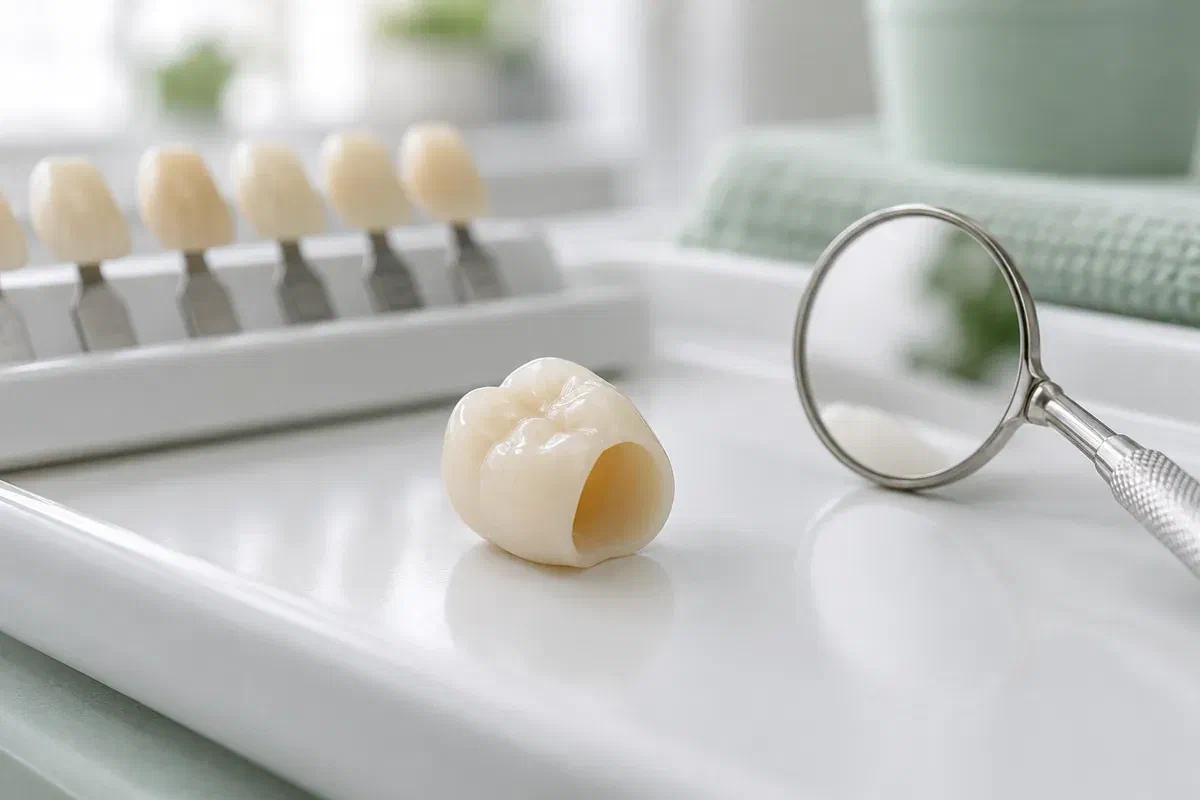
You do not need to wait for the crown to fall out before contacting the clinic. Explain what feels different and avoid repeatedly testing the movement, which can make the situation harder to manage.
Tell the team whether the movement is new or has happened before. Do not pull or twist the crown to find out how loose it is; its relationship to the tooth needs professional assessment.
A crown that seems to meet first or shift during chewing needs checking. Describe the sensation rather than repeatedly biting hard on it to reproduce the problem for yourself.
Changes in food trapping, temperature sensitivity, or taste can help guide the examination. These symptoms have more than one possible explanation and should be considered alongside the crown's fit and the condition of the tooth.
Call promptly about a loose crown. Mention significant pain, swelling, a recent injury, or a component that seems likely to detach so the team can advise on the appropriate timing.
If the crown remains sound, fits appropriately, and has suitable tooth support, resecuring it may be an option. That decision follows examination and preparation; it is not simply a matter of adding cement to any crown that moves.
When the tooth or crown has another problem, identifying it first helps avoid a repair that leaves the cause unresolved. Ask what the dentist has found, which parts can be retained, and why the proposed treatment is expected to provide a more dependable restoration.
Patient information: Cleveland Clinic — dental crown care and signs to report
The visible crown and its supporting tooth need to be considered individually. Understanding which part is moving helps explain why a straightforward recementation may be suitable in one case and inappropriate in another.
The assessment may reveal that the tooth's foundation needs attention before coverage can be restored. Ask how much sound structure remains and what that means for the available treatment choices.
A first visit may involve assessment or an interim measure while further treatment is planned. Clarify whether the proposed work is the final repair and what restrictions or follow-up apply if it is temporary.
The visit starts with understanding the problem and your symptoms. The extent of treatment depends on the findings, and additional appointments may be needed if the tooth or restoration requires more work.
The dentist asks about the crown, previous treatment, and how the change began. The tooth, gums, bite, and restoration are assessed, with imaging or other tests when they would help answer a clinical question.
If removal or further inspection is needed, the dentist explains the reason and relevant risks. The aim is to determine whether the existing crown and its foundation remain suitable for the proposed repair.
Discuss the findings, alternatives, and estimated fee before proceeding. A suitable crown may be recemented, while decay, damage, or inadequate support may require a different restorative plan.
After treatment, the fit and bite are reviewed as appropriate. Ask about eating, cleaning, temporary restrictions, and what to do if movement or discomfort returns before the next planned visit.
Contact the clinic for advice about your particular crown. Instructions may differ for a temporary crown, a definitive restoration, and a tooth that has lost part of its supporting structure.
Avoid chewing hard or sticky foods on the affected area while awaiting advice. Do not keep moving the crown with your tongue or fingers to see whether it has become more secure.
If it comes out, place it in a clean container and bring it to the appointment. Do not glue it back, leave a detached crown loose in your mouth, or try to force it onto the tooth.
Ask when to resume normal eating and how to clean around the crown. Report a bite that feels high, persistent symptoms, or renewed movement rather than assuming that repeated loosening is expected.
These questions address a crown supported by a natural tooth. If your crown is attached to an implant, mention that when booking because the supporting components and repair approach are different.
Contact our Bronte Street clinic about a crown that feels unstable. We can assess the restoration and its supporting tooth, discuss what can be retained, and explain a suitable repair plan.
For pain, swelling, or a crown at risk of detaching, please call and describe the concern.
