A faint click or lift
Tell us if you have felt this before or if it is new. It is tempting to see how far it will go, but please do not pull or wiggle the crown; the dentist needs to assess how it is sitting.


A crown that pops off during dinner, or one that was loose for weeks before it finally let go, needs the same thing: a careful look at the crown and the tooth it came from. Our team sees people from Burlington to work out the cause and plan the right repair.
It often happens with something chewy: a bite of bread or caramel, and suddenly a hollow cap is sitting on your tongue. Other times the crown has been loosening quietly and you finally notice the gap. Either way, the tooth underneath is now exposed, and it helps to know what to do next and what to avoid.
A crown stays on because it is shaped to fit a prepared tooth and is bonded to it. When it lets go, the reason could be the bonding material, a flaw in the crown, or a change in the tooth or the core built up inside it. The crown might look perfect while the tooth has decay or a crack, and the reverse is also possible. Losing a crown does not mean you have lost the tooth.
Call us, keep the crown safe, and be ready to describe what happened: what you were eating, whether it had felt loose beforehand, and whether there is pain, sensitivity, or swelling. Mention any recent treatment on that tooth. With that information, the team can suggest timing and arrange the assessment.
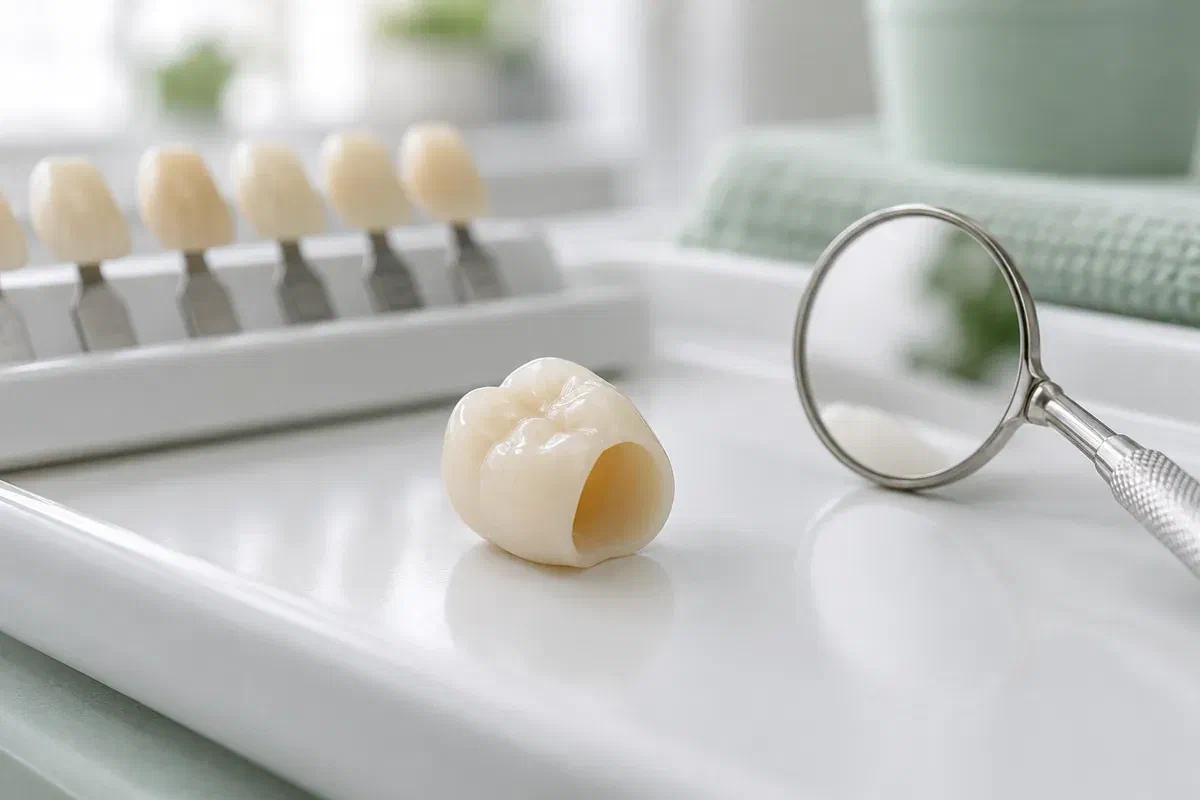
Many crowns give a hint before they detach. If you notice one of these, get in touch rather than waiting, and try not to keep testing the crown, since constant prodding can make things worse.
Tell us if you have felt this before or if it is new. It is tempting to see how far it will go, but please do not pull or wiggle the crown; the dentist needs to assess how it is sitting.
A crowned tooth that seems taller than its neighbours or shifts under pressure is worth mentioning. Describe it in words instead of biting down firmly to check it again.
Cold sensitivity, food wedging next to the crown, or an unusual taste may help guide the exam. Because each has several possible causes, the dentist interprets them with the crown’s fit and the tooth’s condition.
Call promptly, whether the crown is wobbling or already out. Let us know about strong pain, swelling, a recent knock, or a broken piece, so we can advise on how soon you need to be seen.
Sometimes the original crown can go back on. That is reasonable when it is intact, fits properly, and the tooth has enough healthy structure to hold it, and the dentist only knows after examining and preparing the area. Cement alone does not solve every lost crown.
If the tooth or the crown has another problem, dealing with it first means the repair is less likely to fail for the same reason. Ask what the dentist sees, which parts can be reused, and why the recommended treatment should last better.
Patient information: Cleveland Clinic — dental crown care and signs to report
The crown and the tooth are examined separately. Understanding where the failure started explains why rebonding is the right step for some people and not for others.
With the crown out, the dentist can assess the tooth’s foundation directly and may find it needs treatment before being covered again. Ask how much sound tooth remains.
The first visit may be an assessment or a temporary cover while more treatment is planned. Ask whether you are leaving with the final repair, and if not, what restrictions and next appointment apply.
We start by hearing what happened. How much is done depends on the examination, and further visits may be booked if the tooth or the crown needs more work.
The dentist asks about the crown’s age, earlier dental work, and how it came loose. The exposed tooth, gums, bite, and crown are checked, with X-rays or other tests where they help answer a clinical question.
The crown is inspected inside and out, and the tooth is assessed. If a still-attached crown needs to be removed, you will be told why and what the risks are.
Before treatment, you will discuss the findings, alternatives, and an estimate of the fee. A crown in good condition may be rebonded, while decay, damage, or limited support may need another restorative plan.
Once the work is complete, the fit and bite are reviewed where appropriate. Ask about food, cleaning, any temporary precautions, and what to do if the crown loosens or aches again before your next visit.
Phone the clinic for advice suited to your situation. A temporary crown, a permanent crown, and a tooth that has lost some of its structure may each come with different instructions.
Chew on the other side and skip hard or sticky foods there until you have advice. If the crown is still on but loose, avoid moving it with your tongue or fingers.
Place it in a small clean container and bring it with you. Please avoid superglue or household adhesives, do not leave it loose in your mouth, and do not force it back over the tooth.
Ask when you can return to normal meals and how to clean around the margin. If the bite feels high, symptoms linger, or the crown moves again, call us instead of assuming it will settle.
These answers are written for crowns on natural teeth. If your crown was attached to an implant, tell us when you call, since the parts and the repair process are different.
Call our Bronte Street clinic when a crown has come off or feels like it is about to. We will examine the crown and the tooth, discuss what can be reused, and explain the repair that fits.
In pain, swollen, or worried about the tooth? Please call us and explain what you are experiencing.
