Comments about a ‘wobbly’ tooth
Find out whether it is new or something they have felt for a while. Discourage them from pulling or twisting it to show you; how the crown sits on the tooth needs a dentist’s assessment.


Sometimes the person who notices a loose crown is not the one wearing it: an adult child hears a parent mention it, or a partner sees someone chewing on one side. Families in Caledon can book an assessment of the crown and tooth and get a clear explanation of the repair.
A loose crown is not always reported by the person who has it. Older relatives may play it down, and busy partners may decide to deal with it later. Often a family member is the one who spots the signs, such as favouring one side, avoiding certain foods, or mentioning that a tooth feels strange, and picks up the phone.
What is going on beneath the crown can vary. Crowns stay on through an accurate fit over a prepared tooth plus a cement bond, and either can weaken. The crown may have cracked, or the tooth or its build-up may have changed. A tidy-looking crown can still conceal decay or a fracture. On the other hand, movement is no proof that the tooth must go or that a whole new crown is required.
When you call on someone’s behalf, it helps to know when the problem started and whether the crown shifts with eating, brushing, or tongue pressure. Ask them about pain or swelling, recent dental work, and any medications or health conditions. With their agreement, you are welcome to come along to the appointment.
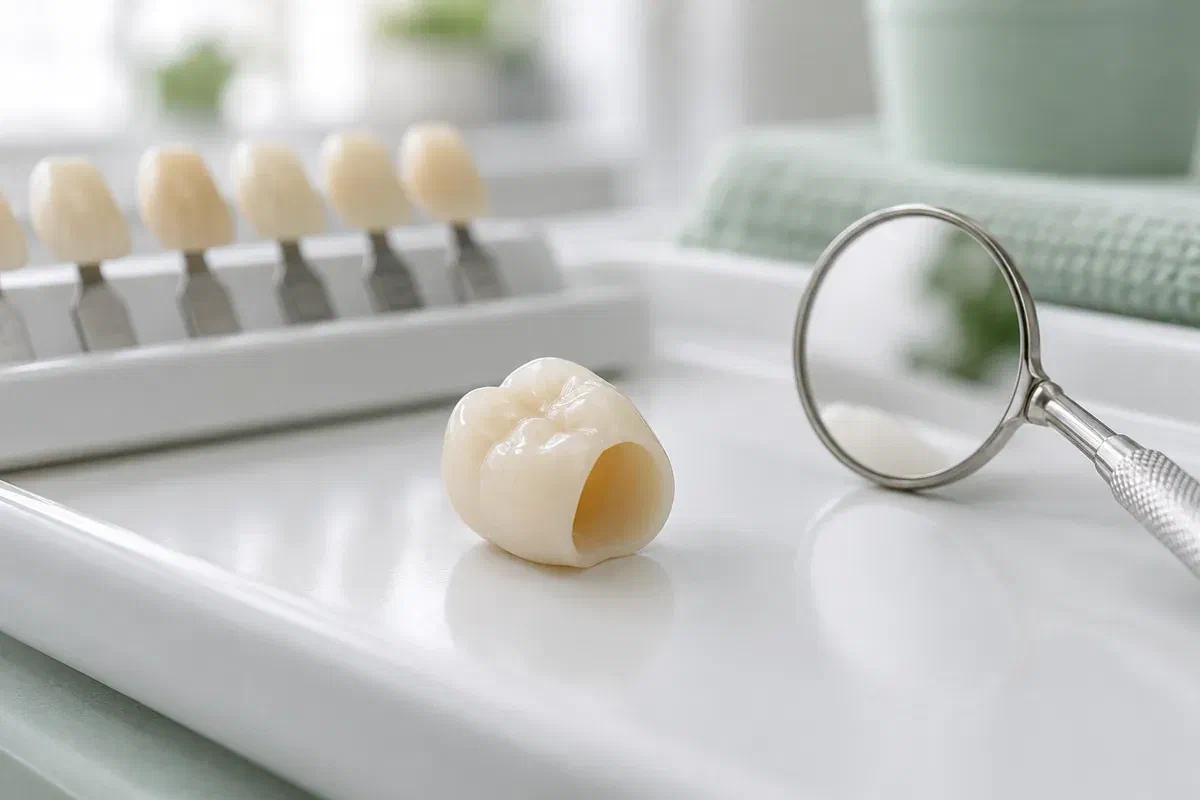
Don’t wait until the crown falls out. Encourage the person to describe what they feel, and to stop pressing or testing the crown, which can make treatment more difficult.
Find out whether it is new or something they have felt for a while. Discourage them from pulling or twisting it to show you; how the crown sits on the tooth needs a dentist’s assessment.
Favouring one side, or saying a tooth feels high, can mean the crown has shifted. They don’t need to bite hard on it to prove the point.
New sensitivity, food catching near the crown, or an odd taste may be part of the picture. Several things can cause these, so the dentist looks at them in light of the fit and the tooth’s condition.
Please call soon. Mention significant pain, swelling, a fall or injury, or a crown edge that seems about to break away, so the team can suggest how quickly the person should be seen.
If the crown is undamaged, fits correctly, and the tooth beneath it remains strong, it may be possible to resecure it after examination and preparation. A dab of fresh cement under any moving crown is not the standard approach.
When there is another issue with the tooth or crown, sorting it out first avoids a repair that soon fails. You and the patient can ask what the dentist found, which parts can be saved, and why the recommended option should be more reliable.
Patient information: Cleveland Clinic — dental crown care and signs to report
The crown and the tooth are assessed separately. That explains why a simple recementation suits some situations and is unsuitable in others.
The exam might show the core or remaining tooth needs work before a crown can be fitted again. Ask how much sound tooth there is and how that shapes the decision.
The first visit may be for assessment or a short-term measure while the full plan is arranged. Ask whether the work is final, and if not, what precautions and next visits apply.
The visit opens with the patient’s account, and yours if you are there. How much treatment follows depends on the findings, and more involved care can take additional appointments.
The dentist reviews the crown’s background, earlier treatment, general health and medications, then examines the crown, tooth, gums, and bite. X-rays are used where they would answer a clinical question.
Taking the crown off for inspection is sometimes needed, and the reason and risks are explained first. The aim is to see whether the crown and the tooth underneath can carry the planned repair.
Before treatment, the dentist goes over what was found, the choices, and the likely fee with the patient. A sound crown may be recemented; decay, damage, or thin support may require a different restorative plan.
Afterwards, the dentist checks the fit and bite. Ask about eating, cleaning, short-term restrictions, and which signs mean the patient should call before the next visit.
Ask the clinic for instructions suited to the specific crown. Temporary and permanent crowns are looked after a little differently, and so is a tooth with less natural structure left.
Softer meals and chewing on the other side reduce strain on the crown. Gently remind the person not to keep pushing it with their tongue or fingers.
Keep a small, clean, lidded container handy so the crown can be stored and brought in. Avoid glue, avoid leaving it loose in the mouth, and don’t press it back on.
Note when normal eating can resume and how the crown’s edges should be cleaned. If the bite feels high, discomfort continues, or the crown moves again, call instead of waiting for it to settle.
These answers concern crowns on natural teeth. If the crown is on an implant, mention it when booking, as the components and the repair are different.
Call our Bronte Street clinic to arrange an assessment for yourself or a family member. The dentist will examine the crown and tooth, walk everyone through the findings, and outline a suitable repair.
If there is pain, swelling, or the crown looks about to come off, please phone and describe what you’ve noticed.
