Movement when you press or bite
Jot down when you first felt it and whether this has occurred before. Please don’t try pulling or rotating the crown to see how loose it is; how it is sitting is something the dentist has to judge directly.


Making the trip from Etobicoke for a crown that has started to move? A phone call first helps us plan a well-organised assessment of the crown and its supporting tooth, so you leave knowing the cause and whether resecuring, repair, or replacement is the next step.
When the clinic is a longer trip, it is natural to want one appointment that sorts everything out. With a loose crown, the most useful thing you can do is give us a clear picture before you travel. That lets the team set aside the right time and have the dentist ready to examine both the crown and the tooth.
Crowns are held by a close fit over a prepared tooth and the cement between them. Movement can come from that cement, from damage to the crown, or from a change in the tooth or its core. Decay or a crack can be present under a crown that looks perfectly normal. And a crown that moves is not proof that the tooth is failing or that you will need a new crown.
Before you head out, tell us when you first noticed the change and whether it happens when you bite, brush, or touch it with your tongue. Mention recent treatment, a root canal if you have had one, and any pain or swelling. Being able to plan around those details often makes the visit more productive.
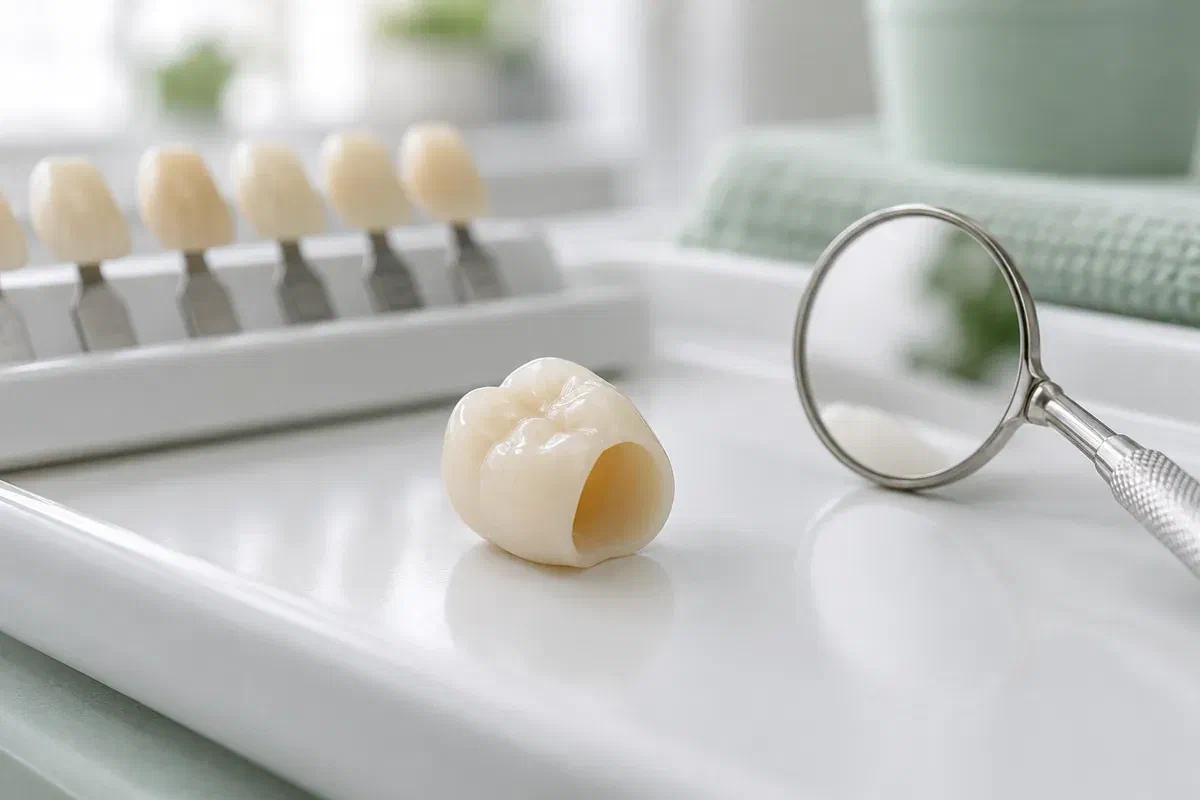
You do not have to wait for the crown to come out. Write down what you have felt so you can describe it clearly, and try not to keep testing the crown, which can make it harder to treat.
Jot down when you first felt it and whether this has occurred before. Please don’t try pulling or rotating the crown to see how loose it is; how it is sitting is something the dentist has to judge directly.
Early contact on the crown, or a shift under chewing pressure, is important to mention. Describe the sensation rather than clamping down on it to check whether it happens again.
Food lodging near the crown, sensitivity to temperature, or an unfamiliar taste can guide the examination. None of them pins down a cause by itself; the dentist fits them together with what the examination shows.
Call promptly about a moving crown. If there is severe pain, swelling, a blow to the mouth, or a fragment that looks likely to break away, mention it, because the team may suggest seeking care closer to home first.
A crown that is intact, fits as it should, and has solid tooth support may be suitable for resecuring. That is decided after the dentist examines and prepares the tooth. It is not a matter of adding cement under any crown that has started to move.
Any separate problem with the tooth or crown is best found before treatment, which spares you a repair that misses the cause, and possibly an extra trip later. Ask what the dentist has found, what can be kept, and why the proposed plan should be more reliable.
Patient information: Cleveland Clinic — dental crown care and signs to report
The crown and its supporting tooth are assessed on their own terms. Knowing which one has shifted explains why recementing is right in some cases and not in others.
Sometimes the build-up inside the crown, or the tooth around it, has to be treated before anything goes back on. Ask how much sound tooth remains and what that means for the number of visits.
Your first appointment may be an assessment or an interim repair while further work is planned. Ask whether today’s treatment is final and, if not, what to avoid and when the next visit should be.
Your description of the problem shapes the visit. How much is done depends on the findings, and more appointments may be needed when the tooth or crown requires more extensive treatment.
The dentist goes back over the details from your call and fills in any gaps about past treatment. Then comes a hands-on look at the crown, tooth, gums, and bite, and imaging is taken only when it would settle a specific question.
Taking the crown off for inspection is sometimes necessary, and you will hear the reasoning and the risks first. This stage answers one question: can the crown and what lies beneath it carry the repair being discussed?
Nothing proceeds until the findings, choices, and an estimated fee have been explained. A healthy crown may simply be rebonded. Where decay, a break, or thin support is found, a fuller plan is drawn up and its visits scheduled with your travel in mind.
Before you leave, the dentist confirms the crown seats properly and your bite feels right. It is a good moment to ask about meals, cleaning, short-term precautions, and who to phone if the crown loosens or aches on the way to your next booking.
Ask the clinic for guidance about your crown. Advice can be different for a temporary crown, a permanent one, and a tooth that is missing some of its supporting structure.
Favour soft food and chew on the opposite side while you wait for your appointment. Leave the crown alone rather than pushing at it to see whether it is still moving.
If the crown comes out, keep it in a clean, sealed container and bring it with you. Don’t glue it back, leave it loose in your mouth, or force it onto the tooth.
Before heading home, confirm when you can eat as usual and how to keep the crown’s edge clean. A bite that feels tall, symptoms that hang on, or fresh movement are reasons to phone, not to wait and see.
We have assumed the crown is cemented to one of your own teeth. Implant crowns rely on different hardware and are repaired another way, so please say so when you call.
Phone our Bronte Street team before you set out. We will plan the appointment around what you describe, examine the crown and tooth, and explain what can be kept and what comes next.
For pain, swelling, or a crown about to come off, please call first so we can advise on where and when to be seen.
