The same rocking as before
Tell us whether it feels like the earlier episode or different in some way. Resist pulling or twisting to compare; the relationship between crown and tooth needs to be assessed in the chair.


Second time this crown has come loose? Repeat movement is a signal to look harder at the cause, not just to recement again. For households across Halton Hills, our dentist reassesses the crown, its fit, and the tooth beneath before recommending what comes next.
The first time a crown loosens, recementing it can be entirely reasonable. When the same crown moves again weeks or months later, the more useful question becomes why. Something about the fit, the tooth underneath, or the forces on that crown may not have been resolved.
Crowns depend on two things working together: a close match between the crown and the shaped tooth, and a bond holding them in place. Repeated loosening can point to a fit that has drifted, a core or post that has weakened, decay under the margin, a crack, or heavy biting forces. A crown can look unchanged through all of this. Even so, a second episode does not automatically mean the tooth is lost or a new crown is unavoidable.
When you call, mention the earlier repair: roughly when it was done, by whom if you know, and how long the crown stayed firm. Say whether the movement now comes with chewing, brushing, or tongue pressure, and note any pain or swelling. That history is often the most valuable piece of the puzzle.
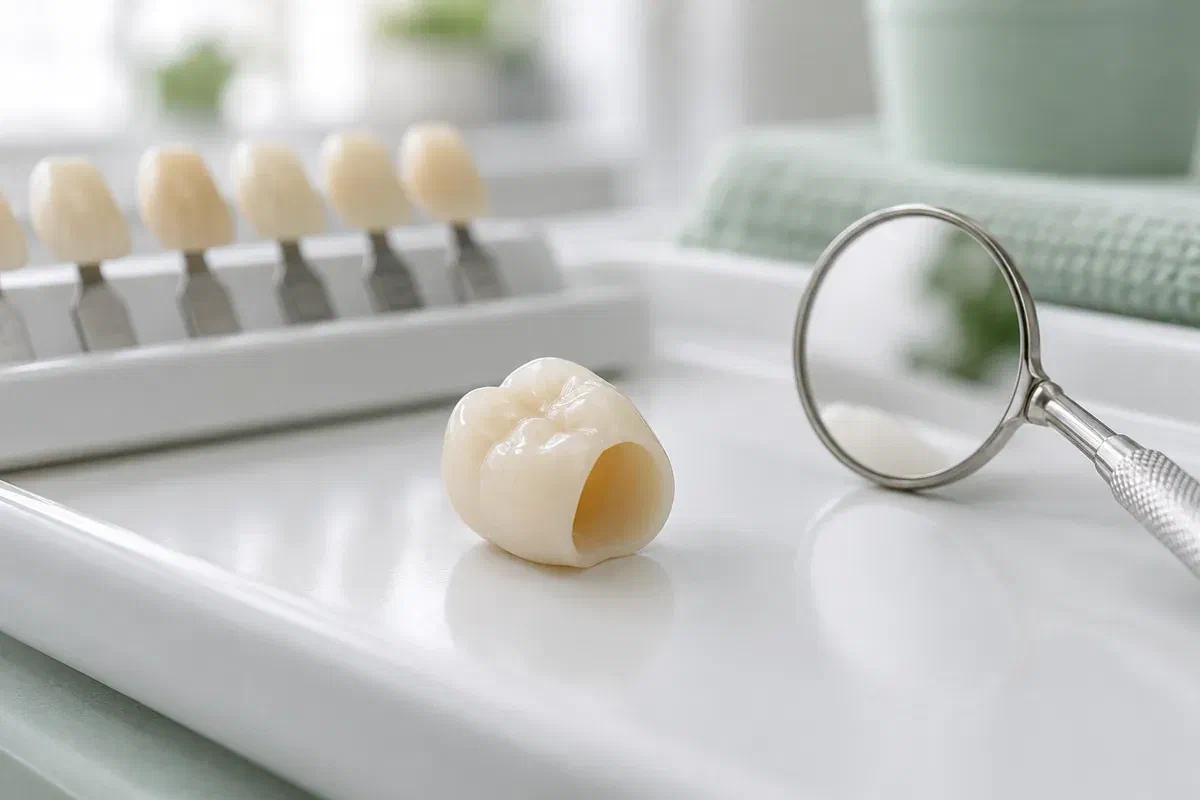
Call before it comes away completely. Share what you have noticed, including anything that seems similar to the last time, and avoid checking the crown over and over, as that can make treatment harder.
Tell us whether it feels like the earlier episode or different in some way. Resist pulling or twisting to compare; the relationship between crown and tooth needs to be assessed in the chair.
If the crown seems to take the first or hardest contact when you close, or you clench or grind, mention it. Bite forces can be one reason a crown keeps working loose. There is no need to bite hard to test it.
Food getting caught at the edge, twinges with temperature, or an unpleasant taste can hint at what is happening under the crown. Each has more than one possible explanation and is interpreted with the rest of the findings.
Repeated loosening still deserves a prompt call. Tell us about strong pain, swelling, a recent knock, or a section that seems close to separating, so the team can advise on how soon to come in.
A crown can sometimes be resecured even after it has loosened before, provided it is intact, fits well, and the tooth gives it solid support. The dentist decides that after examination and preparation. Another layer of cement on its own is not a plan.
More often, a repeat episode means something else needs attention first. Identifying it is what makes the next repair more dependable. You can ask what has changed since last time, which parts are still usable, and why the proposed approach should hold better.
Patient information: Cleveland Clinic — dental crown care and signs to report
The crown and its tooth are examined as separate questions. Knowing which is at fault explains why recementing worked for a while, and whether it is still the right choice.
Repeat loosening sometimes reveals a weakened build-up or decay at the edge that needs treatment before a crown can be secure. Ask how much sound tooth is left and what that means for your options.
You may leave the first visit with a temporary measure while a longer plan is arranged. Ask whether the work is definitive, and what precautions and follow-up apply if it is not.
We start with the crown’s history, especially the previous repair. What follows depends on the findings, and a crown or tooth that needs deeper work may take more than one appointment.
The dentist asks when the crown was placed, when it was recemented, and how this episode began. The tooth, gums, and bite are examined, and X-rays may be taken if they would help explain the repeated movement.
Should removal be needed, the dentist explains the reason and the risks beforehand. Inside surfaces, margins, and the tooth beneath are checked to see whether they can support another attempt at resecuring.
You will hear the findings, the choices, and an estimated fee before any work. A crown that is still sound may be bonded again with the underlying issue addressed; otherwise a different restorative plan may be recommended.
Afterwards, the dentist confirms the crown seats well and checks your bite. Ask about chewing, cleaning, any temporary limits, and what signs should prompt a call before your next scheduled appointment.
Ask for guidance about your specific crown. Temporaries, finished crowns, and teeth with less natural structure left each come with slightly different do’s and don’ts.
Keep sticky and hard foods off that tooth while you wait for advice. Avoid working the crown loose with your tongue or a fingertip to see whether it has settled.
Keep it somewhere safe and clean, such as a small lidded pot, and bring it with you. Skip household adhesives, avoid holding it loose in your mouth, and don’t jam it back onto the tooth.
Ask when you can return to normal eating and how to clean the margin. Report a bite that feels high, lingering discomfort, or any new movement promptly instead of waiting to see whether it settles.
Our answers assume the crown is fixed to a natural tooth. Implant crowns are held by separate components and repaired in their own way, so tell the team if that applies to you.
Contact our Bronte Street clinic about a crown that keeps working loose. We will reassess the restoration and its tooth, explain what has changed, and recommend a repair aimed at stopping the cycle.
Pain, swelling, or a crown hanging by a thread? Please ring the clinic and describe it.
