Movement you can feel
Mention whether the looseness is recent or has come and gone. Please don’t try to lift or rotate the crown; whether the crown or the tooth is moving is for the dentist to determine.


The first worry when a crown moves is often whether the tooth itself is in danger. Many loose crowns are repairable, but only an exam can say. From Rockwood, book a visit so the dentist can assess the crown and its tooth and explain honestly what the findings mean.
Feeling a crown move tends to spark the worst-case thought straight away. It helps to know that a loose crown is a common problem with a range of explanations, many of them manageable. The point of an assessment is to replace guesswork with a clear account of what is happening.
Crowns are retained by a precise fit over a shaped tooth and the cement sealing them together. Looseness can come from cement that has worn away, a crown that has cracked, or changes in the tooth or the core inside. Decay or a fracture can lie beneath an outwardly normal crown. Some of those findings are straightforward to fix and some are more serious, which is exactly why the tooth needs examining rather than guessing.
Help the dentist by noting when the movement started and what brings it on: biting, brushing, or simply your tongue. Mention any previous root canal or repairs, recent treatment, and pain or swelling. That history shapes the assessment and the conversation about what comes next.
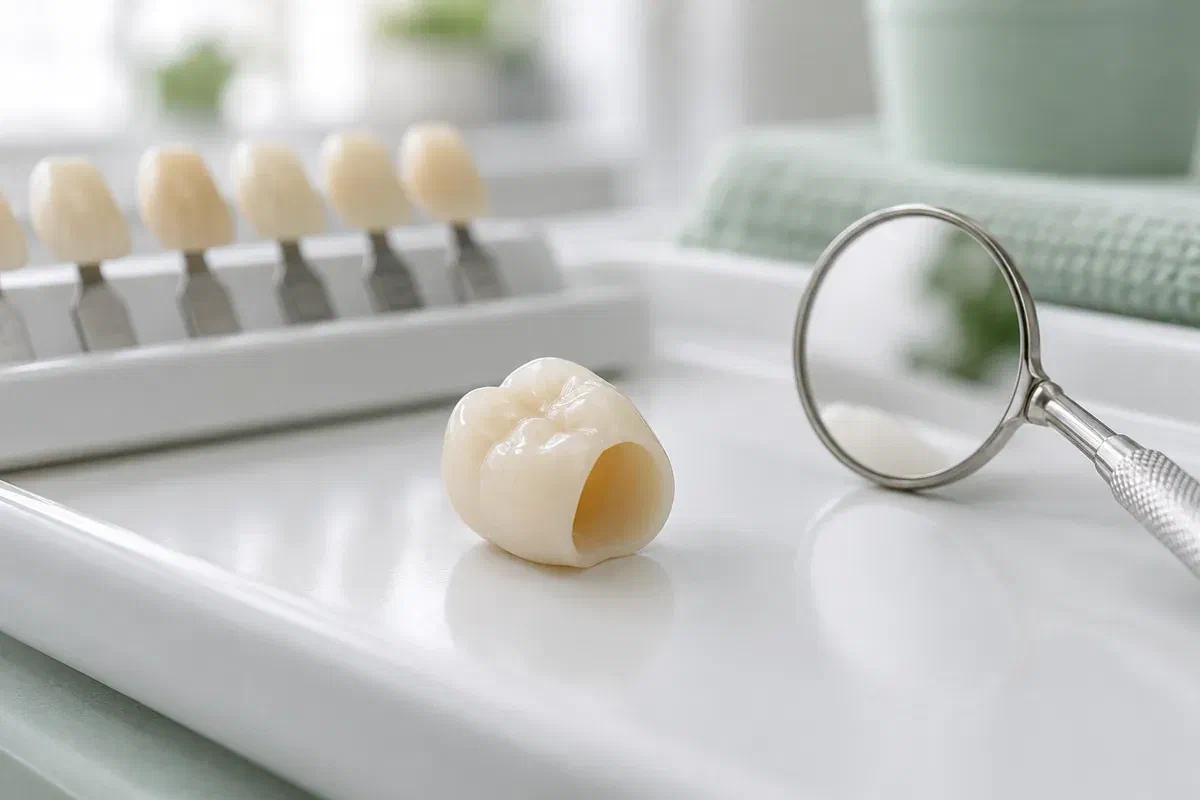
Any of these is worth a call, long before the crown actually falls off. Tell the team what you notice, and avoid repeatedly checking the crown, because handling it can make the situation more difficult to treat.
Mention whether the looseness is recent or has come and gone. Please don’t try to lift or rotate the crown; whether the crown or the tooth is moving is for the dentist to determine.
A crown that touches first, feels uneven, or shifts while you chew is worth describing. Biting hard to reproduce it won’t tell you much and could stress the tooth.
Temperature twinges, an unusual taste, or food lodging beside the crown can each guide the examination. They don’t point to one cause on their own, so the dentist considers them with everything else the exam reveals.
Please call soon about any movement. Mention severe pain, swelling, a recent injury to the mouth, or a part that seems close to detaching, and the team will advise when you should come in.
When the crown is sound, fits well, and the tooth gives it solid support, resecuring may be all that is needed. The dentist confirms that through examination and preparation. It isn’t a case of adding cement to every crown that wobbles.
If something more serious is found, knowing it early gives you time to understand the choices. Ask what the dentist has seen, which parts can be retained, and why the recommended plan is likely to be more dependable for that tooth.
Patient information: Cleveland Clinic — dental crown care and signs to report
A crown loose on a steady tooth is a different situation from a tooth that moves in its socket. Separating the two explains why recementing suits some cases and not others.
The assessment may show the core or remaining tooth needs work before a crown can be secured again. Ask how much healthy structure is left, and what that means for the tooth’s future.
A first visit may involve diagnosis or a temporary measure while you consider the options. Ask whether the work is final, and what to avoid and when to return if it is not.
Your description starts the visit. From there, what the dentist sees sets the course, and a crown or tooth needing more extensive care may take further appointments.
The dentist asks about the crown, earlier dental work, and how the problem started. Your gums, bite, crown, and tooth are examined, and X-rays may be used to look at the root and the bone around it.
Sometimes the crown must be removed to see the tooth properly; the dentist will explain the reason and any risks first. This step tells you whether what is there is strong enough to repair.
You will hear the findings, the alternatives, and an estimated fee before any treatment. A sound crown may be recemented; decay, damage, or weak support may mean another restorative plan or a frank talk about the tooth’s outlook.
After treatment, the dentist reviews the fit and bite. Ask about eating, cleaning, temporary limits, and what to do if the crown moves or the tooth aches again before you are next seen.
Ask the clinic for guidance that applies to your crown. Advice for a temporary crown can differ from a permanent one, and from a tooth that has already lost part of its structure.
Chew on the other side and keep hard or sticky foods away from that tooth while you wait. Leave the crown alone rather than testing it to see whether it has tightened.
Place it in a small, clean container and bring it to your visit. Resist gluing it, carrying it in your mouth, or pushing it back over the tooth.
Check when normal meals can resume and which cleaning aids suit the crown. Let us know about a high bite, lasting symptoms, or new movement instead of assuming they will settle.
The questions below are about a crown over a tooth of your own. A crown screwed or cemented onto an implant follows a separate repair path, so flag that when you book.
Contact our Bronte Street clinic when a crown starts to move. The dentist will look carefully at both crown and tooth, explain plainly what turns up, and talk through which repair, if any, makes sense.
If you have pain, swelling, or a crown close to coming off, please call and describe it.
