
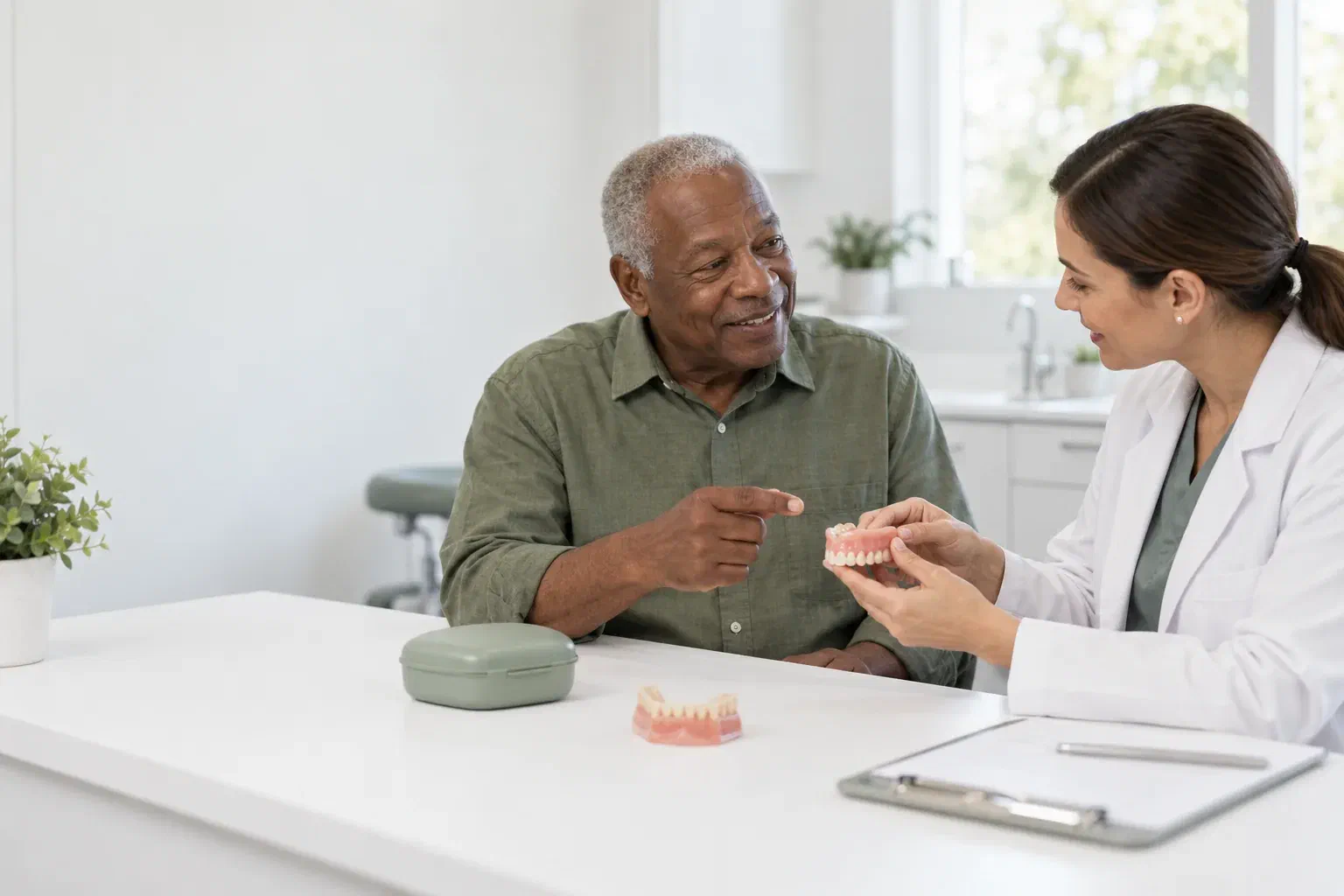
Illustrative patient discussing the fit of a removable denture with a dentist
Restorative Dentistry

Loose Denture Treatment

A denture that shifts, lifts, or rubs can make ordinary meals and conversations difficult. Explore loose denture treatment in Milton with an assessment of the appliance, the mouth supporting it, and whether adjustment, relining, repair, or replacement would help.

A closer look at loose denture treatment

Bring the movement into the conversation.

A removable denture needs to work with the shape of the mouth, the bite, and the available support. When it becomes loose, you may notice lifting during speech, rocking at meals, or rubbing in a familiar spot. Those experiences are worth discussing even if the denture still looks much the same.

The mouth can change while the denture's fitting surface stays the same. Wear, damage, changes around remaining teeth, or problems with an implant attachment may also affect stability. An assessment considers the appliance and its surroundings together so the recommendation addresses the reason it moves.

At Milton Dental Clinic, tell us which situations are hardest and what you have already tried. Bring the denture and any information about recent extractions, repairs, or relines. The aim is to identify a practical next step, explain its limits, and help you make a decision without assuming that every loose appliance needs replacing.

Arrange a denture fit assessment
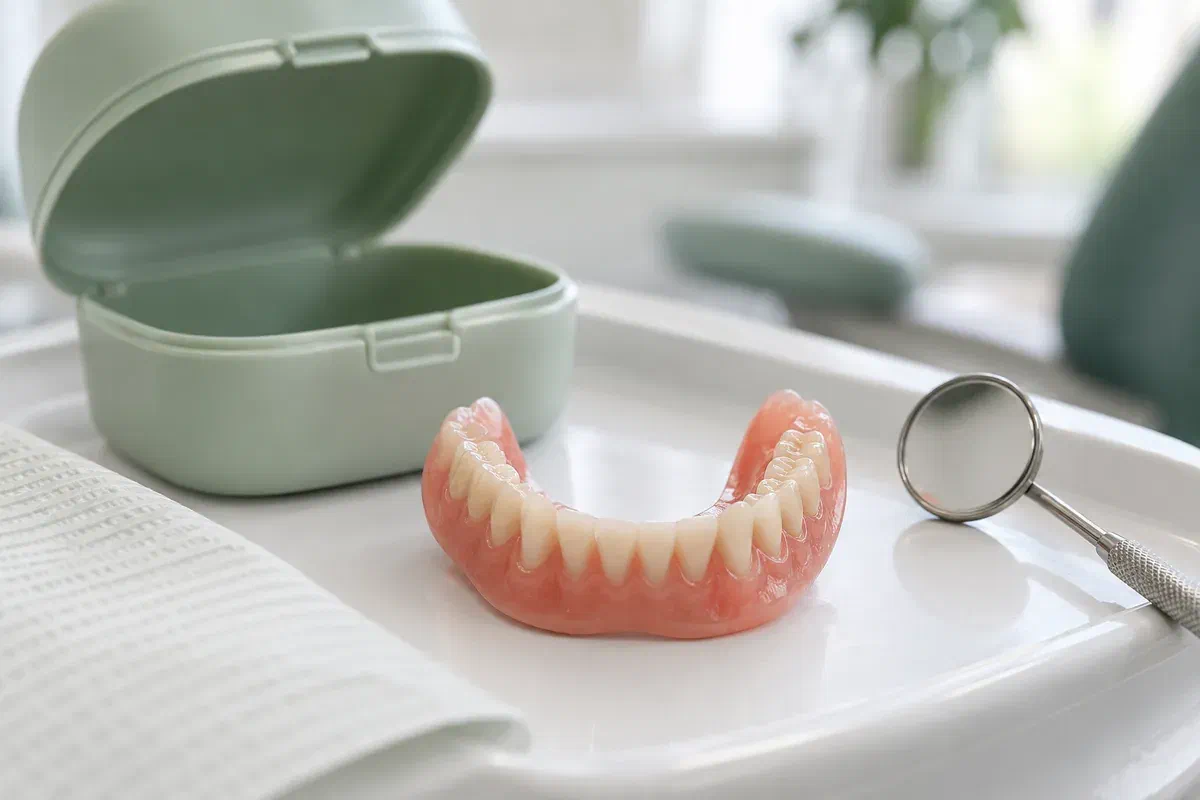
Lower removable denture beside an open storage case and dental mirror
When the fit stops working for you

Notice when it moves and how it affects your day.

A denture may lift, rock, or feel unstable for different reasons. Your description helps direct the examination, particularly when the movement occurs during an activity that is difficult to reproduce in the dental chair.

The appliance shifts during meals

Explain which foods or chewing movements cause difficulty and whether one side lifts. The dentist can assess the base fit, bite, and condition of the appliance rather than treating every movement as a need for more adhesive.

You rely on increasing amounts of adhesive

Adhesive can have a role when used appropriately, but increasing dependence may signal a fit problem. Bring the product details and describe how often you use it so the underlying support can be reviewed.

Loose movement is causing sore areas

Point out where the appliance rubs and how long the soreness has been present. A persistent ulcer or tissue change needs examination as well as a denture assessment; do not assume every sore area is harmless friction.

If a denture breaks, has a sharp edge, or cannot be worn comfortably, contact the clinic for advice. Bring all pieces, and avoid household glue or filing the appliance yourself.

What a fit assessment can establish

Improve the fit where possible and be clear about its limits.

A useful assessment separates a localized issue from a broader loss of adaptation. Some appliances may benefit from a targeted adjustment or a new lining surface, while worn teeth, damage, or an unsuitable design can make replacement a more reasonable discussion.

The goal is not simply to make the denture harder to remove. Comfort, chewing, speech, tissue health, and your ability to handle the appliance all matter. Ask what the proposed work is expected to improve and which concerns may remain even after a technically appropriate change.

Patient information: American College of Prosthodontists — evaluating dentures for replacement

Consider the appliance's condition as a whole

The base and artificial teeth may have aged differently. A denture that needs a closer fit may also have wear or damage that affects the value of a reline, so ask how those findings influence the recommendation.

Match treatment to the stage of healing

A denture worn after recent extractions may need a different plan from a long-established appliance. Discuss expected mouth changes and whether proposed work is intended as an interim measure or a longer-term solution.

Plan around the time without your denture

Some work may require laboratory involvement. Ask whether the appliance must leave the clinic, how long that may take, and what arrangements are realistic for meals, work, and social commitments while it is being treated.

Your loose denture appointment

Assess the fit before changing the fitting surface.

The examination should explain why the denture is unstable and whether the appliance remains suitable to modify. Bring any recent repair history and tell the team about discomfort before the fit is tested.

  1. Discuss the history and practical difficulties

    The dentist asks when the appliance was made, how the problem developed, and what changes have occurred in your mouth. Describe adhesive use, recent treatment, handling difficulties, and the activities affected by movement.

  2. Examine the appliance, bite, and supporting mouth

    The base, teeth, and any clasps or attachments are assessed with the tissues and remaining teeth. The examination considers stability and comfort together, including any sore area that needs its own assessment.

  3. Compare suitable adjustment and replacement options

    Discuss the proposed work, expected benefit, limitations, and estimate. The options may involve a localized adjustment, reline, repair, or new appliance, depending on what is causing the problem.

  4. Check the revised fit and arrange review

    After treatment or fitting, the appliance is reassessed and the care instructions explained. Ask how adaptation will be reviewed and whom to contact if pressure, movement, or difficulty using the denture persists.

After a fit change

Give the new fit attention without reshaping it yourself.

A revised appliance may feel unfamiliar, and the instructions depend on the work performed. Ask about wearing, meals, cleaning products, and any review appointment before returning to your usual routine.

Report pressure and persistent movement

Explain where a sore spot develops and which activity brings it on. Do not trim acrylic or bend a clasp at home; small uncontrolled changes can affect other parts of the fit.

Follow the care instructions for any new lining

Different lining materials may need different cleaning and product choices. Confirm the routine and whether adhesive is appropriate rather than automatically continuing every method used on the older surface.

Keep the mouth and appliance under review

Even a comfortable denture needs ongoing care of the tissues and any remaining teeth. Attend the recommended reviews and mention renewed looseness instead of assuming that fit will remain unchanged indefinitely.

Choosing the right fit treatment

The condition of the denture determines what is worth changing.

The right approach depends on the mouth, the appliance, and the source of instability. Ask how each relevant option addresses your main concern and whether it also deals with wear, damage, or altered support.

When a specific area or component is responsible

A targeted adjustment or repair

Localized pressure, a damaged part, or another identifiable issue may be addressed without replacing the whole appliance. The dentist should explain the scope of the work and its expected limits.

When the base needs closer adaptation

A denture reline

A new fitting surface may help a suitable denture match the current mouth more closely. It will not automatically correct every problem with tooth wear, bite, appearance, or overall design.

When modifying the existing denture is insufficient

A new appliance or different support plan

Replacement may be considered for broader fit or condition problems. An implant assessment may also be relevant in selected cases, with its own suitability, treatment, and maintenance discussion.

Questions about a loose removable denture

Understand the fit before choosing a fix.

Your previous denture experience is useful information. Explain what used to work, what has changed, and which practical limitations matter most when discussing a repair, reline, or replacement.

(905) 876-4488
Can a denture become loose even if it has not cracked?
Yes. The supporting mouth can change while the denture base retains its original shape. Other factors can also affect stability. An intact appearance does not establish a good fit, so explain the movement and arrange an assessment.
Will a reline solve every loose denture problem?
No. A reline changes the fitting surface, but it may not resolve worn teeth, a problematic bite, damage, or an unsuitable design. The whole appliance needs assessment before deciding whether a reline is worthwhile.
Is using more denture adhesive a suitable long-term answer to increasing looseness?
Do not rely on increasing amounts to avoid a fit assessment. Adhesive may help in selected circumstances, but it does not correct every underlying problem. Ask about appropriate use and why the appliance is needing more support than before.
Why is my immediate denture looser a few weeks after extractions?
The mouth changes during healing, which can alter how an immediate denture fits. Contact the treating team for review. An interim lining or other adjustment may be considered, with later reassessment once healing has progressed.
Can I use a home reline kit before having my loose denture checked?
Ask the dental team before altering the appliance. A home material may change the bite, fit, or access for later work and may be unsuitable for particular components. An examination can identify whether relining is actually the appropriate response.
What if the loose denture is attached to implants?
Mention that when booking. The attachments, denture base, and implant supports all need consideration. A worn retentive component may require different care from a changed tissue fit or a problem affecting the implants themselves.
Loose denture treatment in Milton

Let’s make the next step about your actual fit.

Visit our Bronte Street clinic to discuss a denture that shifts or no longer feels dependable. We can assess its condition, explain suitable options, and help you plan any adjustment, laboratory work, or replacement.

Bring your denture, any broken pieces, and details of recent relines, repairs, or extractions.

Visit Milton Dental Clinic
Unit 1, 342 Bronte St. S, Milton, ON L9T 5B7
Get directions Clinic hours
Monday–Thursday
11am–7pm
Friday–Sunday
By appointment only

How can we help?

Milton Dental Clinic

Have a question about your smile? Choose the option that works best for you.

For urgent dental concerns, please call.
Messages are reviewed during clinic hours.