Biting makes it pivot
Mention which foods are trouble and whether the denture seesaws or lifts at one end. Rocking often relates to the base or bite, and the dentist can check those rather than defaulting to stronger adhesive.


Reline or replace? It is the question almost everyone with a loose denture ends up asking. For households across Halton Hills, our Milton clinic examines the appliance and the mouth beneath it so the answer rests on what is actually causing the movement, not on guesswork.
Picking between a reline and a new denture can feel like choosing between a quick fix and a big commitment. In reality the choice usually makes itself once the cause of the looseness is clear. A sound appliance on a changed ridge is one situation; a worn, repaired denture with a tired bite is quite another.
Gums and bone shift gradually over the years, so a base made for your mouth long ago may no longer match it. Teeth on the denture wear down, acrylic can crack, natural teeth still present can move, and implant attachments lose their hold. Each finding pushes the recommendation in a particular direction.
Coming in from Georgetown, Acton, Glen Williams or elsewhere in Halton Hills, bring the denture and anything you know about its age, past relines and repairs, and recent extractions. Tell us what you most want to improve. We will explain what is likely behind the movement, which option fits that cause and where each one’s limits lie.
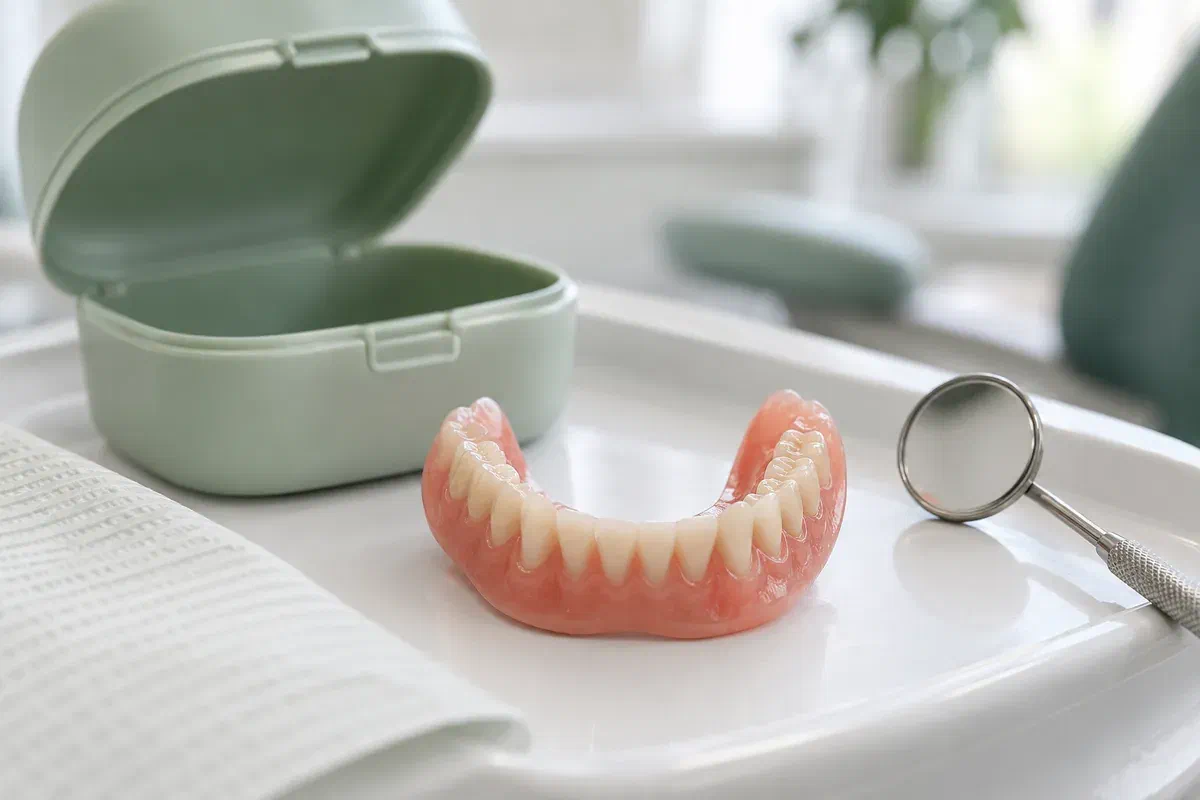
The way a denture misbehaves at home hints at the cause. Movement at meals, during speech or when you yawn rarely appears on cue in the chair, so a detailed account helps target the examination.
Mention which foods are trouble and whether the denture seesaws or lifts at one end. Rocking often relates to the base or bite, and the dentist can check those rather than defaulting to stronger adhesive.
Adhesive has a role when used as directed. When larger amounts still leave you uneasy, the fit has often drifted. Bring the product and explain your routine so the supporting ridge can be reviewed.
Show the dentist where it rubs and how long it has lasted. An ulcer that does not heal or a patch that looks unusual needs its own examination; it should not be put down to friction automatically.
If the appliance breaks, has a sharp edge or has become impossible to wear comfortably, call the clinic. Bring every fragment, and avoid household glue or filing it yourself.
A careful assessment answers whether the problem is confined to one area or spread across the whole fitting surface. A targeted adjustment or a new lining can suit a denture that is otherwise in good shape. When the teeth are flattened, the base is damaged or the design no longer suits you, replacing it is usually the more reasonable conversation.
Grip is not the only measure. Chewing, speaking, gum health and how easily you can manage the appliance all matter. Ask what a proposed change should improve, and which complaints may still linger even when the work is done properly.
Patient information: American College of Prosthodontists — evaluating dentures for replacement
A base that needs relining may sit under teeth that are worn or chipped. Ask how the condition of each part affects whether a reline is good value or whether replacement would serve you better.
Recent extractions can mean the ridge is still remodelling. Ask whether work now would be interim, and when a longer-lasting reline or new appliance would make more sense.
Relines may be done in the chair or at a lab, and new dentures take several stages. Ask how long you might be without it and how to manage meals, work and family life during that period.
Before any change is suggested, the dentist works out why the appliance is unstable and whether it is still worth modifying. Mention past repairs and any discomfort before the fit is checked.
You will be asked how old it is, how many times it has been relined or repaired, and when the looseness started. Share adhesive habits, recent dental work and any handling difficulties.
The fitting surface, artificial teeth and any metal clasps or attachments are examined, along with your gums and natural teeth. Any tender area that needs its own attention is noted.
Each realistic option is explained: what it involves, what it should improve, its limits and an estimate. You can then weigh them against your priorities and your schedule.
Once the chosen work is complete, the fit is reassessed and care instructions are given. Ask when the next review will be and who to call if pressure or movement persists.
Whichever route you take, the appliance may feel different at first. Advice depends on the work, so ask about wearing time, food, cleaning and follow-up before going back to your usual habits.
Note where pressure develops and what triggers it. Please avoid shaving acrylic or bending clasps at home, since that can create new problems elsewhere in the fit.
Relined surfaces and new dentures can have specific care needs. Confirm which cleaners suit the material and whether adhesive is still appropriate.
Gums and any remaining teeth keep needing care. Attend recommended reviews and mention returning looseness, rather than assuming today’s fit will hold forever.
Your past experience with dentures helps shape the plan. Tell us what has worked well before, what feels different now and which practical constraints matter as you weigh the options.
Bring your denture to our Bronte Street clinic and talk through what has changed. We will examine the appliance and your mouth, compare the options that fit the cause and help you plan the work that makes most sense.
Bring the denture, any broken pieces and what you know about its age, past relines, repairs and recent extractions.
