Chewing brings on the pain
Tell us which foods trigger it and whether one side lifts as you bite. With that information, the base, the bite and the appliance itself can be checked rather than reaching for adhesive as a cushion.


A denture that slides around tends to rub, and the sore spot is often what finally prompts a call. If you are travelling from Mississauga, our Milton clinic can examine both the tender area and the fit, then explain whether an adjustment, reline, repair or new appliance is appropriate.
Picture a lower denture sliding a millimetre with every chew. Each tiny slide drags across the same patch of gum, and by evening that patch is raw. People often treat the sore and overlook the looseness behind it, or the reverse. Both deserve attention, because they can feed each other.
As the ridges that support a denture reshape over the years, the acrylic base stays just as it was made, leaving gaps that let it rock. Worn biting surfaces, a fracture, shifting natural teeth or a tired implant fitting can create the same effect. Examining the appliance alongside your gums shows which of these is driving the friction.
For anyone booking from Mississauga, it is worth jotting down where the soreness sits, when it flares and how long it lasts. Bring the denture and what you know about extractions, relines or repairs. We will examine the tender area properly, explain why the appliance is moving and outline a practical step, along with what that step will not fix.
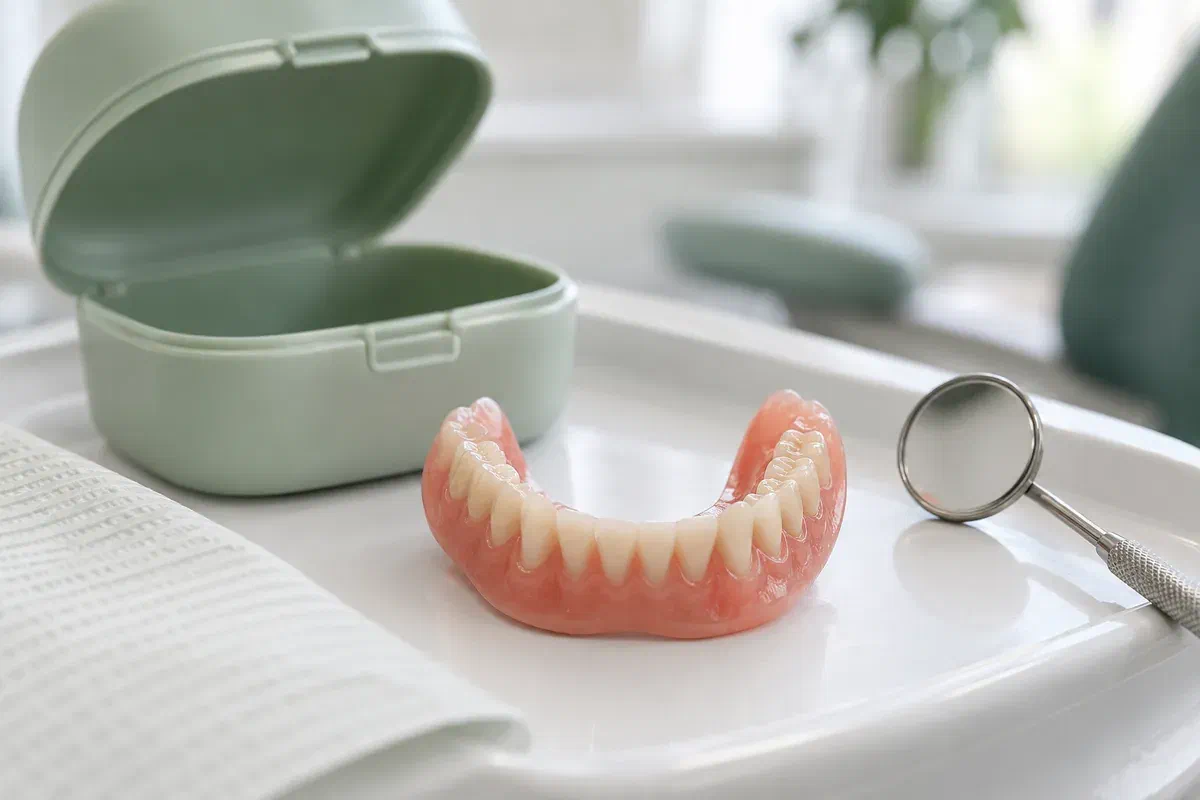
The location and timing of discomfort are clues. Because the worst moments usually happen at home, a clear account helps the dentist test the parts of the fit most likely to be involved.
Tell us which foods trigger it and whether one side lifts as you bite. With that information, the base, the bite and the appliance itself can be checked rather than reaching for adhesive as a cushion.
Adhesive used as directed has a role, but piling it on to soften a sore spot can hide a fit that has drifted. Mention the product and your routine so the tissues beneath can be properly reviewed.
Show exactly where it is and how long it has been present. An ulcer that persists, or tissue that looks unusual, needs examination as an issue of its own; it should not be written off as friction.
Phone for advice if the denture cracks, has a jagged edge or has become too painful to wear. Keep the pieces, and please do not reach for household glue or a file.
Easing one high spot may settle a localized sore, and a new lining can help a sound denture follow your gums more closely. When the teeth are worn down, the base is damaged or the design no longer suits you, a replacement may be the more realistic topic.
Clamping the appliance tighter does not guarantee comfort. Healthy tissues, comfortable chewing, natural speech and easy handling all matter. Ask what the proposed work should achieve, and which concerns could persist even if the work itself goes smoothly.
Patient information: American College of Prosthodontists — evaluating dentures for replacement
A base and its teeth do not always wear at the same pace. If a closer fit is needed but the teeth are worn or the acrylic damaged, ask how that changes the value of a reline.
Soreness under a denture placed soon after extractions may need a different plan from soreness under an established one. Ask what changes to expect and whether treatment is interim or longer term.
Some fixes require the denture to go to a laboratory. Ask how long it might be away and how to manage eating, work and plans in the meantime, especially if you are travelling to appointments.
We want to understand the discomfort and decide whether your current denture is still worth modifying. Mention any repairs, and point out tender areas before the dentist checks how the appliance seats.
When was the denture made, when did the soreness start and has anything in your mouth changed? Include adhesive use, recent dental care and any difficulty putting the appliance in or taking it out.
Your gums, any remaining teeth and the sore area are examined along with the base, teeth and any clasps or attachments. A spot that needs further assessment beyond the fit is recorded and discussed.
You will learn what each option involves, the likely benefit, its limits and an estimate. It might be a small adjustment, relining, a repair or a new appliance, depending on what the examination shows.
Once work is done, the fit is reviewed and care advice is explained. Ask when to return and who to call if soreness, movement or trouble handling the denture continues.
A changed fit can take some getting used to, and advice depends on the treatment. Ask about wearing time, eating, cleaning and your review appointment before settling back into old routines.
Tell us where it is and what sets it off. Avoid trimming acrylic or bending clasps at home; one small change can create a new pressure point somewhere else.
Lining materials differ in how they should be cleaned and whether adhesive is suitable. Confirm the routine for yours rather than repeating everything you did with the older surface.
Tissues under a comfortable denture, and any natural teeth, still need regular care. Keep recommended appointments and report looseness when it returns instead of expecting the fit to last indefinitely.
Your history matters here. Tell us what used to feel fine, what changed and which practical limits are important when you weigh a repair, a reline or a new appliance.
Come to our Bronte Street practice and tell us about the denture that rubs, shifts or no longer feels dependable. We will examine the appliance and your gums, explain what can be done and plan any adjustment, lab work or replacement with you.
Bring the denture, any broken pieces and notes on recent relines, repairs or extractions.
