It still slips despite the paste
Describe which foods or movements unsettle it and whether one side lifts first. The dentist can then check the base, bite and appliance condition instead of assuming the answer is simply a stronger product.

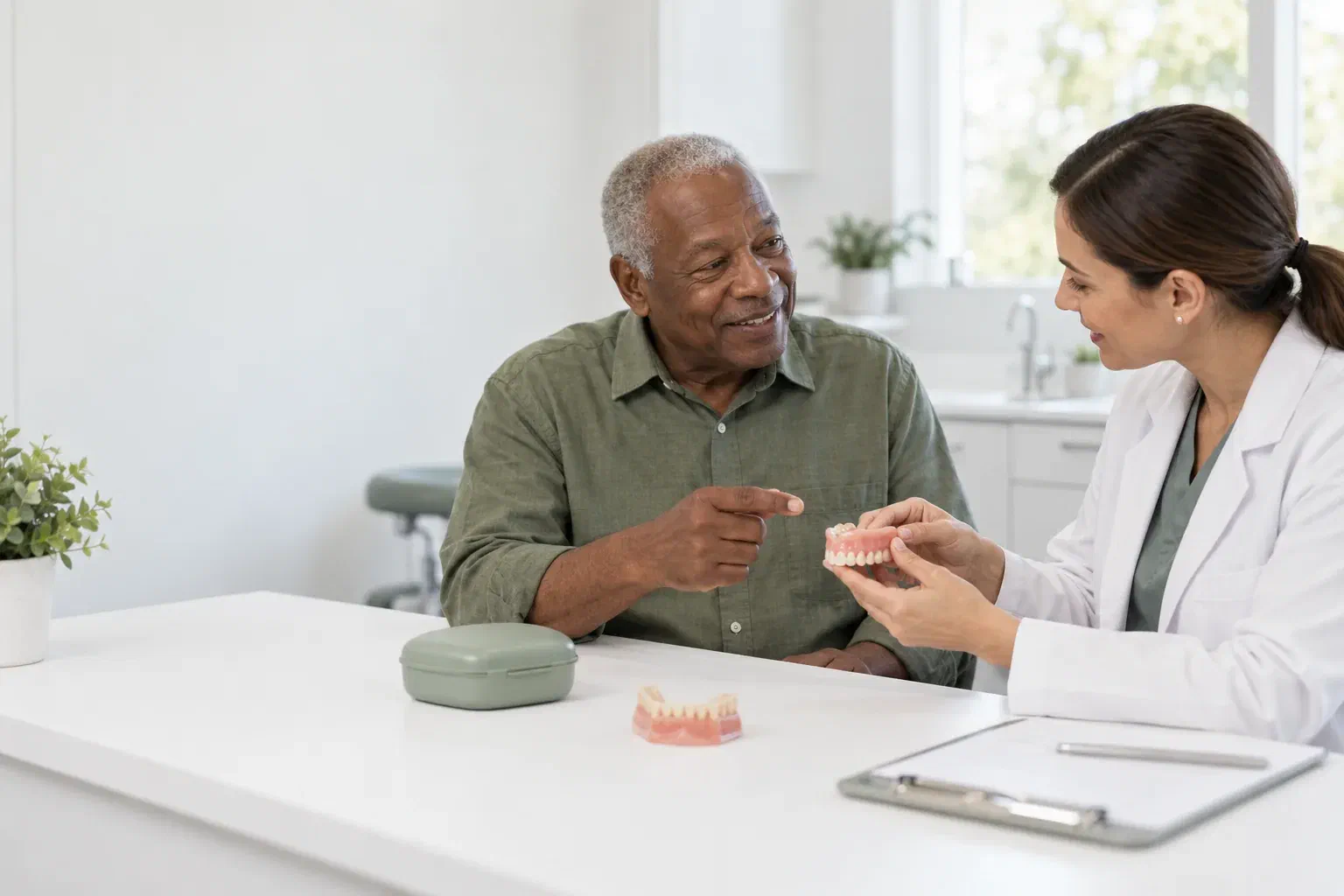
Reaching for more adhesive every morning is often the first clue that a denture no longer fits as it should. From Oakville, you can visit our Milton clinic for an assessment of the appliance and your mouth, and a clear explanation of whether adjustment, relining, repair or replacement would help.
It usually starts with a thin line of paste. Months later you are using a thicker strip, reapplying after lunch, and still feeling the plate shift when you talk. That gradual creep is one of the most common ways a fit problem announces itself, long before the denture looks any different.
Behind the extra paste there is usually a mismatch. Gums and the underlying ridge reshape over time, but the denture base does not follow. Worn teeth, a hairline crack, movement of remaining natural teeth, or a loosened implant attachment can add to it. Examining all of these together tells us what the adhesive is compensating for.
When you come up from Oakville, bring the product you use along with the denture, and tell us how often you apply it. Notes on past extractions, relines or repairs help too. We will explain what is likely causing the looseness, what a sensible next step looks like and where its limits are, without presuming a new appliance is the only route.
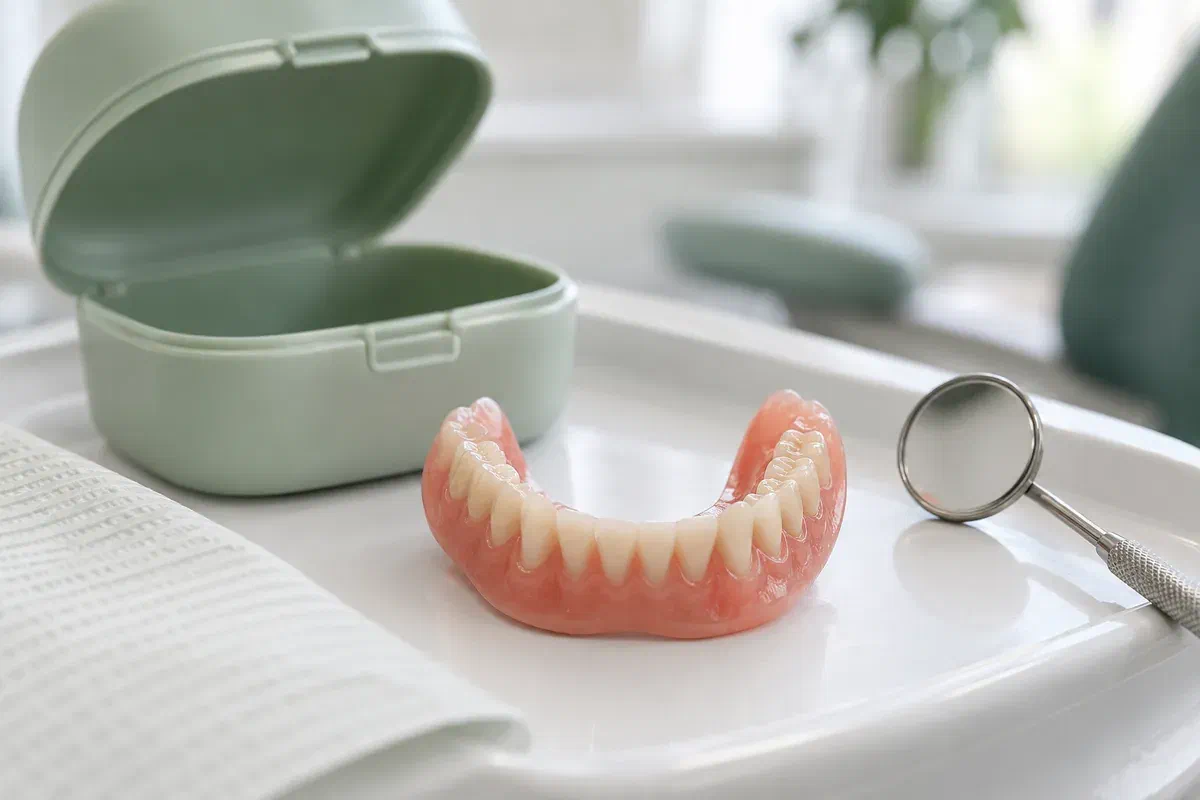
Instability can have several sources, and your account of daily life helps narrow them down. Movement during a meal or a phone call is hard to reproduce in a dental chair, so details are genuinely useful.
Describe which foods or movements unsettle it and whether one side lifts first. The dentist can then check the base, bite and appliance condition instead of assuming the answer is simply a stronger product.
Adhesive used as directed can be helpful. Needing it more often, or in larger amounts, can be a sign the fit has drifted. Mention the brand and your routine so the support underneath can be properly examined.
Show where the denture rubs and how long the area has been tender. A sore that does not settle, or a change in how the tissue looks, needs examination in its own right rather than being cushioned with more paste.
Call the clinic for advice if your denture cracks, develops a sharp edge or becomes too uncomfortable to wear. Bring every piece, and avoid household glue or trying to file it smooth yourself.
The examination aims to tell a single trouble spot apart from a base that has lost its match with your gums overall. A pressure point might respond to a targeted adjustment, and a suitable denture may benefit from relining. Heavy tooth wear, damage or a poor design can tip the discussion toward replacement.
Holding firmly is only part of the goal. Comfort, chewing, speech, healthy tissues and easy handling all matter too. Ask what the proposed work is meant to improve, and which concerns could remain after a change that is technically sound.
Patient information: American College of Prosthodontists — evaluating dentures for replacement
The teeth and the base of a denture can wear unevenly. If the appliance needs a closer fit but also has worn teeth or damage, that affects whether relining is worth it, so ask how each finding influences the advice.
An appliance placed after recent extractions may call for a different plan than one worn for years. Ask how the mouth is expected to change, and whether the work is a temporary measure or intended for the longer term.
Some fit changes need a dental laboratory. Ask whether you will be without the denture, roughly for how long, and what realistic arrangements you can make for meals, work and social plans.
The visit should explain why the appliance is unstable and whether it is still suitable to modify. Mention recent repairs, and let us know about discomfort before the fit is tested.
The dentist asks how old the denture is, when the looseness began and what has changed in your mouth. This is the moment to describe your adhesive habits, any recent treatment and which activities are most affected.
The base, teeth and any clasps or attachments are examined alongside your gums and natural teeth. Stability and comfort are considered together, and any sore area needing separate attention is noted.
You will hear what each realistic approach involves, the expected benefit, its limits and the estimated cost. That could be a local adjustment, a reline, a repair or a new appliance, depending on the cause.
After the work or fitting, the fit is checked again and care instructions are explained. Ask when adaptation will be reviewed and whom to contact if pressure, movement or handling difficulty persists.
A revised denture can feel different, and the advice depends on what was done. Before returning to your usual routine, ask about wearing time, eating, cleaning products, adhesive and your next review.
Tell us where soreness appears and what triggers it. Please do not trim the acrylic or bend a clasp yourself; even a small unplanned change can affect the fit elsewhere.
Lining materials vary, and some call for particular cleaners or no adhesive at all. Confirm what suits yours instead of automatically carrying over the routine from the old surface.
A comfortable denture still rests on tissues, and perhaps natural teeth, that need ongoing care. Keep recommended reviews and mention it if you find yourself reaching for more adhesive again.
What you have noticed at home is helpful. Tell us what used to work, what has changed and which practical concerns matter most as you consider a repair, a reline or a new denture.
Visit our Bronte Street clinic to discuss a denture that has started to slip or needs more help to stay put. We will assess its condition, explain your options and help you plan any adjustment, lab work or replacement.
Please bring your denture, your adhesive, any broken pieces and details of recent relines, repairs or extractions.
