Meals have become a negotiation
Say which foods you now avoid and whether the front or one side lifts first. That steers the dentist toward checking the base, the bite and the wear on the teeth, rather than simply recommending a stronger hold.

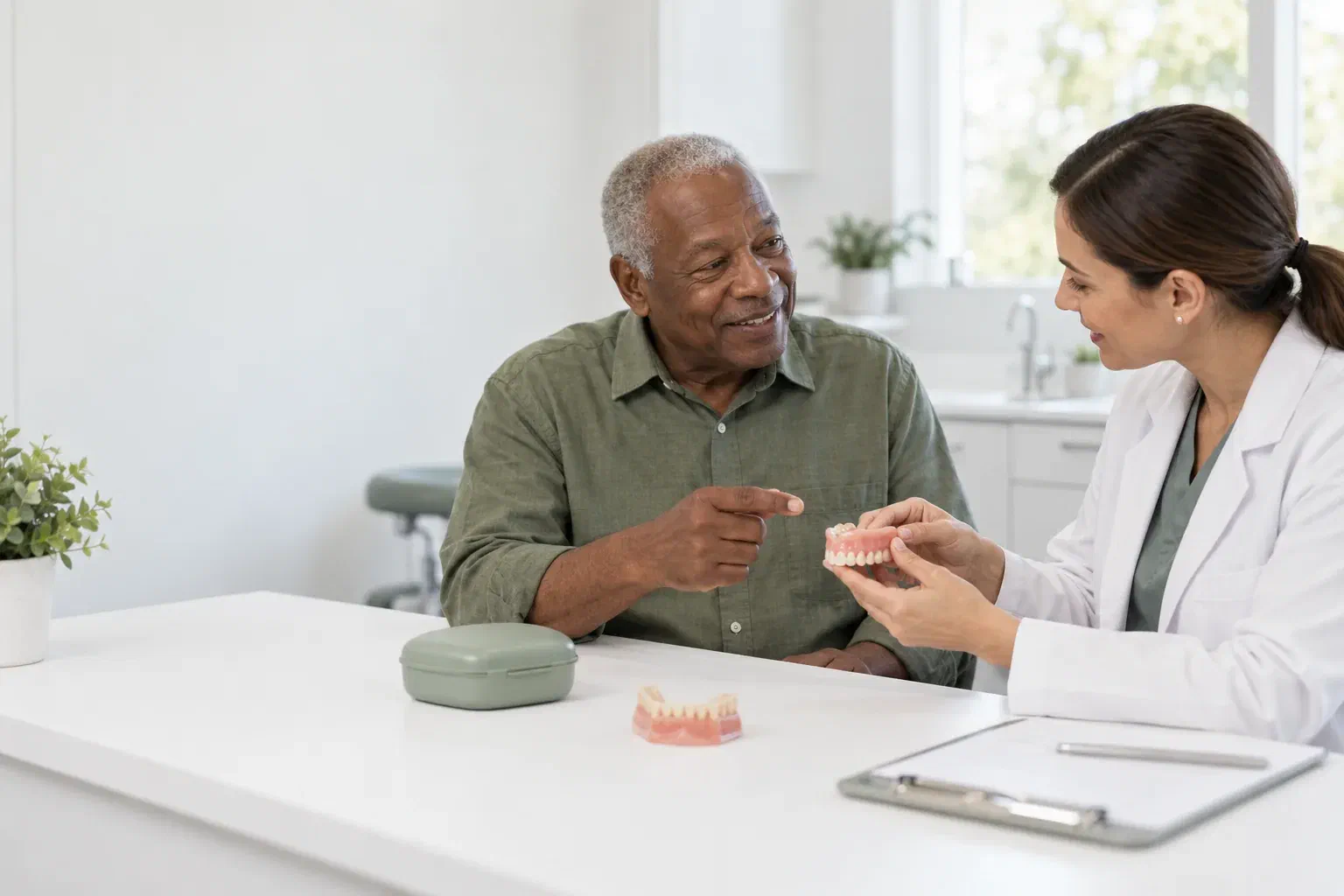
Some dentures have been part of daily life for a decade or more, and letting go of a familiar one is a real decision. For people in Old Milton, we assess how your long-worn appliance fits today and explain whether it can be adjusted, relined, repaired or should be replaced.
A denture worn for many years often feels like your own teeth, right up until it starts to wobble. Perhaps it lifts when you sip tea, rocks on crusty bread, or catches a familiar patch of gum. It may still look tidy in the glass at night, which can make the change easy to dismiss.
Over time, the ridges that hold a denture slowly change shape while the acrylic stays as it was made. Long service also brings worn biting surfaces, small cracks, shifting around any natural teeth that remain, or tired implant attachments. Each of these affects stability differently, so the appliance and your mouth are examined as one picture.
Our practice sits a short way from Milton's historic downtown, and many people from Old Milton have worn the same appliance for a long while. Tell us what you value about it, what has become difficult, and what you have tried. Bring it with any details about past relines, repairs or extractions. Keeping a trusted denture is sometimes possible, and we will explain honestly when it is not.
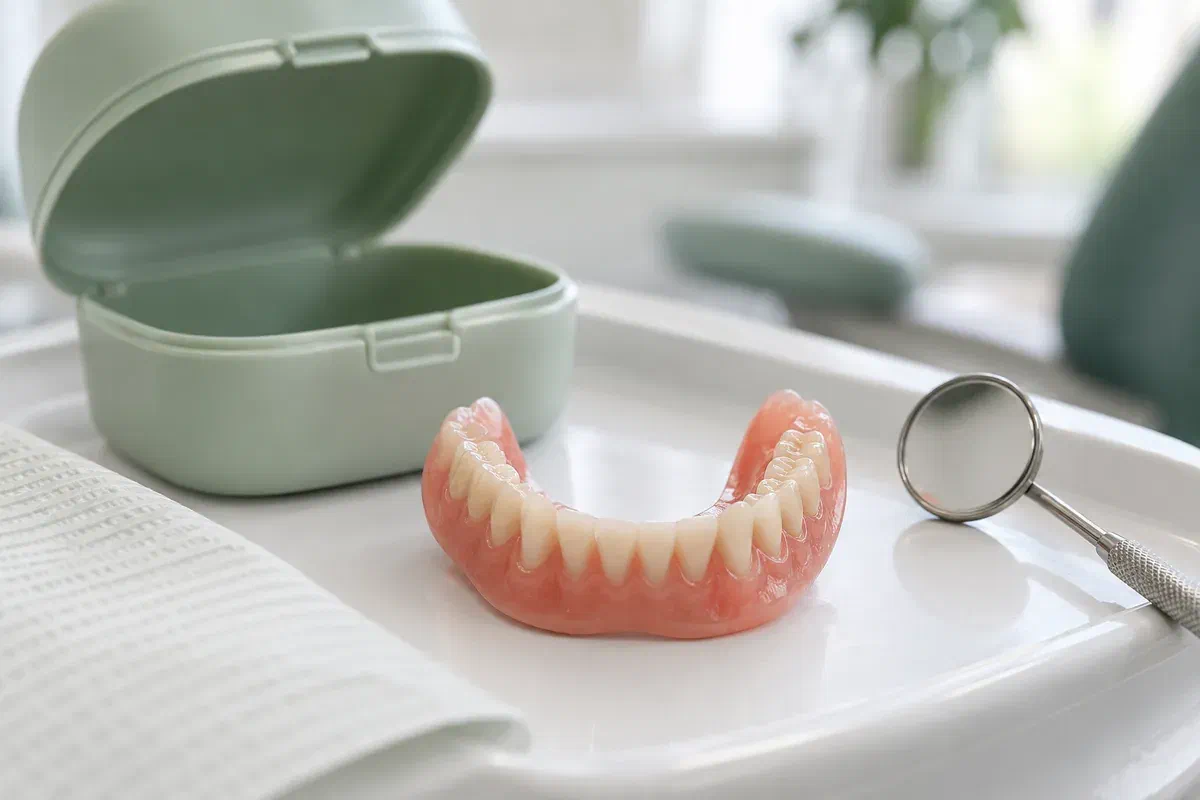
After years of wearing one denture, small changes can creep in unnoticed. Describing the situations where it now misbehaves gives the examination a starting point, since many of those moments cannot be recreated in the chair.
Say which foods you now avoid and whether the front or one side lifts first. That steers the dentist toward checking the base, the bite and the wear on the teeth, rather than simply recommending a stronger hold.
Used properly, adhesive can help. A gradual climb in how much you need, though, may mean the base no longer matches your gums. Bring the product and explain your routine so the supporting tissues can be reviewed.
Point to where it rubs and roughly how long it has been sore. An ulcer that lingers or tissue that looks unusual needs examining for its own sake, not only as a fit issue; it should never be assumed to be harmless.
If an older denture cracks, loses a tooth or develops a sharp edge, call the clinic for guidance. Keep all the pieces together, and please resist using household glue or a nail file on it.
An assessment sorts out whether the problem is local or general. A single pressure point or a worn clasp may respond to a targeted change, and a fresh lining can sometimes give a sound denture more years. Teeth worn flat, repeated repairs or an outdated design can make a new appliance the more sensible discussion.
Grip alone is not the measure of success. You also want comfortable chewing, clear speech, healthy gums and a denture you can handle easily. Ask what any proposed work should improve, and which of your concerns may persist even when it is done well.
Patient information: American College of Prosthodontists — evaluating dentures for replacement
On an older denture, the artificial teeth may be more worn than the base suggests, or the reverse. That balance affects whether relining is good value, so ask how each finding feeds into the recommendation.
Extractions, new crowns or changes in remaining teeth can alter what an older appliance rests on. Discuss what is expected to keep changing and whether any work is a stopgap or meant to last.
Relines and repairs can involve a laboratory. Ask whether the denture will need to stay with us, for how long, and how you might handle meals, appointments and social plans while it is away.
The appointment aims to explain the looseness and whether your current denture is still worth modifying. Share its repair history and mention any tender spots before the dentist checks how it seats.
Expect questions about when it was made, any past relines, when the looseness began and what has changed in your mouth. Describe your adhesive habits, recent treatment and anything that makes handling it harder.
The dentist looks at the base, teeth, clasps or attachments, then at your gums and any natural teeth. Comfort and stability are assessed together, and a sore patch that needs separate attention is recorded.
You will hear what each option involves, what it is likely to help, where it falls short and the estimated cost. That might mean a small adjustment, a reline, a repair or starting fresh with a new denture.
After the work or fitting, the seat of the denture is reviewed and care advice is explained. Ask when you should come back and who to contact if rubbing, movement or handling trouble continues.
After a reline or repair, a long-worn appliance may feel strange for a while. Instructions depend on the work, so before resuming your usual habits, ask about wearing time, food, cleaning and your follow-up visit.
Note where tenderness develops and what brings it on. Please leave the acrylic and clasps alone at home, as an unplanned trim or bend can unsettle other parts of the fit.
New lining material may need different cleaning products or gentler handling than you are used to. Check the routine and whether adhesive still makes sense before falling back on old habits.
Your gums, and any natural teeth, need care whatever the age of the denture. Attend the reviews you are offered and mention looseness when it returns, since the fit is unlikely to stay fixed forever.
What you have learned from years of wear matters. Tell us what used to work well, what has changed and which practical limits are most important when you weigh a repair, a reline or a new appliance.
Come to our Bronte Street practice to discuss an appliance that has started to move or no longer feels dependable. We will review its condition, explain your choices and help you plan an adjustment, lab work or a new denture.
Please have the denture with you, plus any broken fragments and what you know about past relines, repairs or extractions.
