It tips when you chew
Say which foods unseat it and whether one end lifts while the other stays engaged. The dentist can check the attachments, base, bite and appliance condition instead of reaching for adhesive.


A denture that snaps onto implants should click firmly into place. When that click softens, the cause might be worn attachments, a changed base fit or something involving the implants themselves. For households in Puslinch, our Milton team checks each part and explains what is worth adjusting, replacing or reviewing.
With an implant-retained denture, most people get used to a firm snap when it goes in. Over months or years, that snap can weaken. The denture may lift on one side when you bite into an apple, or come away more easily than it should. It is a common change, and it usually has an identifiable cause.
Small retentive parts inside the denture wear with daily use, much like any connector. The gum under the base can also change shape, so the denture rocks around the attachments rather than resting evenly. Less often, the implants or tissue around them need attention. Conventional dentures loosen for related reasons, including tooth wear, cracks and shifting natural teeth.
If you are coming from Puslinch, let us know when booking that your denture uses implants, and bring any details of the system and who placed them. Bring the appliance, along with notes on extractions, relines or repairs. We will check each component, explain which one is responsible and outline the realistic next step and its limits.
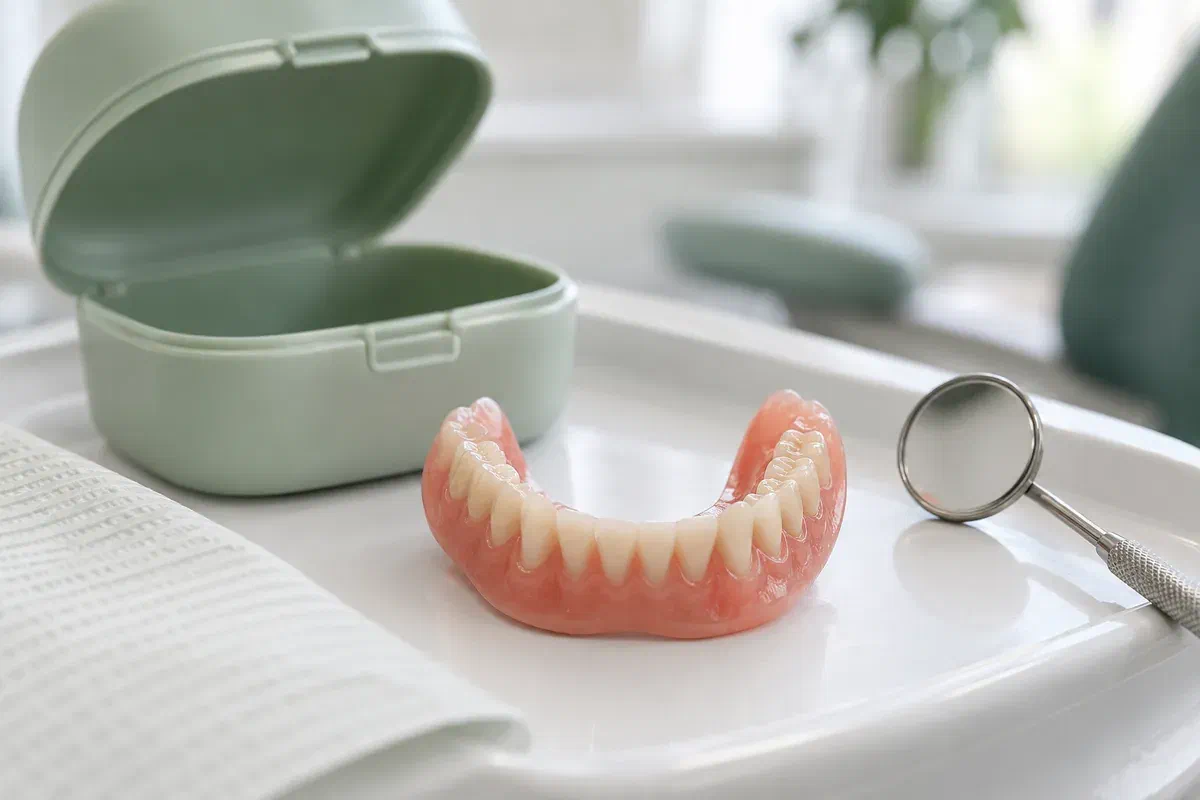
Implant-retained and conventional dentures can both lose stability, and the pattern of movement hints at the reason. Your description helps the dentist focus the examination, because these moments rarely happen on cue.
Say which foods unseat it and whether one end lifts while the other stays engaged. The dentist can check the attachments, base, bite and appliance condition instead of reaching for adhesive.
Snap-on dentures are not usually designed to need adhesive. If you have begun using it, or using more with a conventional denture, bring the product and mention how often you apply it.
Point out soreness, swelling or bleeding near an implant or under the base, and how long it has lasted. A lingering sore or unusual tissue needs its own examination rather than being dismissed as rubbing.
If an attachment comes loose, a part breaks or the denture cannot be worn comfortably, call the clinic for advice. Keep any loose parts, and please do not try to tighten, glue or file anything at home.
The examination aims to tell a simple wear issue from a wider change. Worn retentive inserts may be replaceable, and a base that rocks may benefit from relining around the attachments. Damage, heavy wear on the teeth or concerns about the implants themselves call for a different discussion.
Restoring the click is not the only goal. You also want comfortable chewing, natural speech, healthy tissue around the implants and a denture you can put in and take out without strain. Ask what any proposed work should improve and what it may not change.
Patient information: American College of Prosthodontists — evaluating dentures for replacement
Inserts, the denture base, the teeth and the implants can each age differently. Ask how findings about one part affect the value of work on another, such as relining a base with worn teeth.
Recent extractions, new implants or changes in remaining teeth can affect fit. Ask whether any work now is interim, and what the longer-term plan might look like.
Insert changes may be done in one visit, while relines or repairs may need a laboratory. Ask how long the denture could be away and how to manage meals, work and plans.
The visit explains what is making the denture less stable and whether modifying it is the sensible route. Share the implant details and past repairs, and mention any tender spot before the fit is checked.
The dentist asks when the denture and implants were placed, how the looseness developed and what has changed. Mention adhesive use, recent treatment and any difficulty clicking it in or removing it.
The retentive parts, denture base and teeth are checked, along with the tissue around the implants and any remaining natural teeth. Anything that needs further assessment is explained.
You will hear what replacing inserts, relining, repairing or a new denture would involve, what each should achieve, its limits and an estimate. Implant concerns are discussed separately.
After any work, the fit and retention are checked and care is explained. Ask when your next review is and who to contact if the denture loosens or causes pressure.
After new inserts or a reline, the denture may feel firmer or slightly different. Instructions depend on the work, so ask about wearing, eating, cleaning and follow-up before going back to your usual routine.
Describe where soreness or tightness develops and when it began. Please do not adjust attachments, trim acrylic or bend anything yourself; home changes can damage the components.
Tissue around implants needs thorough daily cleaning. Confirm which products suit the denture and any new lining, and check whether adhesive should be used at all.
Retentive parts and fit change with use. Attend recommended reviews and mention softening retention early instead of assuming it will stay the same indefinitely.
Share what the denture felt like when it was new, what has changed and which practical concerns matter most so the plan fits your situation.
At our Bronte Street clinic, we can examine an implant-retained or conventional denture that has started to shift. We will check each component, explain what is causing the change and plan any insert, reline or replacement work with you.
Bring the denture, any loose parts, details of your implant system and notes on recent relines, repairs or extractions.
