The whole tooth seems to move
It can be hard to tell crown movement from implant movement by feel alone, so please do not test it. Pressure may cause further damage. Describe what happens when you eat normally.


The first fear with a moving implant tooth is usually that the implant has failed. Often the problem is higher up, in the crown or its connection. For people in Bolton and across Caledon, our Milton dentist finds out which it is before any plan is made.
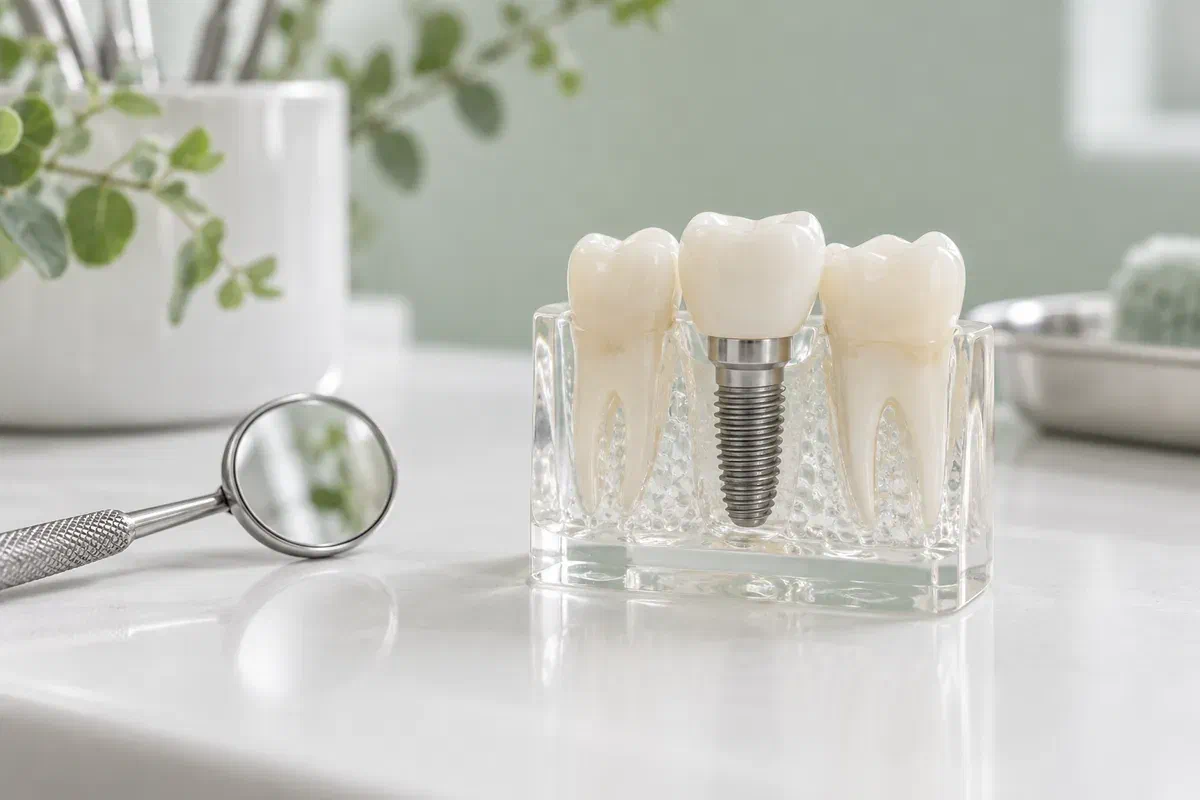
It is an understandable question, and it deserves a proper answer rather than reassurance or alarm. An implant tooth is not one piece. There is the crown, very often a connecting component under it, and the implant itself, which is fused with the jawbone. Movement you feel can come from any of those.
In many cases the implant stays firm while the crown or connection has loosened, but that has to be confirmed, not assumed. Equally, it is not safe to treat the wobble as a simple screw issue. Our dentist checks which layer is moving, examines the gum and bone, and looks for damaged parts.
Caledon is a large area northeast of Milton, and many households there balance long days and several family schedules. A call to our Bronte Street office helps us gauge urgency and find a sensible time. If you have an implant card or records, bring them, as identifying the system helps the team plan.
Let us know when the crown and implant were placed, whether there has been movement before, and whether a fall, a hard bite or other dental treatment came just before.
It can be hard to tell crown movement from implant movement by feel alone, so please do not test it. Pressure may cause further damage. Describe what happens when you eat normally.
Sounds or a change in contact often point toward the crown or connection, but this still needs checking. Note when they occur and whether they began suddenly or over several days.
Tenderness, bleeding, swelling or discharge around the implant are important to mention. They are assessed together with any movement, since a crown repair alone may not address tissue problems.
Call promptly about any movement in an implant tooth. If something comes out, keep it and any small components in a closed container and do not attempt to refit them.
If the implant itself is stable and the fault lies in the crown or connection, repair can often proceed without replacing the implant. The examination shows whether that is your situation and what parts or additional steps a repair would require.
Knowing why it happened is part of the answer. The crown’s fit, the connection, bite forces and earlier repairs can each contribute. Ask how the recommended treatment addresses the finding and how stability and the gum will be monitored over time.
Patient information: Cambridge University Hospitals — implant restorations and complications
The dentist explains which part is involved and what appears sound. That distinction matters most here, because each leads to a very different plan.
Restorative components vary by brand and design. Records help confirm what you have, whether compatible parts can be obtained, and whether the original provider or a specialist should be involved.
You will discuss whether to keep using the crown, have it removed, or wear a temporary. That depends on the findings, and should be realistic about appearance and chewing.
We examine the full restoration and the implant support before discussing repair. The crown’s attachment and our findings decide how it is accessed, which parts stay, and what can be done that day.
Your dentist asks about placement, earlier loosening, recent changes and records. If the work was done elsewhere, information from that office can clarify the design and components.
Clinical checks, with imaging when indicated, show whether movement is in the crown, the connection or the implant, and how the bone and gum look. Removing the crown, if needed, is explained first.
If the crown or connection is at fault, repair may proceed. If the implant itself is involved, referral may come first. Either way, you will understand the proposal, its limits and an estimate before agreeing to it.
After repair, the bite and stability are checked and home care is explained. A follow-up assesses the result, and you will know which changes should bring you back sooner.
Advice depends on which part is involved and the treatment performed. Ask for clear instructions on eating, cleaning, any temporary crown and whether to use an existing night guard.
Keep hard or sticky foods away from the moving tooth until it is examined. Avoid pressing on it, and call if the movement increases or it feels close to coming out.
Cement for natural-tooth crowns, glue or improvised tools are not suitable for implant restorations. They can damage components, hide the real source of movement, and make diagnosis harder for the dentist.
After treatment, contact us about renewed movement, clicking, soreness or a bite change. Keep your review even if everything feels fine, particularly after a repeat episode.
Answers depend on your implant system, the crown and the findings. They explain why diagnosis and records come before any repair is proposed.
Contact our Bronte Street office about an implant tooth that has started to move. We will determine whether the crown, connection or implant is involved, explain the options clearly, and identify any records or parts needed.
Please call sooner about pain, swelling, rapidly increasing movement or a piece that has come out, and bring any implant records.
