Rocking, lifting or spinning
Leave it alone rather than testing it. Several components can feel the same, and extra pressure could turn a reusable part into one that needs replacing. Describe what happened during normal meals.


Keep the crown, replace a part, or start fresh? That choice can only be made after someone has found what is actually loose. For Campbellville households, our team in town examines the implant tooth and talks through each realistic route.
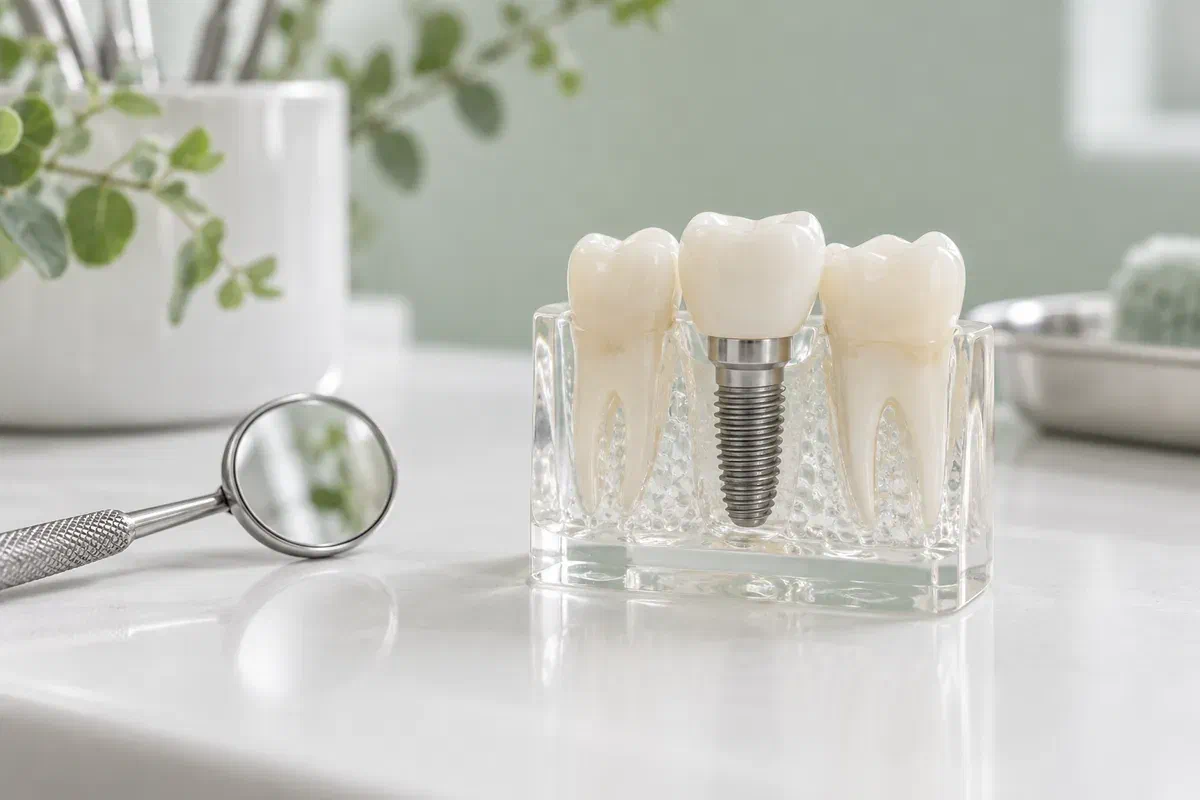
People often ask, right away, whether they will need a whole new tooth. The honest answer is that it depends on which layer has given way. An implant restoration has the crown you see, commonly a linking component, and the implant set in bone. Some of those may be perfectly reusable even when the tooth feels loose.
The decision follows the diagnosis, not the other way round. Movement is not proof that the implant has failed, and it would be equally unwise to assume a single screw is the whole story. Our dentist sorts out which part is moving, checks the gum and bone, and looks for wear or cracks.
Campbellville sits within Milton’s own boundaries, northwest of the town centre, so our Bronte Street office is a practical choice when a crown begins to rock or click. Rural households often like to group visits; mention that when you call. Bring any implant card or records, as they help us judge which parts can stay.
Give us a sense of the crown’s age, any earlier loosening, and whether the change followed something specific, such as biting a hard object, a fall around the property or other dental treatment.
Leave it alone rather than testing it. Several components can feel the same, and extra pressure could turn a reusable part into one that needs replacing. Describe what happened during normal meals.
Sounds and changes in contact can matter even when movement is slight. Note when they occur and whether they came on all at once or gradually over a few days.
Bleeding, puffiness, soreness or discharge around the implant should be mentioned. Gum findings can change which options are appropriate, and a crown repair by itself may not be enough.
Phone soon about an implant tooth that moves. If it comes away, place it and any small pieces in a closed container. Please do not try to press or glue it back on.
If the implant is stable and the fault is in the crown or connection, you may be able to keep the implant and possibly the crown. The examination clarifies how much can be reused, and which new parts or extra stages a repair would need.
The reason it happened influences the choice too. A crown that never fitted well, a worn connector, a heavy bite or a history of repeat repairs might all tilt the decision toward replacement. Ask how each option addresses the finding and how its success will be reviewed.
Patient information: Cambridge University Hospitals — implant restorations and complications
The dentist explains which parts appear sound and which are not. That allows a real comparison between options, rather than assuming everything must go or nothing needs to change.
Components differ by system. Records help confirm what you have, whether matching parts are obtainable, and whether another clinician should weigh in or extra visits be booked.
Find out whether the crown can be used for now, should come out, or needs a temporary while the chosen option is arranged. Appearance and chewing should both be considered honestly.
The whole implant restoration is assessed before any option is recommended. Its attachment design and what we find determine how the crown is reached and whether a repair can begin at that visit.
Your dentist asks about the implant’s original placement, past episodes, recent changes and any records. If the crown came from a different office, their notes may show which parts were used.
Hands-on checks, with imaging when indicated, reveal where the movement starts and how healthy the support is. If taking the crown off would answer a key question, that step is explained first.
You hear what each route involves: reconnecting, replacing a component, or remaking the crown. You approve the choice, its limits and the estimate, including parts, lab work or referral, before work starts.
After repair, we check how the tooth meets the others and how firm it feels, then go over home care. A follow-up visit is arranged, and you will know which changes should bring you back sooner.
Instructions vary with the part and the repair. Ask clearly about eating, cleaning, any temporary crown, and whether to keep wearing an existing night guard or other bite appliance.
Keep hard or sticky foods away from the loose crown until it is examined. Avoid poking at it, and call if it becomes looser or feels as if it may detach.
Store-bought crown cement is designed for natural teeth. Glues, improvised drivers and unverified parts can damage reusable components, which may take simpler repair options off the table.
After treatment, contact us if looseness, clicking, soreness or a bite change returns. Keep the follow-up visit even when all feels well, particularly after a repeat episode.
Every answer depends on the system, the restoration and the examination. These explain why diagnosis and records come before choosing between repair and replacement.
Get in touch with our Bronte Street office about an implant crown that has started to move. We will examine the crown and support, explain which parts can be reused, and set out the options and records needed for the next step.
Call promptly about pain, swelling, increasing movement or a piece that has come out, and bring any implant records.
