Wobbling or twisting
Resist the urge to rock it to see how bad it is. Several parts can feel alike when they loosen, and repeated force can make the eventual repair harder. Describe how it felt while eating normally.


The pharmacy aisle has crown cement, but an implant crown that moves is a different problem from a lost cap on a natural tooth. For people in Mississauga, our Milton team identifies what is loose and explains repairs that protect the implant.
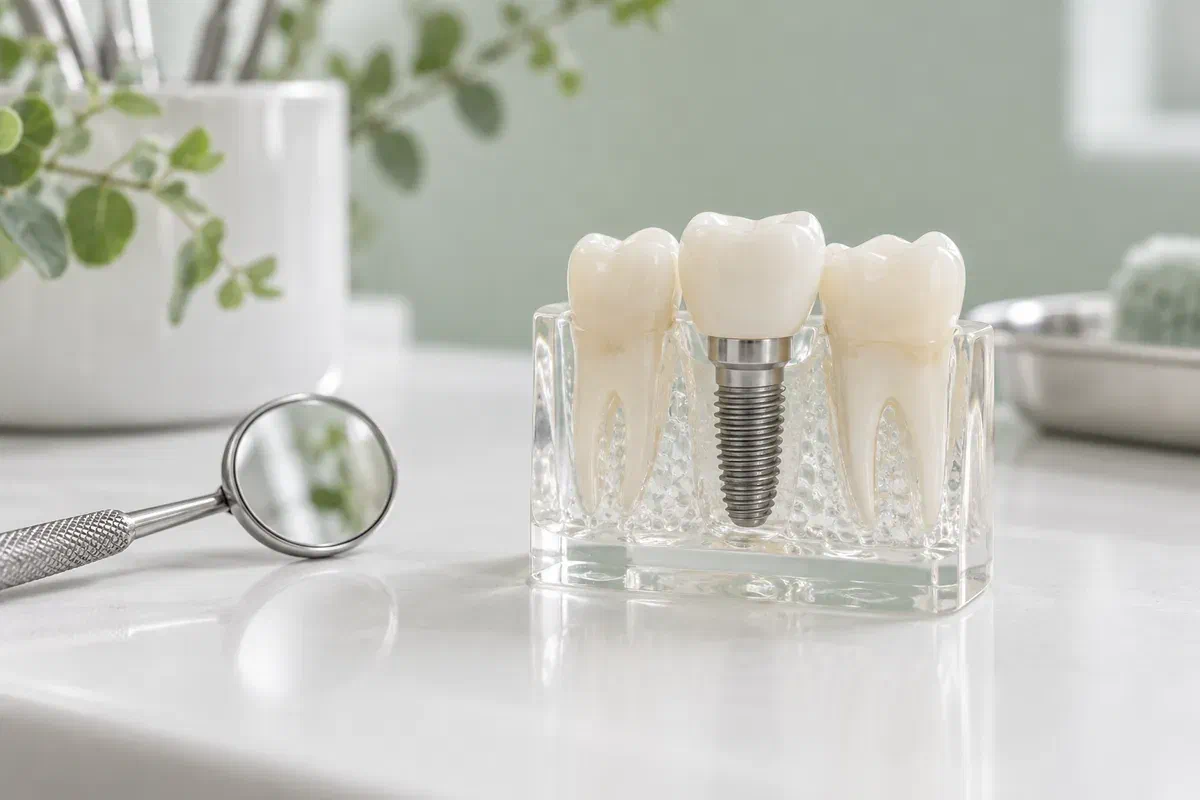
When a tooth feels loose, the instinct is to press it back and hold it there with something. With an implant crown, that can create new trouble. The crown is joined to the implant through a connection, often with a separate component in between, and the implant is anchored in bone. Each layer behaves differently.
Movement may come from the crown, from that connection, or from the support. It is not automatically a failed implant, and it is not always a screw ready for a twist. Our dentist needs to find which part is moving, check the gum and bone, and spot any piece that is chipped, worn or bent.
Families in western Mississauga, around Meadowvale or Churchill Meadows, can reach our Bronte Street practice when an implant tooth starts to rock or click. Please leave it as it is and phone us. If you have an implant card or treatment records, bring them, since identifying the system helps us plan the repair.
Let us know roughly when the crown was fitted, whether it has loosened before, and whether a hard bite, a knock or dental work came just before the change.
Resist the urge to rock it to see how bad it is. Several parts can feel alike when they loosen, and repeated force can make the eventual repair harder. Describe how it felt while eating normally.
A new noise, or teeth meeting in an unfamiliar way, can be important even with little visible movement. Tell us when it happens and whether it started suddenly or built up over days.
Mention any bleeding, puffiness, tenderness or discharge around the implant. Gum and mechanical problems are assessed together, and a crown repair alone might not address everything.
Call promptly about an implant crown that moves. If it comes out, keep it and any small pieces in a lidded container, and do not glue or press it back in.
In many cases the implant is still firm and the problem is in the crown or connection, which may allow repair without touching the implant. The examination confirms whether that is so, and which parts or extra stages would be needed.
Understanding the cause matters as much as the repair. Fit, the type of connection, your bite and previous repairs can all influence what is recommended. Ask how the plan responds to what was found, and how the result will be checked later.
Patient information: Cambridge University Hospitals — implant restorations and complications
Your dentist can explain what is involved and what still looks sound. That helps you follow the proposed repair rather than assuming the worst or assuming it is a two-minute job.
Implant components are not interchangeable across brands. Records help establish what you have, whether matching parts can be obtained, and whether another clinician or more visits will be needed.
Ask whether the crown can stay in, should be taken out, or needs a temporary. The answer rests on the findings, and should be realistic about how it will look and feel to chew with.
We assess the entire implant restoration first. The attachment design and our findings guide how the crown is accessed, what can be reused, and how much treatment fits into that appointment.
Expect us to ask who placed and restored the implant, whether it has loosened before, what changed recently, and what paperwork you have. If another office made the crown, their records can help.
Examination and, where indicated, imaging locate the movement and show the state of the gum and bone. Should the crown need removing for a closer view, you will hear the reasons first.
The repair might focus on the attachment, a connector or the crown. You confirm the plan, any limitations and the estimate beforehand, including possible parts orders, lab steps or a referral.
We check the repaired tooth as your teeth come together, explain cleaning and any limits, and book a review. Ask what should prompt a call and when stability and gum response will be rechecked.
Advice depends on which part was affected and how it was repaired. Ask for specific guidance on food, cleaning, any temporary, and whether to keep wearing a bite guard you already have.
Until you are seen, keep hard and sticky foods away from it, and try not to poke at it. If it loosens more or seems about to come off, call rather than waiting for the appointment.
Store-bought crown cement is meant for natural teeth. Glue, kitchen tools used as drivers or random replacement parts can damage the implant system and make our job harder.
After repair, tell us if looseness, clicking, soreness or a bite change comes back. Keep the review appointment, particularly if this crown has loosened before.
The right answer depends on your implant system, crown and examination. These explain why we assess and check records before committing to a specific repair.
Call our Bronte Street practice if an implant crown has started to move. We will examine the crown and the support beneath, explain the realistic repair options, and tell you which records or parts we may need.
Phone us right away about an implant crown that is painful, swollen, getting looser or has come out, and bring any implant paperwork.
