One end lifts or the bridge clicks
Point out which side seems affected and when you first noticed it. Avoid levering or rocking the bridge to check; extra loading can strain the remaining connections before they have been assessed.


An implant bridge can be held by more than one screw, so a loose end or a faint lift on one side needs careful checking. For people coming from Acton, we examine each connection and the bridge’s fit, identify the implant system, and explain whether one screw, several parts, or the bridge itself needs attention.
With a bridge on two or more implants, a problem at one connection can feel like the entire bridge is loose. Each implant usually has its own small prosthetic screw joining it to the bridge or to a connecting part. Those screws are separate from the implants anchored in the jaw.
So which connection has let go, and why? A screw may have unwound, worn or broken. A component may not be seating, the bridge may not be fitting evenly, or the problem may lie somewhere else. With several joints sharing the load, simply tightening the obvious one can miss what is really happening.
For anyone travelling from Acton, gather what you have before booking: implant cards, the original bridge paperwork, repair notes and any part that has come away. Our Bronte Street team will examine the restoration and explain the options, including compatible parts, access to each screw and how much work is likely.
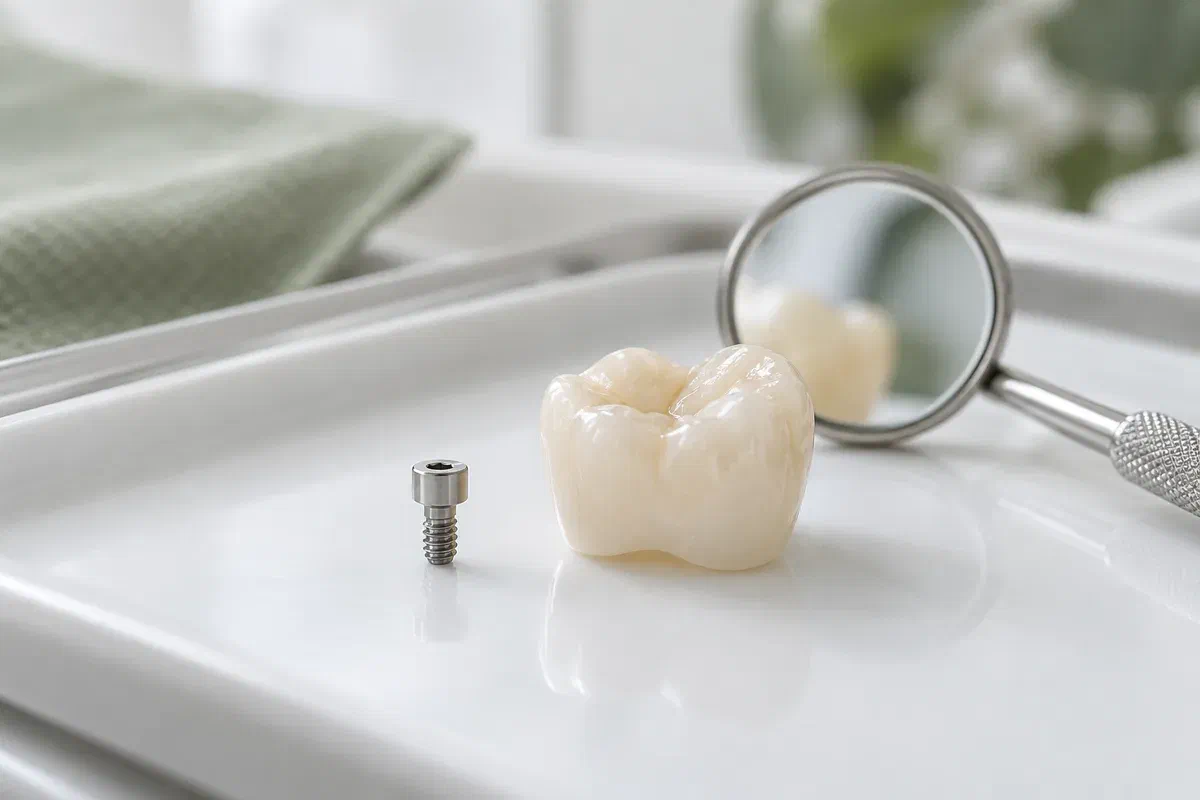
There’s no need to work out which screw is involved. Tell us where you feel the movement, whether it is a bridge or a single crown, and what repairs have been done before.
Point out which side seems affected and when you first noticed it. Avoid levering or rocking the bridge to check; extra loading can strain the remaining connections before they have been assessed.
Bridges on implants may have several sealed screw openings. One coming out doesn’t prove that screw is loose. Keep the piece, describe which opening it came from, and leave tools out of it.
Earlier tightening, replaced screws or adjustments are relevant. Bring dates and paperwork where possible so recurrence, part history, bridge fit and your bite can all be reviewed.
Phone soon if a bridge or crown on implants becomes unstable. Tell us about pain or swelling, a piece that has come off, or any sense that an implant itself, not only the bridge, is moving.
On a bridge, the prosthetic screws share the work of holding precisely fitted parts together. When one loosens, the others can take more strain. Whether the connections stay secure depends on the system, the condition of each part, how evenly the bridge fits, and the forces from your bite.
If the implants and bridge remain suitable, targeted work on the connections may let you keep using the restoration. The dentist should be clear about whether the existing screws can stay, which may need replacing, and whether the findings call for a different approach.
Patient information: International Team for Implantology — mechanics of implant connectors
Implants under one bridge are normally from the same system, but records confirm it. Correct identification points to the right screws, instruments and manufacturer requirements.
A bridge needs to sit evenly on each implant. Uneven seating, damage or wear at any connection can explain looseness and may alter the repair plan.
If a connection has loosened before, ask what is being reconsidered. Fit, part wear or bite loading may play a role, and a check after the repair should be arranged.
The work is guided by how your bridge or crown was designed and by the examination. Some repairs need records, specific components or another clinician’s involvement before they can be finished.
The dentist reviews your history, examines each implant site and takes images when appropriate. This distinguishes a connection problem from other reasons a bridge or implant might move.
We explain how each screw is reached and whether the bridge needs to come off for inspection. Records aid identification, and a close look shows which parts are intact.
Each connection is managed to the system’s requirements and the findings. A fractured or damaged part may call for another procedure, further appointments or referral.
We check that the bridge sits evenly and that your bite is balanced. Access openings are resealed according to the design, and you get guidance on cleaning and when to return.
Follow the instructions for your repair, including any short-term limits on chewing. If the bridge feels unfamiliar for a few days, let us know what you notice rather than trying to change it.
A screwdriver from the drawer, a screw bought online, or glue can damage implant components and make later repair more complicated.
Contact us if movement returns at either end or your teeth come together differently. Ask whether any night guard you already wear is still suitable.
Store the treatment summary and component details for each implant. They help future maintenance, especially if you change dentists.
Implant systems have their own components and handling rules. These answers are general; the repair is decided after your bridge has been examined.
Talk to our Bronte Street team about an implant bridge or crown that has started to lift or click. We will examine each connection, review your records, and explain whether screw work, new components or further assessment is needed.
Bring bridge paperwork and any parts that came out, and call promptly about pain or worsening movement.
