Looseness, clicking or shifting
Describe when it began and whether it is worsening. Please avoid testing the movement; loading the restoration again and again can strain components that the dentist needs to see intact.


With a loose implant crown, the real decision is often repair or rethink: can the existing parts be secured, or is something else needed? For households in Caledon, from Bolton to the smaller villages, our team examines the connection and the crown, identifies the system, and lays out the options in plain terms.
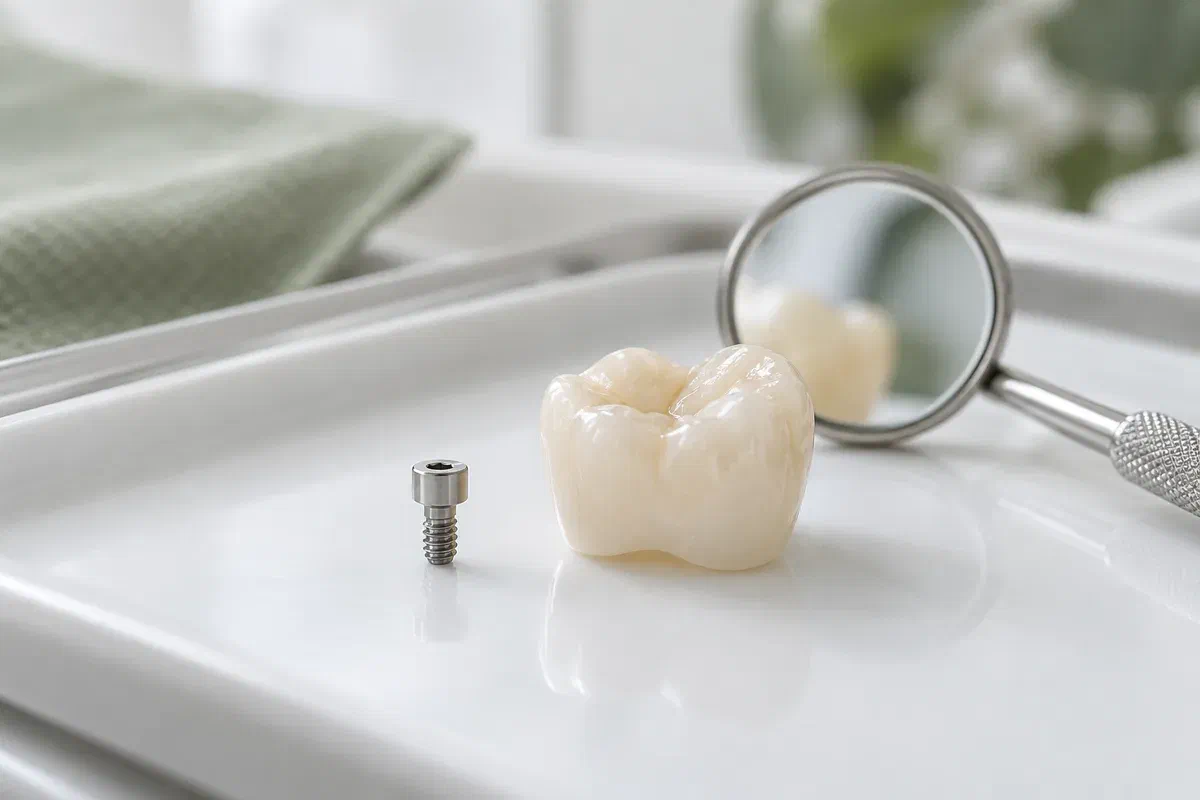
Most people with a loose implant tooth want to know one thing: can it simply be fixed? The answer depends on which part is at fault. Implant crowns and bridges are often fastened by a small prosthetic screw. That part is distinct from the implant within the jaw, so movement doesn’t automatically mean the implant is in trouble.
Choosing well means knowing the cause. An unwound screw, a damaged screw, a connecting part that no longer seats, and a crown that has worn or lost its fit can all feel the same. Some respond to connection work; others need a different solution. Retightening without that knowledge can postpone the real decision.
For a trip from Caledon, bring every bit of history you have: the implant card, earlier repair records, and any component that has come out. Our Bronte Street dentist can assess the restoration and set out the choices, from compatible parts and access to how much work each route involves.
You needn’t know what has failed. Tell us what you have felt, whether the implant holds a crown or a bridge, how old the restoration is, and whether the connection has been repaired before.
Describe when it began and whether it is worsening. Please avoid testing the movement; loading the restoration again and again can strain components that the dentist needs to see intact.
A lost or worn seal over the screw hole is not proof that the screw has loosened. Keep anything that came out, tell us what you see, and keep implements out of the opening.
How long the crown has been in place, and how often it has been tightened or had parts replaced, both influence the options. Records or rough dates help the dentist weigh fit, wear and your bite.
Call promptly about an implant tooth that has become unstable. Tell us about pain or swelling, a part that has detached, or any feeling that the implant support is moving along with the crown.
The prosthetic screw is one link in a chain of precisely fitted parts, holding them together under controlled tension. Whether that chain is still sound depends on the system, the condition of every component, how accurately the crown fits, and the forces your bite applies. That full picture guides the choice.
When the implant and crown remain suitable, targeted connection work may let you continue with what you have. The dentist should be specific about whether the screw can stay, whether it needs replacing, or whether the findings make a different approach the better option.
Patient information: International Team for Implantology — mechanics of implant connectors
Lookalike screws don’t confirm compatibility. Knowing the implant and its restorative components identifies the right parts, instruments and manufacturer requirements for any repair.
The screw, its seating surfaces and the crown are examined together. Wear, damage or a loss of fit can tip the balance away from a simple repair.
If loosening keeps returning, ask what each option would change about fit, part condition or bite loading, and how the result will be monitored.
The process follows your restoration’s design and the clinical findings. Some options need records, ordered parts or another clinician’s expertise before the final work begins.
The dentist reviews your records and earlier work, examines the area and takes images where indicated, separating a connection problem from other reasons for movement.
We explain how the screw is reached and any removal needed. Records support identification, and inspection shows which parts are intact and which are worn or damaged.
Once you understand the options, connection work or part replacement is carried out to the system’s requirements. A broken part or a broader problem may need a separate procedure, extra visits or referral.
Stability, fit and your bite are reassessed. Any access opening is sealed as the design requires, and you leave with care guidance and a review appointment.
Follow the instructions specific to your repair or revision, including any temporary restrictions. If the tooth feels unfamiliar afterwards, describe it to the team instead of adjusting it.
Screwdrivers from the toolbox, screws ordered online and glue can damage implant parts and narrow the options for a later repair.
Call if clicking, rocking or a change in your bite comes back. Anyone already using a night guard should ask whether it is still appropriate after the work.
Add the new treatment summary to your implant paperwork. A full history makes any future decision about repair or revision clearer.
Implant systems use their own parts and requirements. What follows is general patient information; your options are confirmed after the restoration is examined.
Speak to our Bronte Street clinic about an implant crown or bridge that has started to move. After examining it and reviewing your history, we will explain whether resecuring, a replacement component or a broader plan makes the most sense.
Bring your implant card, repair records and any loose parts, and call promptly about pain or worsening movement.
