Movement or clicking since the bite
Note when it happened and whether things seem to be getting worse. Please don’t keep biting on it or wiggling it to compare; the parts need checking before they take more load.

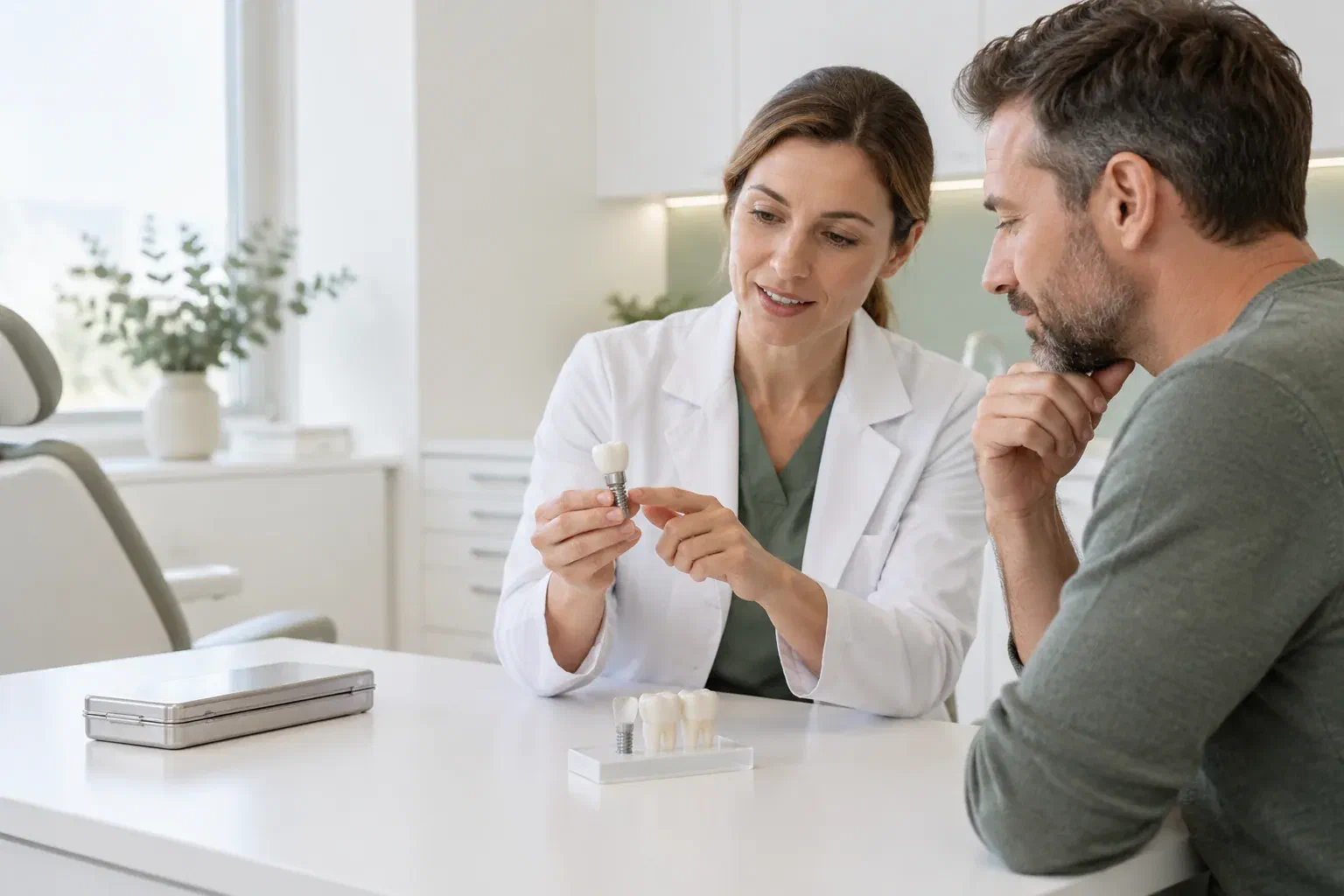
Biting down on an olive pit or an unpopped kernel can jolt an implant crown, and afterwards it may feel slightly loose. For people in Erin and Hillsburgh, our team can check whether the prosthetic screw or connection was affected, identify the system, and explain if securing, replacing a part, or further assessment is needed.
A sudden hard bite sends a sharp force through the tooth. On an implant crown, that force passes through a small prosthetic screw that fastens the crown or a connecting part to the implant. The screw is a separate piece from the implant held in the jaw, and it is often the part that reacts first.
After a jolt like that, several things are possible. The screw may have loosened, bent or cracked; a component may have shifted out of full contact; the crown itself may have chipped. These can feel identical. Tightening the connection without checking what changed may overlook damage that needs a different fix.
Coming in from Erin, a little preparation goes a long way. Bring your implant card, any record of earlier repairs, and anything that broke off. Our Bronte Street dentist can examine the restoration and explain what has happened, which parts suit your system, and what the repair will involve.
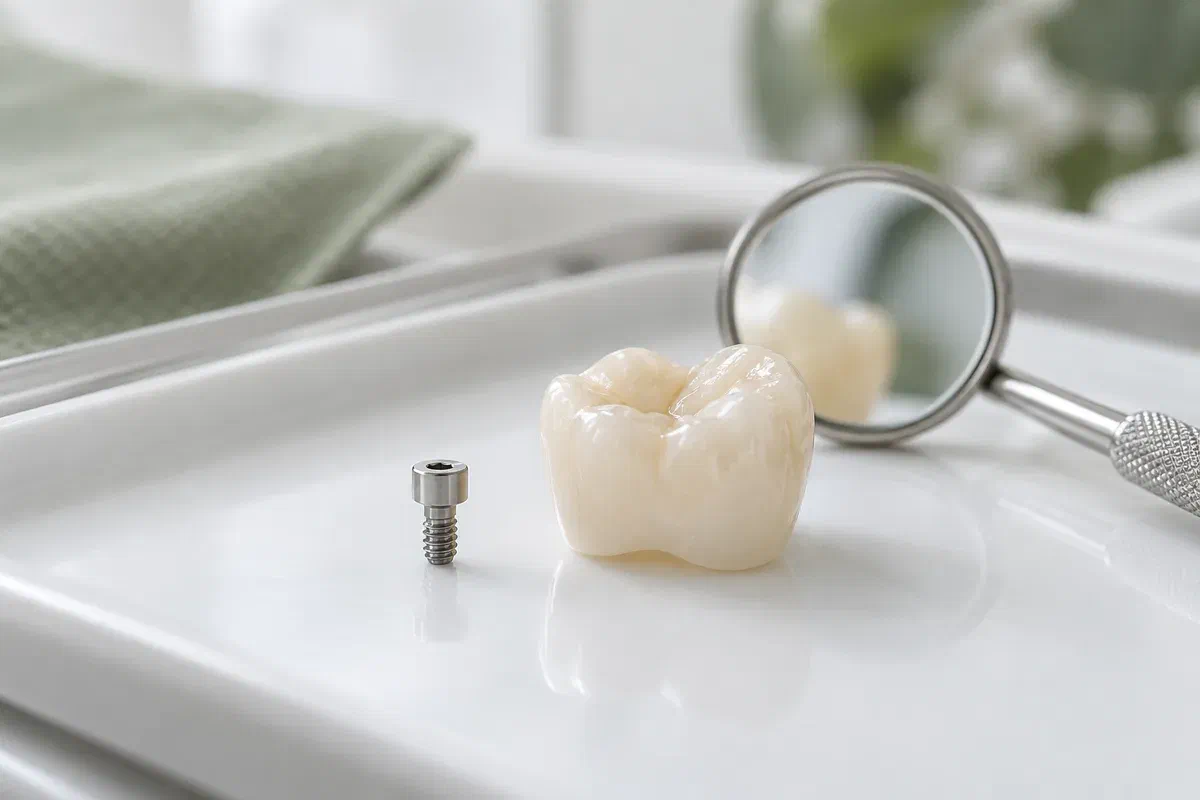
We don’t need part names. Describe what you bit on and what you felt, whether the implant carries a single crown or a bridge, and whether the connection has been repaired previously.
Note when it happened and whether things seem to be getting worse. Please don’t keep biting on it or wiggling it to compare; the parts need checking before they take more load.
A chipped crown or lost access filling can follow a hard bite without the screw loosening. Save any fragment, describe what you see, and don’t poke at the opening.
If this crown has needed tightening before, mention when. Dates and records help the dentist consider recurrence, earlier parts, crown fit and how you bite.
Phone promptly if the crown is unstable after the bite. Describe any pain, swelling or detached piece, or a feeling that the implant beneath the crown has moved.
Implant parts are made to fit together tightly, held by the prosthetic screw under controlled tension. A sudden heavy force can disturb that tension or damage a component. A thorough assessment considers the system, each part’s condition and fit, and your bite before deciding how to proceed.
If the implant and crown remain suitable, connection work may let you carry on using them. The dentist should explain whether the screw can be reused, whether the jolt has made replacement sensible, or whether something more complex needs a different approach.
Patient information: International Team for Implantology — mechanics of implant connectors
Screws from different systems can look nearly the same. Identifying your implant confirms the correct components, instruments and manufacturer requirements.
The screw, the surfaces it seats against and the crown are examined for cracks, bending or wear. Damage from a hard bite can change the repair plan.
Ask how the dentist will check the repair over time, especially if the connection has loosened before or the bite was particularly forceful. If loosening has recurred, fit, part wear or bite loading may be worth reconsidering.
The work is guided by the design of your restoration and the examination. Records, specific components or the help of another clinician may be needed before the final repair.
The dentist asks what happened, examines the crown and surrounding gum, and takes images if indicated. This helps tell connection problems apart from a damaged crown or other causes.
We explain how the connection is reached and whether the crown must be removed. Records help confirm the system, and inspection reveals any bending, cracks or wear.
The connection is secured or a damaged part replaced according to the system’s requirements. A fractured screw or crown may need a different procedure, more visits or referral.
We check the crown is steady and meets your other teeth correctly, then reseal any access hole as the design requires. You’ll receive care instructions and a review time.
Follow the guidance given after your repair, including any temporary limits on chewing. If the crown feels unfamiliar for a few days, describe it to us rather than trying to change anything.
A household screwdriver, an online replacement screw or adhesive can damage implant components and make later repair more complex.
Cut firm foods into smaller pieces and watch for hidden pits. Call if clicking, rocking or a bite change returns, and ask whether a protective appliance you wear remains suitable.
Save the summary and component details we give you. If anything happens again, that record helps the next assessment move faster.
Implant systems vary in their parts. These answers are general information only; your repair is chosen after the crown has been examined.
Call our Bronte Street practice if an implant crown feels loose or different after a hard bite. We will examine the crown and connection, go over your records, and recommend whether securing, a new component or further assessment is appropriate.
Bring any fragments and your implant records, and call promptly about pain, swelling or increasing movement.
