
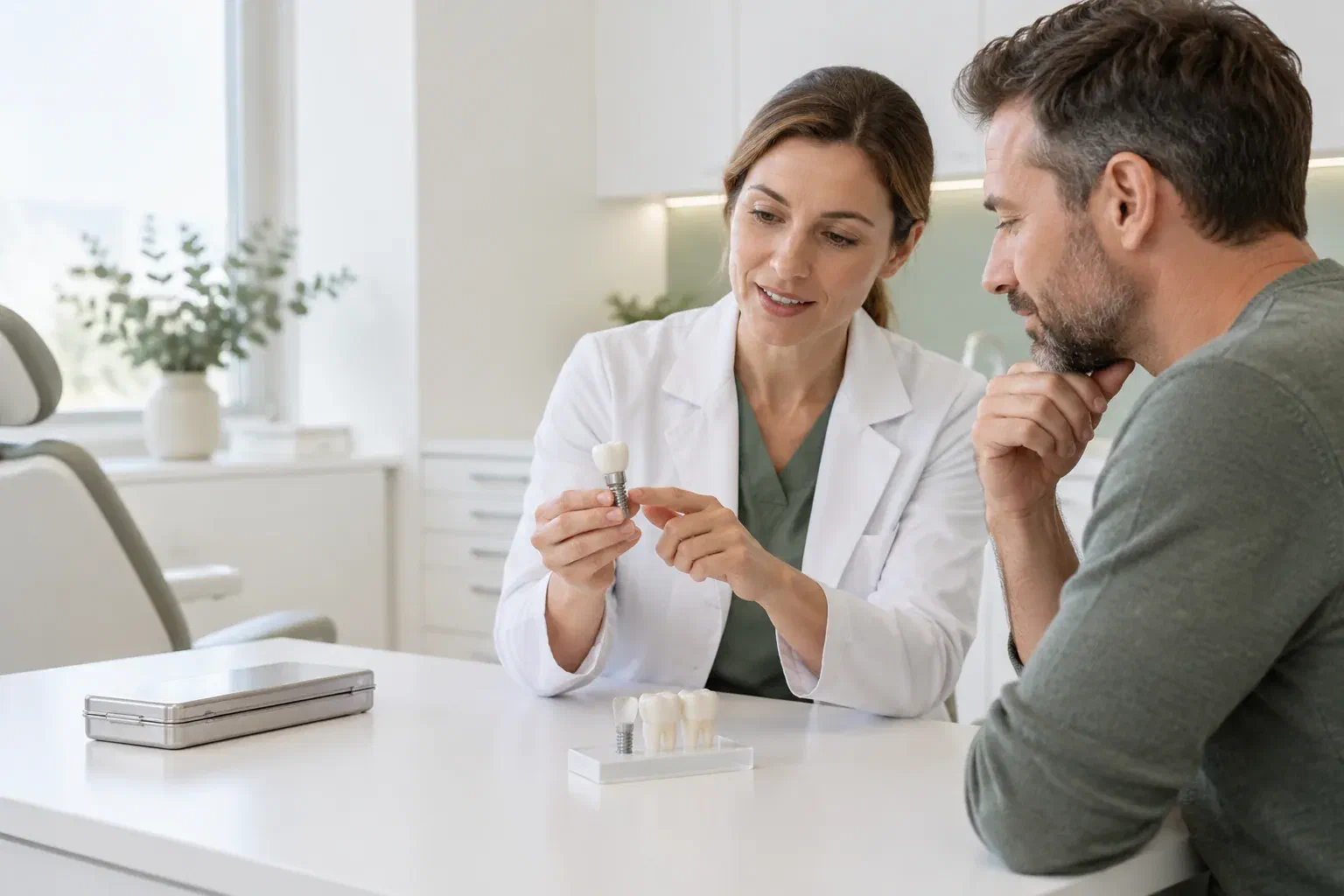
Illustrative discussion about the connecting components of an implant restoration
Restorative Dentistry

Loose Implant Screw Repair in Etobicoke

Coming from Etobicoke for a loose implant screw makes preparation worthwhile. A quick call first, with your implant records and any loose parts ready, helps us plan an efficient assessment of the crown and connection. We then explain whether the screw can be secured, a component replaced, or another stage of care is needed.

Planning the trip from Etobicoke

Phone first, then make the visit count

On a longer journey, you want the appointment to achieve as much as possible. That starts with understanding what may be wrong. Many implant crowns are fastened by a small prosthetic screw, and this part is distinct from the implant fixed in the bone. Movement frequently begins with that screw.

Identifying the precise problem still requires an examination. An unwound screw, a worn or fractured one, a part that is not seating, and a fault in the crown or bridge itself can all present the same way. Retightening without a reason behind it often means another trip later.

Before travelling, call our Bronte Street team and describe what you have noticed. Then gather implant cards, notes from earlier repairs and any piece that has come loose. With the system identified, we can plan parts, access and timing so that fewer visits are needed.

Call ahead about a loose implant screw
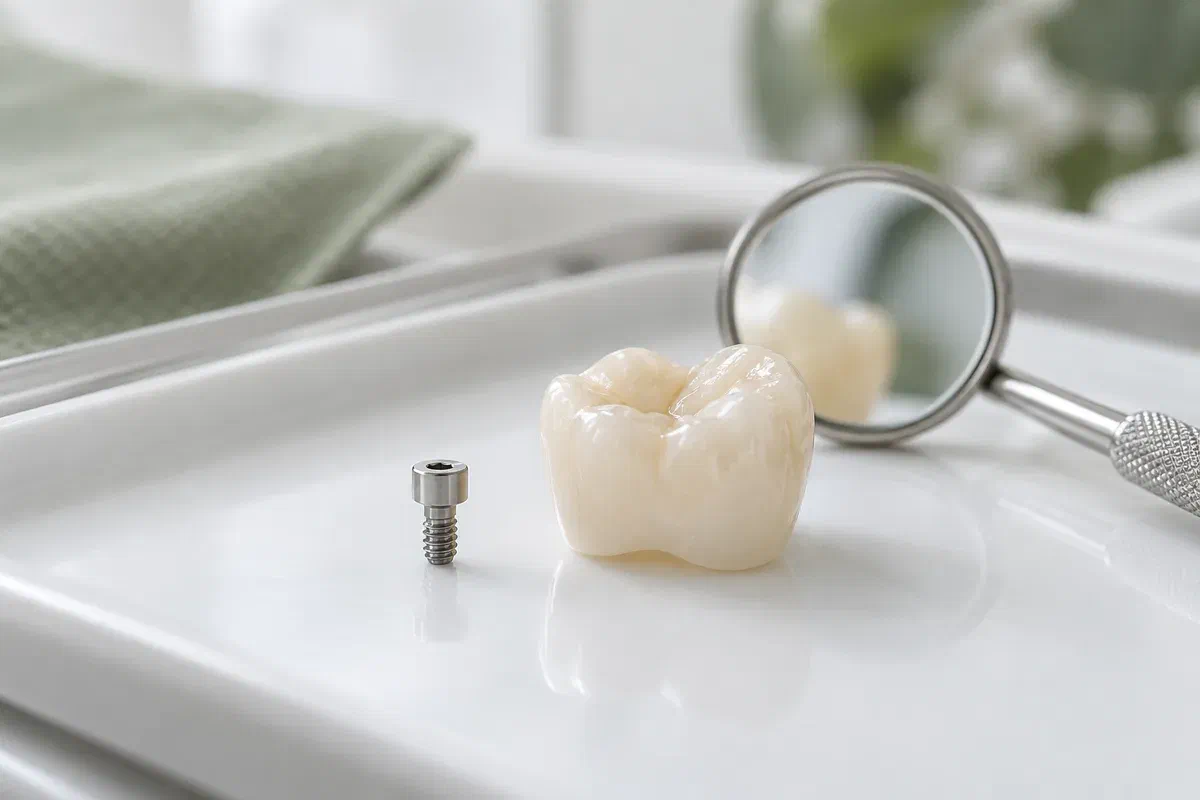
Small prosthetic connecting screw beside a ceramic crown and dental mirror
What to describe on the phone

Tell us enough to plan the appointment.

Component names aren’t needed. Describe the change, say whether the implant supports a single crown or a bridge, and let us know whether the same connection has been worked on before.

Movement, clicking or a shift in position

When did it begin, and is it getting worse? Answering those helps with planning. Meanwhile, avoid testing the crown with your tongue or fingers, as repeated loading can strain parts that need clinical assessment.

A seal, plug or small piece is missing

Losing the filling over a screw-access opening is not proof of a loose screw. Hold on to anything that came out, describe the opening, and keep tools away from it.

Earlier repairs on the same implant

Previous tightening or part changes affect the plan. Have dates and records ready so the dentist can review recurrence, component history, the fit of the restoration and your bite.

If an implant tooth becomes unstable, call promptly. With severe pain, facial swelling or fever, consider seeking urgent care closer to home rather than delaying for the drive.

Getting it right the first time

One careful assessment beats repeated retightening.

The prosthetic screw holds precisely fitted parts together with controlled clamping force. Whether that holds depends on the system, the state and fit of the components, and the forces your bite applies. Adding torque without considering those things does not address why the screw let go.

When the implant and restoration are still suitable, targeted connection work may allow them to remain in use. The dentist should explain whether your screw can be kept, whether a replacement is the better choice, or whether a more complex finding calls for a different route.

Patient information: International Team for Implantology — mechanics of implant connectors

Records that make parts planning possible

Screws can look alike across systems. Knowing your implant and restorative components lets the team confirm compatible parts, instruments and manufacturer requirements, ideally before you arrive.

An inspection of the complete joint

The screw, its seating surfaces and the restoration it holds are assessed together. Wear or a poor fit can change the plan even when the movement you feel is slight.

A follow-up that fits your schedule

If loosening has recurred, ask what will be reconsidered, whether fit, worn parts or bite loading. Plan the post-repair check at a time that suits the trip.

How the visit runs

History, identification, repair and a final check

Expect careful component work that follows your restoration’s design and the findings on the day. If parts, records or another clinician’s help are needed, we will explain how to schedule the rest.

  1. Assess the cause of movement

    The dentist reviews your history, examines the area and takes images when indicated. That distinguishes a connection fault from other reasons a crown, bridge or implant may be moving.

  2. Establish the system and the access route

    Your records help confirm the components. We explain how the screw is reached, whether anything must be removed, and whether the existing parts look intact enough to reuse.

  3. Perform the agreed connection work

    Tightening or a component replacement follows the system’s requirements and what was found. A broken part may need a different procedure, further appointments or referral.

  4. Verify the result before you head home

    We reassess the connection, the crown and your bite. The access opening is sealed according to design, and you receive care instructions and a review date that suits your travel.

Between visits

Know what to watch for once you’re home.

Follow the instructions given after the repair, including any temporary restrictions. If something feels unusual, call and describe it before deciding whether another trip is needed.

Don’t attempt any home fixes

Screwdrivers, online replacement screws and glue can damage implant components. The wrong part or force may also make the next assessment and repair harder.

Call early about clicking or bite changes

Phone us if movement returns or your teeth meet differently. If you use a night guard, ask whether it is still appropriate. A call lets us judge how soon to see you.

Keep the new component details handy

Save the treatment summary or implant information we provide. It is valuable if you ever need care from a clinician closer to home.

Planning around the finding

Same-visit repair, or a staged plan?

Whether the work can be finished in one appointment depends on what the inspection shows. Ask which component is involved, what can be retained, and what remains uncertain.

Often manageable at one visit

Securing a sound connection

When the components remain suitable, the clinician may restore the connection to the system’s requirements. Fit and bite are still reviewed, especially after a past loosening.

May need parts or another appointment

Replacement or retrieval of a damaged piece

Replacing a worn screw, or retrieving a fractured fragment, can require ordered parts or specialized help. The team should explain access, risks and referral options up front.

Usually planned in stages

Broader treatment of the restoration or implant

A fit issue, damaged connection or concern about the implant’s support may need a wider plan. Tightening the screw repeatedly is not an answer to those findings.

Patient information: International Team for Implantology — technical implant-restoration complications

Questions before you travel

Plan your implant screw visit with fewer surprises

Each implant system has its own parts and handling rules. These are general answers; your repair is confirmed once the restoration has been examined.

(905) 876-4488
Can the repair usually be done in a single appointment?
Sometimes. If the system is identified and the parts are sound, the connection may be managed in one visit. Damaged components, missing records or a referral can add appointments.
When should I go somewhere closer instead of waiting?
Severe pain, facial swelling, fever, bleeding that won’t settle, or any breathing concern are reasons to get urgent care nearby. You can follow up with us once things are stable.
Can you order parts before I arrive?
If you can share implant records ahead of time, the team may be able to check part availability. Without records, identification usually happens during the examination.
Is it safe to keep chewing on a loose implant crown?
It is better to chew on the other side and choose softer foods until it is checked. Continued loading of a loose connection can damage the parts.
My crown has a small hole on top. Is that normal?
Screw-retained crowns usually have a sealed access hole. If the seal is missing, the screw may still be secure. Keep tools out of the opening and call to have it checked.
How do I make the trip from Etobicoke worthwhile?
Call first, share what records you can, bring any loose parts, and allow time for imaging. That helps us diagnose at the first visit and schedule any follow-up efficiently.
Loose implant screw help for Etobicoke

A well-planned visit for a loose implant tooth

Reach out to our Bronte Street practice before you travel. Describe the movement, send or bring your records, and we will examine the restoration and explain whether connection work, a replacement component or further assessment is the next step.

For severe pain, swelling or breathing concerns, seek urgent care close to home first.

Visit Milton Dental Clinic
Unit 1, 342 Bronte St. S, Milton, ON L9T 5B7
Get directions Clinic hours
Monday–Thursday
11am–7pm
Friday–Sunday
By appointment only

Areas we serve

  • Milton
  • Oakville
  • Mississauga
  • Georgetown
  • Halton Hills
  • Acton
  • Campbellville
  • Brampton
  • Burlington
  • Puslinch
  • Rockwood
  • Erin
  • Caledon
  • Etobicoke
  • Old Milton
  • Bronte Meadows
  • Timberlea
  • Dorset Park
  • Dempsey
  • Clarke
  • Beaty
  • Coates
  • Harrison
  • Scott
  • Willmott
  • Ford
  • Bowes
  • Cobden
  • Walker
  • Mountain View
  • Milton Heights
  • Hawthorne Village
  • Valley View
  • Fallingbrook
  • Nassagaweya
  • Trafalgar
  • Esquesing
  • Nelson
  • Brookville
  • Moffat
  • Glen Williams
  • Norval
  • Limehouse
  • Stewarttown
  • Ashgrove
  • Hornby
  • Silver Creek
  • Speyside
  • Scotch Block
  • North Oakville
  • River Oaks
  • Glen Abbey
  • West Oak Trails
  • Palermo
  • Bronte Creek
  • College Park
  • Joshua Creek
  • Uptown Core
  • Preserve
  • Iroquois Ridge
  • Lisgar
  • Meadowvale
  • Meadowvale Village
  • Churchill Meadows
  • Erin Mills
  • Central Erin Mills
  • Streetsville
  • East Credit
  • Creditview
  • Heartland
  • Sheridan
  • Mount Pleasant
  • Credit Valley
  • Huttonville
  • Churchville
  • Springbrook
  • Northwest Brampton
  • Bram West
  • Fletcher's Meadow
  • Fletcher's Creek South
  • Alton Village
  • Orchard
  • Millcroft
  • Headon Forest
  • Tansley
  • Brant Hills
  • Tyandaga
  • Kilbride
  • Lowville
  • Aberfoyle
  • Morriston
  • Arkell
  • Hillsburgh
  • Freelton
  • Carlisle
  • Waterdown
  • Flamborough
  • Mountsberg

How can we help?

Milton Dental Clinic

Have a question about your smile? Choose the option that works best for you.

For urgent dental concerns, please call.
Messages are reviewed during clinic hours.