Looseness that returns after a repair
Tell us how long the crown stayed firm last time, and whether it loosens gradually or suddenly. Please avoid rocking it to monitor progress; repeated testing loads parts that need a clinical look.

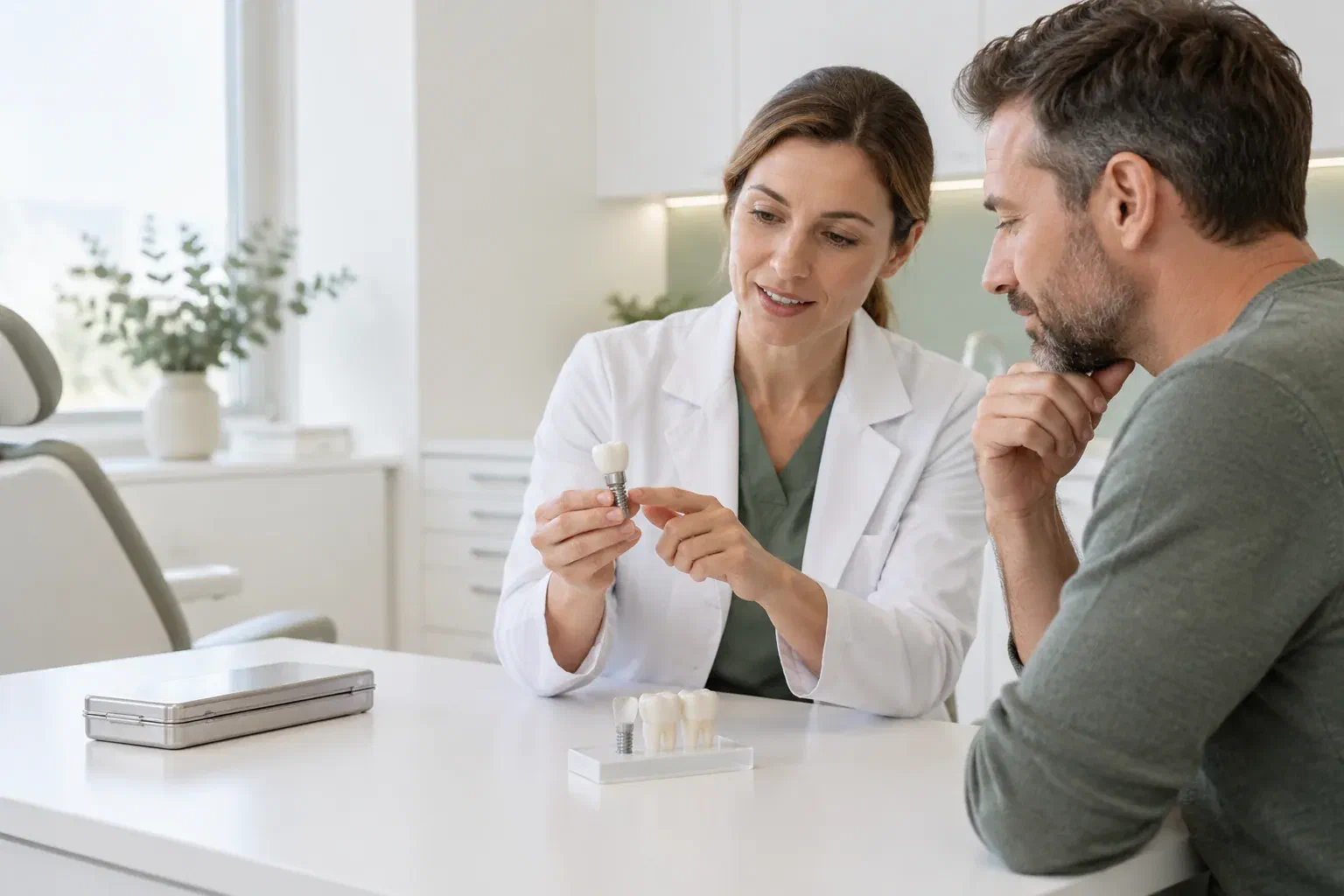
If an implant crown keeps working loose, the screw may be only part of the story; how you bite, clench or grind can matter too. For people across Halton Hills, our team examines the connection and the forces acting on it, identifies the system, and explains whether securing, replacing or rethinking the restoration makes sense.
Some people find that an implant crown comes loose, gets fixed, and then drifts loose again months later. That pattern is a signal to look more widely. The small prosthetic screw that fastens the crown is not the implant itself, but the screw is where the strain from chewing, clenching or grinding often shows up first.
Recurrence can have more than one source. The screw may be worn or stretched, a component may not sit fully, the crown may not fit as it should, or bite forces may be heavier than the joint was planned for. Each repeat tightening without exploring those possibilities tends to end the same way.
Bring a record of each previous repair if you can, along with any implant card and any loose part. From Georgetown, Acton or a smaller Halton Hills hamlet, our Bronte Street team can review that history, examine the restoration, and explain which parts suit your system and what the work may involve.
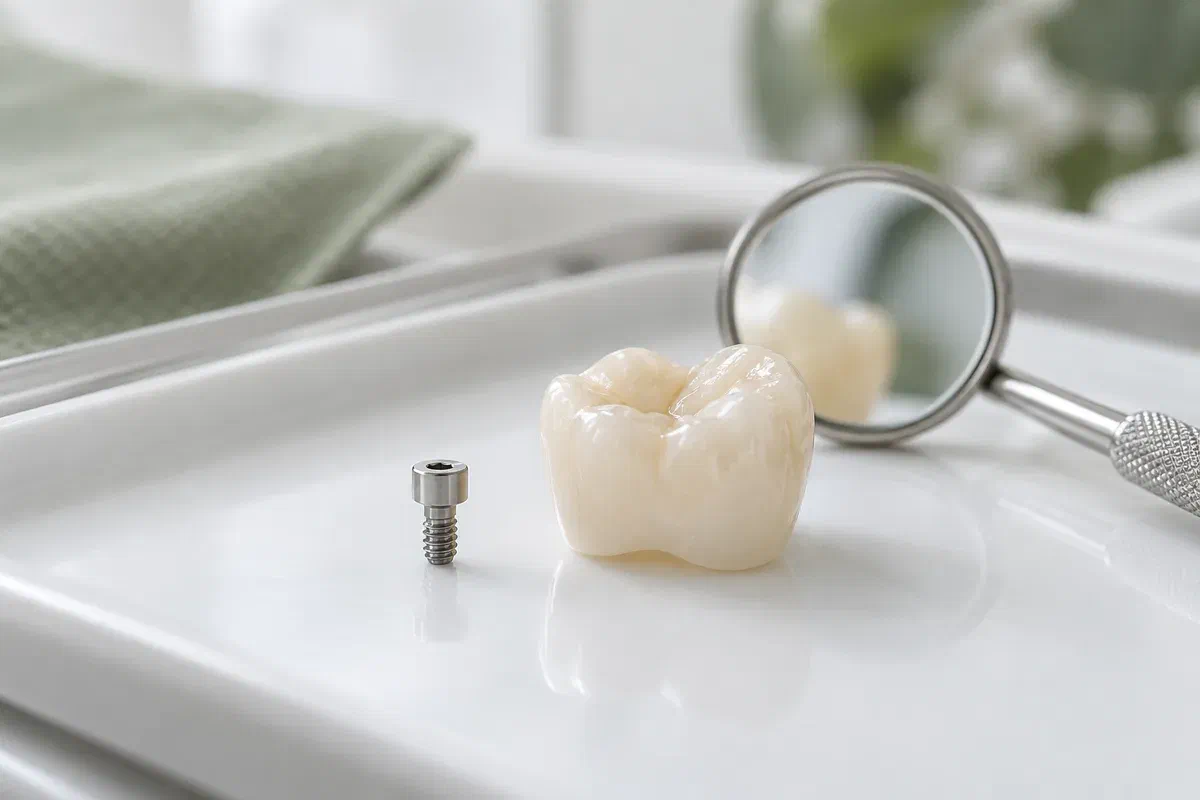
No technical knowledge needed. Tell us what you feel, whether the implant holds a crown or a bridge, and how many times the connection has been worked on.
Tell us how long the crown stayed firm last time, and whether it loosens gradually or suddenly. Please avoid rocking it to monitor progress; repeated testing loads parts that need a clinical look.
If the material over the screw opening has worn or chipped, that alone doesn’t mean the screw is loose. Keep any fragment and describe the opening, but don’t insert anything to investigate.
Morning jaw ache, worn teeth or a partner hearing you grind can be relevant clues. Mention them alongside dates of previous repairs so the dentist can consider loading as well as part history and fit.
Call promptly if an implant tooth becomes unstable. Mention pain, swelling, a detached component, or movement that seems to involve the implant support and not just the crown.
A prosthetic screw keeps matched components pressed together with a set level of tension. Heavy or repeated forces, worn parts or a less-than-ideal fit can all erode that tension over time. That is why a lasting repair considers the system and the bite, not just the amount of turning applied.
Provided the implant and restoration are still suitable, connection work may let you continue using them. The dentist should be clear about whether the existing screw can be retained, whether a new one is appropriate, or whether the findings point to a different approach altogether.
Patient information: International Team for Implantology — mechanics of implant connectors
Identifying your implant and restorative components confirms which screw, instruments and manufacturer requirements apply. A visually similar part may not truly be compatible.
The dentist looks at the screw together with the surfaces it presses against and the restoration on top. An imperfect fit or damage may explain why loosening keeps returning.
Ask how clenching, grinding or the way your teeth meet might be contributing. The plan should include rechecking the connection after the repair and discussing any protective appliance.
Expect careful work based on your restoration’s design and what the examination uncovers. Some cases require records, specific components or another clinician’s expertise before the definitive repair.
We go through each previous loosening and repair, examine the area, and take images if they are indicated. That helps separate a connector issue from other causes of movement.
The team explains how the connection is reached and any removal involved. Records support identification, and inspection shows whether the screw and parts are intact or worn.
Following the system’s requirements, the dentist tightens the connection appropriately or replaces a component. A fractured or damaged part may require a different procedure, more visits or referral.
We look at how your teeth meet on the restored tooth and seal the access opening to suit its design. You leave with care instructions and a review appointment to confirm the connection is holding.
Follow your repair instructions, including any temporary chewing limits. If the tooth still feels unfamiliar after a day or two, describe it to us rather than trying to adjust it.
Household screwdrivers, screws ordered online and glue do not belong anywhere near an implant crown. They can damage components and make later repair harder.
If grinding or clenching is part of the picture, ask whether a protective appliance is suitable, or whether your current one still fits after the repair. Report any renewed clicking promptly.
Note the date of each repair and keep the treatment summary we give you. A clear record helps any future clinician spot a pattern quickly.
Recurring loosening has several possible causes, and every system has its own components. Use these answers as background; your repair is chosen once the restoration has been examined.
Book with our Bronte Street practice if an implant crown has loosened more than once. We will review your repair history, examine the restoration and your bite, and explain whether connection work, new components or further assessment is appropriate.
Bring notes on previous repairs and any loose parts, and call promptly about pain or ongoing movement.
