A click, wobble or shift when you chew
Tell us roughly when it started and whether it seems to be getting worse. Try not to press, wiggle or twist the tooth to test it; the connection is best checked in the chair.


An implant crown that suddenly shifts or clicks often raises one worried question: is the implant failing? In many cases the answer starts with the small screw that holds the restoration together. In Milton, our team can examine the connection, identify the components, and explain whether tightening, a new part, or further care makes sense.
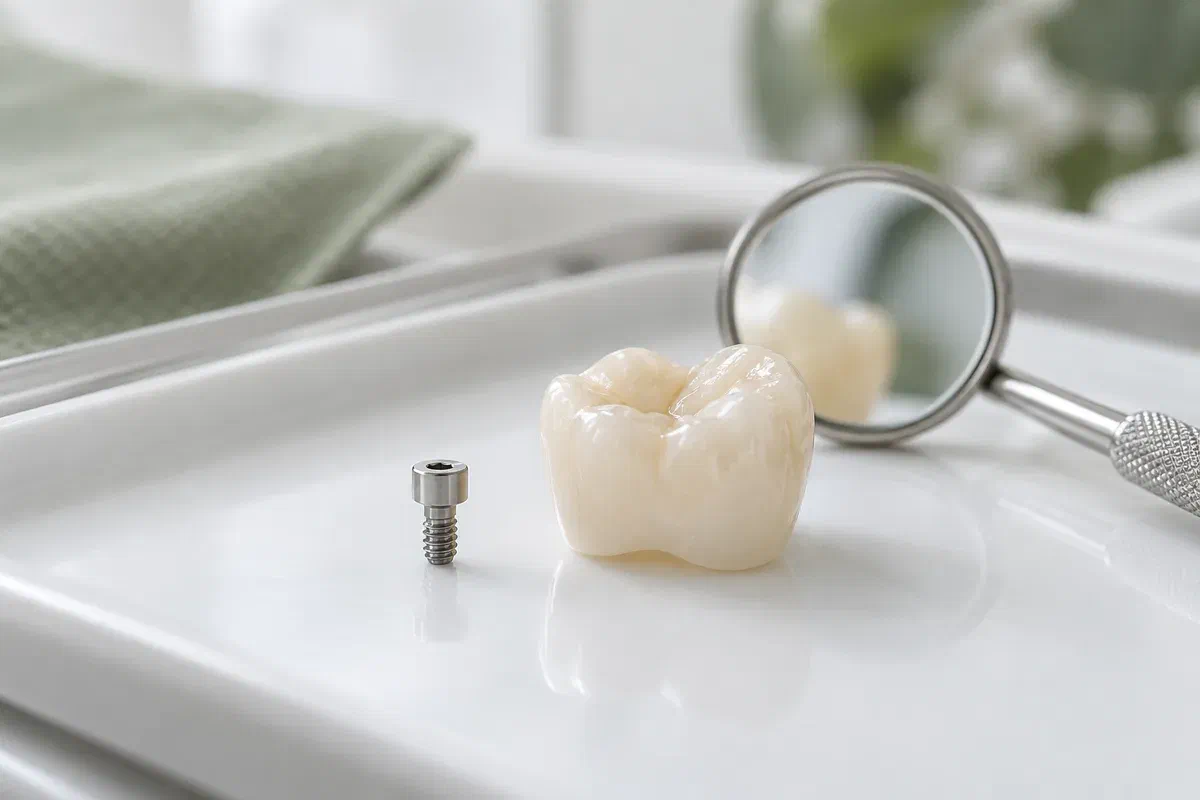
Many people first notice it at the dinner table: a faint click when they bite, or a crown that seems to rock under the tongue. It is natural to fear the implant itself has come loose. Often the movement involves a much smaller part, a prosthetic screw that fastens the crown or a connecting piece to the implant below.
That screw and the implant anchored in the jaw are separate pieces with separate jobs. Loosening, a worn or broken screw, a component that no longer seats properly, or a problem in another part of the restoration can all feel alike. Tightening again and again without a diagnosis can leave the real problem in place.
In Milton, our team can examine the restoration and talk through what comes next. Bring implant cards, notes from an earlier repair, or any part that came out. Clear system details help us explain which components fit and how much work is involved.
There is no need to work out which part is involved. Let us know what you have noticed, whether the tooth is a single crown or part of a bridge, and whether this has happened to the same implant before.
Tell us roughly when it started and whether it seems to be getting worse. Try not to press, wiggle or twist the tooth to test it; the connection is best checked in the chair.
Losing the material that covers a screw-access hole does not prove the screw has loosened. Save anything that came out, describe what you can see, and avoid poking a toothpick or other tool into the opening.
Past repairs matter. Share any dates or paperwork you have so the dentist can weigh how often it has happened, which parts were changed, how the crown fits, and how your teeth meet when you bite.
Please call soon if an implant tooth has become unstable. Let us know about pain, swelling, a part that has come off, or movement that seems to come from the gum and support rather than only the crown.
A prosthetic screw is designed to hold precisely matched parts firmly together. How well it does that depends on the system, the state of each component, the fit, and the forces your bite places on the tooth. A good assessment weighs all of these rather than treating the screw like a bolt that needs more turning.
When the implant and crown are still in good shape, focused work on the connection may let you keep using them. The dentist should tell you whether the existing screw can stay, whether a new one is needed, or whether the findings point to a larger problem that calls for a different approach.
Patient information: International Team for Implantology — mechanics of implant connectors
A screw that looks right may not be right. Knowing the implant brand and restorative parts helps confirm which components, instruments and manufacturer instructions apply to the work being planned.
The screw, the surfaces it seats against, and the crown attached to it are reviewed as one unit. Wear or a poor fit can change the plan, even when the only thing you have noticed is slight movement.
When a screw loosens more than once, it is fair to ask what is being looked at differently. The answer may involve fit, worn parts or bite forces, and should come with a plan to recheck the result later.
This is careful component work shaped by how your restoration was built and what the examination shows. Depending on the findings, the dentist may need records, matching parts or another clinician's input before the final repair.
The dentist looks at the restoration and any earlier treatment, examines the area, and takes images when they are needed. The aim is to tell a connector problem apart from other reasons a crown, bridge or implant might move.
We work out how the screw can be accessed and explain anything that needs to be removed first. Your records help identify the system, and a close look shows whether the parts are sound enough to use again.
The connection is tightened correctly or a component is replaced, following the system's requirements and what was found. A broken or damaged part may need a different procedure, more visits, or a referral.
We recheck the connection, the crown and your bite as needed. Any access hole is sealed to suit the design, and you leave with guidance on eating, cleaning and when to come back for a check.
Follow the specific instructions you are given, including any short-term limits on chewing. If the tooth still feels a little unusual afterwards, tell us what you notice instead of trying to correct it yourself.
Never use a household screwdriver, a replacement screw bought online, or glue on an implant crown. The wrong part or too much force can harm the components and make a later repair harder.
Call us if clicking or rocking returns, or if your teeth meet differently when you close. If you already wear a night guard or other bite appliance, ask whether it still suits you after the repair.
Keep the treatment summary or implant information we give you after the work. It helps with future maintenance, especially if you change clinics or need care somewhere else later on.
Every implant system has its own parts and handling rules. These answers give a general picture for patients; the exact repair is decided once the restoration has been examined.
Call our Bronte Street practice about an implant tooth that feels loose or clicks. Once we have examined the restoration and gone over your records, you will know whether it needs connection work, a new component, or a further assessment.
Bring any parts that came out and your implant records, and call right away about ongoing movement or pain.
