The crown shifted, clicked or lifted out
Say when it began and whether it came out fully or still moves in place. If it is still in, try not to keep loading or rotating it; the parts are best examined clinically before anything else happens.


An implant crown that comes away in your hand, screw and all, is unsettling but often repairable. If you are coming from Mississauga, bring every piece. We examine the crown, the connection and the implant beneath, confirm the system, and explain whether the parts can go back, need replacing, or point to a wider issue.
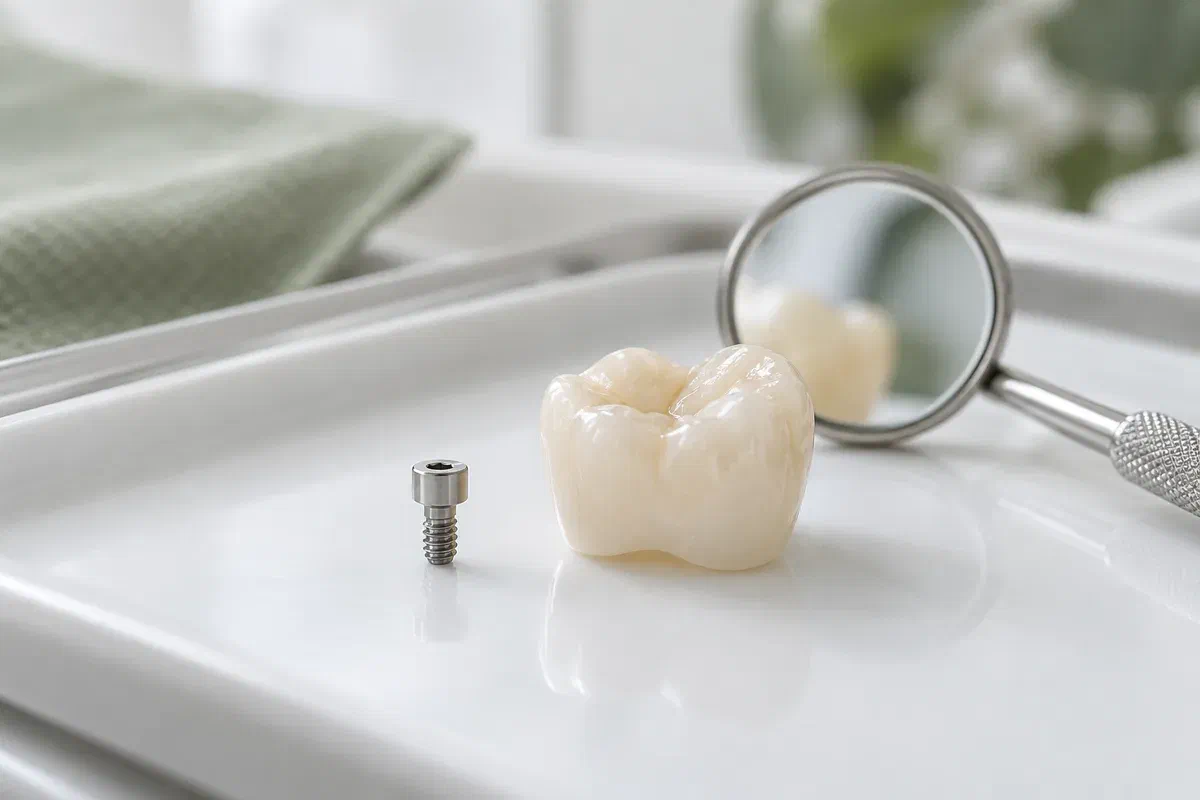
When a screw has loosened far enough, a crown can lift off entirely, sometimes with a tiny screw still sitting in it. Seeing that is alarming, yet the implant anchored in the bone has often stayed exactly where it was. The part that failed is usually the prosthetic screw or the connection it was holding.
Even with the crown out, the reason is not obvious. The screw might have unwound, stretched, worn or snapped. A connecting part may have stopped seating properly, or something in the crown itself may be at fault. Putting it back without finding out why tends to invite a repeat.
Place everything in a small clean container and bring it, along with any implant card or notes from past repairs. Our Bronte Street team can look over the pieces and the site and explain what is reusable. Knowing the system makes it far easier to talk through parts, access and the work needed.
You don’t need technical terms. Just tell us what happened, whether the tooth is a single crown or part of a bridge, and whether this implant has come loose before.
Say when it began and whether it came out fully or still moves in place. If it is still in, try not to keep loading or rotating it; the parts are best examined clinically before anything else happens.
A small piece could be the screw, or just the material sealing its access hole. Either way, keep it safe and tell us what you found. Please don’t try pushing it back in or reaching into the opening.
A previous loosening or swapped part adds useful context. Bring dates and records where you can, so the dentist can consider recurrence, which parts have changed, the crown’s fit and your bite.
Call soon about a loose or detached implant crown. Mention pain, swelling, a missing part, or a sense that the implant support itself is moving.
Implant parts are machined to mate closely, and the prosthetic screw holds them under carefully set tension. Whether it stays put depends on the system, the condition and fit of every part, and the forces from your bite. Cranking it tighter overlooks all of those and can damage the components.
If the implant and crown are still in good order, connection work may let you carry on using them. The dentist should say whether the original screw can be reused, whether a fresh one is wiser, or whether the findings call for a more involved approach.
Patient information: International Team for Implantology — mechanics of implant connectors
Screws from different systems can look almost the same. Knowing your implant and its restorative parts establishes which components, tools and manufacturer instructions apply.
A detached crown lets the team see the screw and seating surfaces directly. Wear, distortion or a poor fit may change the plan, even if the crown looks undamaged.
If the crown has come loose before, ask what might be driving it. Fit, part condition or bite forces can all play a role, and a follow-up check should be planned after the repair.
The approach follows your restoration’s design and the examination findings. Some repairs need records, new parts or input from another clinician before they can be completed.
The dentist examines the implant area, reviews any parts you brought and your treatment history, and takes images where indicated. This confirms whether the issue lies with the connection or with something else.
Records and inspection help identify the components and show whether the screw and crown can be used again. We explain how the connection will be accessed and what is involved.
Following the system’s requirements and the findings, the crown is secured or a component is replaced. A broken part may need a separate procedure, further visits or a referral.
We confirm the connection, the crown’s position and how your teeth meet. The access opening is sealed to suit the design, and you are told how to care for the tooth and when to return.
Follow the instructions given for your repair, including any short-term limits on chewing. If the tooth feels unusual for a while, describe the sensation to us instead of trying to correct it.
Household screwdrivers, screws bought online and glue can all damage implant parts. Using the wrong piece or force may also make a later assessment and repair harder.
Call if the crown starts to shift or click again, or if your teeth come together differently. If you wear a night guard, ask whether it still fits your needs.
Store the treatment summary or component details we give you. They help with future maintenance, especially if you change dentists or move.
Different implant makers use different parts and handling steps. Treat these answers as a general guide; the specific repair is decided after the restoration is examined.
Contact our Bronte Street clinic about an implant crown that has loosened or come off. We will examine the site and the parts, go over your records, and explain whether reconnection, a new component or further assessment is the right course.
Keep the crown and screw in a clean container, and call promptly about pain or swelling.
