The implant tooth contacts first or feels high
Let us know when your bite started to feel different and whether it is changing. Avoid clenching on it to check; repeated pressure can strain parts that need a clinical assessment.


Sometimes a loose implant screw shows up as a bite that suddenly feels wrong, with the implant tooth meeting first or food catching beside it. From Puslinch, you can have the crown, its connection and your bite examined together, the system identified, and a clear explanation of whether securing, replacing or further care is appropriate.
You close your mouth and the implant tooth touches before the others, or a shred of food starts lodging beside it every meal. Neither feels like a loose tooth, yet both can follow a connection that has shifted slightly. Many implant crowns rely on a small prosthetic screw, which is a different part from the implant in the bone.
A changed bite has more than one possible explanation. The screw might have backed off, worn or snapped; a component may be sitting unevenly; the crown may be damaged; or the cause may lie elsewhere entirely. Retightening without investigating can leave both the bite and the underlying fault unresolved.
When booking from Puslinch, gather any implant card, repair notes, and anything that has come loose. Our Bronte Street team will examine the crown and your bite and talk through the choices. A confirmed system makes it easier to explain compatible parts, access and the scope of the repair.
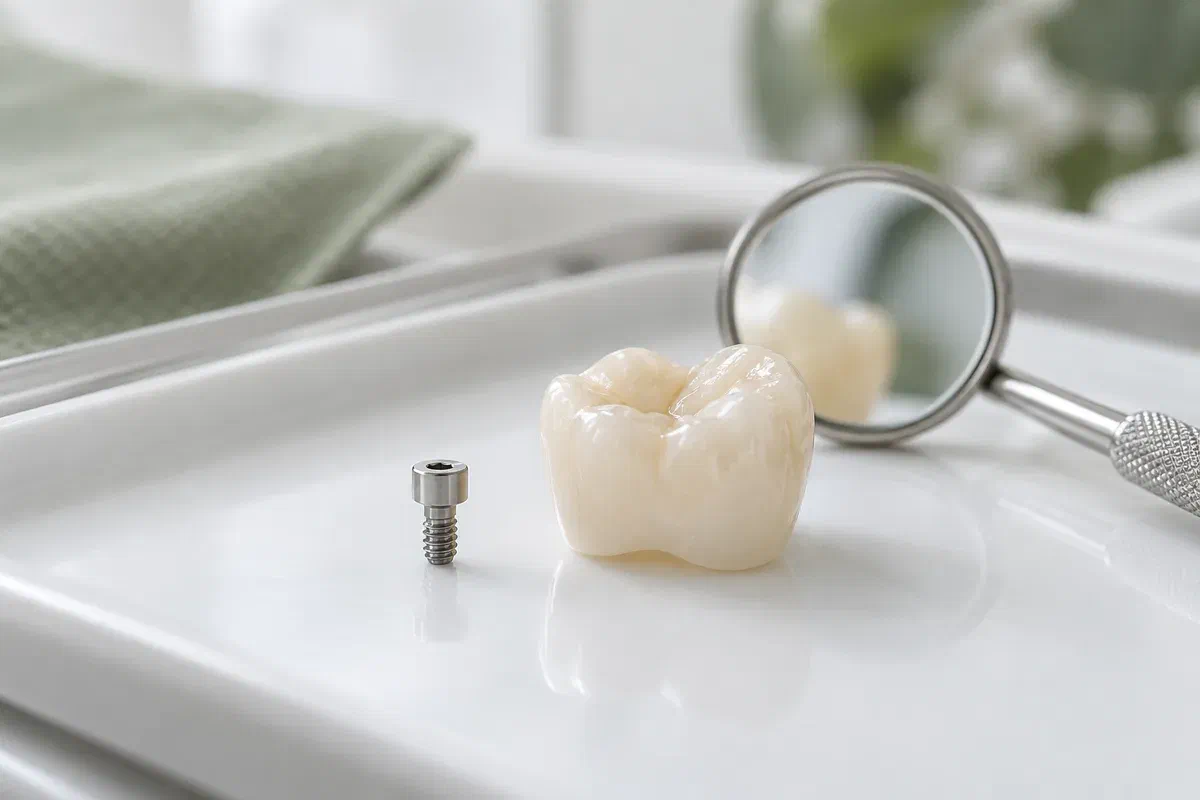
Leave the technical side to us. Describe what feels different, whether the implant holds a single crown or a bridge, and whether the connection has been worked on in the past.
Let us know when your bite started to feel different and whether it is changing. Avoid clenching on it to check; repeated pressure can strain parts that need a clinical assessment.
A new food trap or a lost filling over the screw hole doesn’t confirm a loose screw. Keep any piece that came out, mention what you see, and don’t dig at the area with picks.
Share dates and any records from earlier repairs. The dentist can then consider recurrence, component history, crown fit and how your teeth meet as a whole.
Call promptly about an implant tooth that is unstable or suddenly feels very different. Tell us about pain, swelling, a part that has come away, or any sense that the implant itself has moved.
Implant components are designed to fit snugly, with the prosthetic screw holding them under controlled tension. When that joint loosens even slightly, the crown’s position can change enough to alter your bite. A good assessment looks at the system, the parts, the fit and the forces acting on the tooth together.
If the implant and crown remain suitable, connection work may restore the tooth to a stable position. The dentist should explain whether the screw can be kept, whether replacing it is wiser, or whether a broader finding needs a different approach.
Patient information: International Team for Implantology — mechanics of implant connectors
Components that look alike may come from different systems. Identifying yours confirms the parts, instruments and manufacturer requirements needed for the repair.
The dentist examines how the crown seats on its connection and how it meets the opposing teeth. Damage or uneven seating may change the plan.
If the connection has loosened before, ask what is being reconsidered, such as fit, wear or bite loading, and when the result will be reviewed.
The approach follows your restoration’s design and the clinical findings. Some cases need records, particular parts or another clinician’s expertise before the definitive work is done.
We review your history, examine the implant area, check how your teeth meet and take images if indicated. This shows whether the connection is behind the change or something else is.
The team explains how the screw is reached and any removal involved. Records support identification, and inspection reveals whether components are intact and reusable.
Work follows the system’s requirements and the findings. A cracked or broken component may require a different procedure, further appointments or a referral.
Once the crown is stable, we check how your teeth come together and close any access opening to suit the design. You leave with care advice and a review date.
Follow the instructions you are given, including any temporary restrictions. A bite can take a moment to feel familiar, but if it still seems off after a few days, tell us rather than adjusting anything.
Household screwdrivers, screws ordered online and glue can all harm implant components and complicate any later repair.
Phone if the tooth starts contacting first again, clicks or rocks. Anyone who already wears a night guard should ask whether it still fits properly.
File the component details we provide. They support future maintenance, particularly if you see another clinician later.
Implant components and handling vary between systems. These answers are general information for patients; your repair is confirmed after an examination.
Book with our Bronte Street clinic if an implant tooth now meets differently, catches food or feels loose. After examining the crown and your bite and reviewing your records, we will tell you whether the connection, a part or a wider assessment needs attention.
Bring implant records and any loose pieces, and call promptly about pain or increasing movement.
