It's whole and in your hand
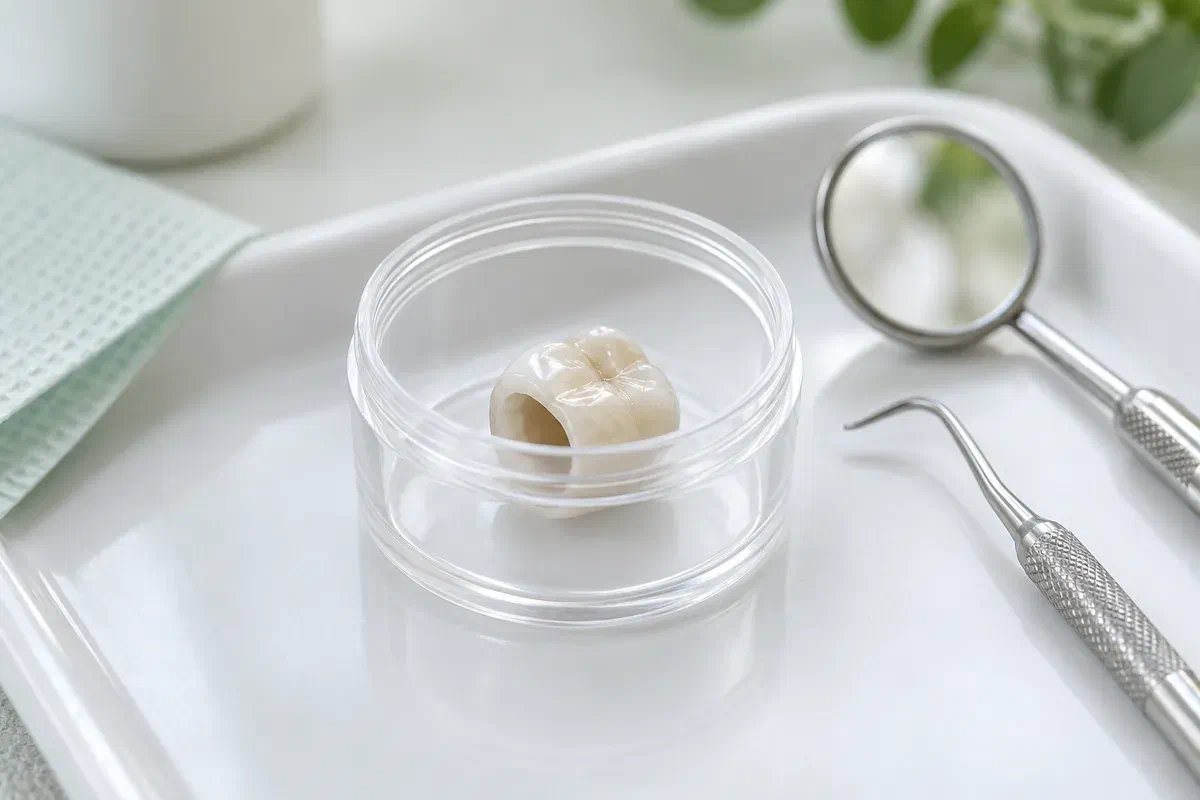
Set it in a closed container rather than back in your mouth. Don't scrape out the inside or pull at a post, and leave household glue in the drawer; the crown and tooth need to be examined side by side.


Tempted to stick the crown back on tonight with a drugstore kit? From Acton, a quick call first can save trouble. Our lost dental crown treatment examines the exposed tooth and the crown itself, then sets out safe interim cover and a durable repair.
When a crown drops into your hand, the quickest fix seems obvious: press it back on and carry on. Pharmacy kits make that look simple. But the crown may not sit where it should, something may be broken underneath, and a crown cemented crookedly can be harder to deal with later. A quick conversation with the clinic is the safer first step.
The tooth that was under the crown was shaped to receive it, so it often looks small or discoloured. That is not a diagnosis. The crown may have loosened because of worn cement or a changed fit, or because the tooth or core gave way. If it is the latter, putting the crown straight back would hide the real issue.
When you call from Acton, mention when it came off, whether you still have it, and how the tooth feels. Note any knock to the mouth and any root canal on that tooth. The team can advise whether a temporary measure is reasonable while you wait and arrange an exam that looks at both the crown and what it was covering.
Working out the cause is not your job. Tell us what happened, keep what came out, and let us know how the tooth is behaving, and we'll take it from there.
Set it in a closed container rather than back in your mouth. Don't scrape out the inside or pull at a post, and leave household glue in the drawer; the crown and tooth need to be examined side by side.
There is no need for an intact crown to be seen. Explain whether it broke while eating or after a bump, and collect any pieces that turn up, as they may show what failed.
Note what sets it off, how long it lingers, and whether it is getting worse. Pain, swelling, or gum changes may mean an earlier visit. A dull or dark tooth isn't automatically a lost cause.
Call about a lost crown even if there's no discomfort. If it may have been inhaled, or there was choking or difficulty breathing, get urgent medical care straight away.
An exam establishes how much sound tooth remains, the state of your old crown, and whether there is decay, a crack, or another deeper problem. Only then can the dentist say whether the crown is worth reusing, whether a replacement is better, or whether the tooth needs other care before being covered.
You'll also learn which steps are short-term and which are final. When further treatment or a lab-made crown is needed, talk through what will protect the tooth during the wait and what that temporary arrangement can reasonably handle.
Patient information: NHS Wales — advice after losing a filling or crown
A crown can look intact and still sit poorly. The dentist checks how accurately it seats on the tooth and whether the foundation can support it again.
If a piece of tooth or core is caught inside the crown, cementing it back at home would cover the problem. A professional check makes sure the cause is addressed.
Go over the appointments you can expect, interim protection, appearance concerns, and the estimate. Where more information is needed first, ask what it is and what you should do in the meantime.
Bring the crown or pieces in a container, along with any details about past treatment on the tooth. If you're anxious about the bare tooth or the exam, let us know and you'll be told what is happening at each stage.
You explain how the crown came off, and the dentist examines the tooth, gums, bite, and symptoms. Imaging or a simple test may be suggested where it would clarify the condition underneath.
A recovered crown is assessed for fit and condition against the tooth. Any attached material, post, decay, or fracture is considered before reuse is discussed.
Findings, choices, and fees are explained. Properly recementing the crown may be possible at that visit, or the tooth is protected while replacement or additional work is organized.
After the agreed work, fit and bite are checked. Ask whether what you have is temporary, what it needs from you day to day, and what remains to be done.
Ask us for advice that matches your symptoms and where you are in treatment. Temporaries, implant crowns, and crowns on natural teeth don't always share instructions.
Chew on the opposite side and avoid hard, sticky, or chewy foods. If hot or cold causes sensitivity, avoid that trigger while waiting for your visit instead of testing it again and again.
Keep the area clean as comfortably as you can, and let us know if brushing hurts. Don't scrape or pick at the tooth or cover it with wax, gum, or other household fillers.
If interim cover is placed, follow its instructions and keep the next appointment. Feeling comfortable with a temporary doesn't mean the work is finished.
A loose crown can make you want to act fast. An examination shows whether the tooth simply needs re-covering or has a problem that requires more extensive care.
Our Bronte Street team can help whether the crown is in your hand or lost for good. Expect an exam of the tooth, a check of anything you saved, and clear advice on safe protection now and lasting treatment later.
Keep the crown and any fragments in a closed container, and call about pain, swelling, or a missing part.
