The crown came out whole
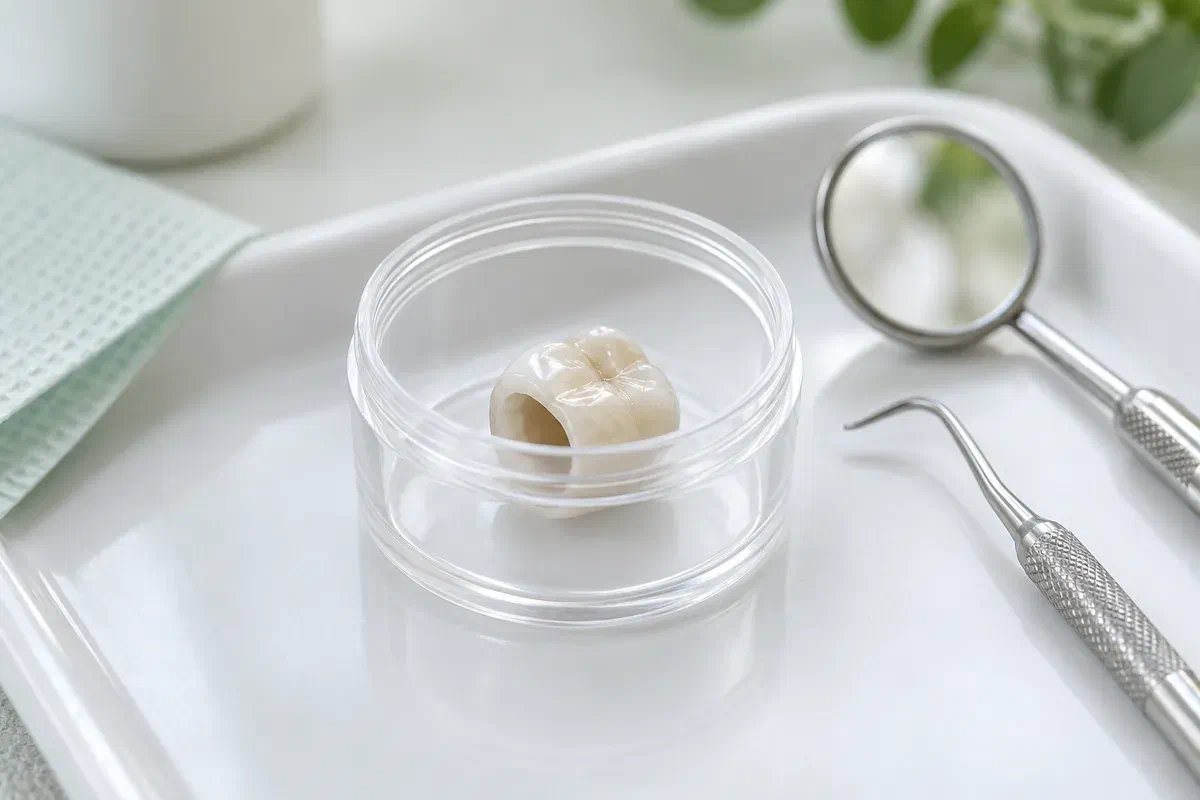
Tuck it into a clean, closed container and bring it along. Leave whatever is inside it as is, and skip home glues or adhesives; the crown and the tooth are examined as a pair before anything is decided.


Losing a crown from the front of your smile can throw off a week of meetings or a family celebration. From Brampton, lost dental crown treatment begins with the exposed tooth, then looks at the recovered crown and at suitable interim and long-term cover.
A back crown can go unnoticed for a day. A front one rarely does. The tooth under it was reshaped to fit the crown, so it may look thin, pointed, or a different shade, and catching sight of it in a mirror can be a shock. How it looks, though, is not a reliable measure of whether it is damaged.
Front or back, the usual reasons are similar: cement that has failed, a fit that has loosened, or a tooth or core that has cracked or decayed underneath. Some crowns can be bonded back on after checking. Others reveal that the tooth needs care first or that a new crown is the better choice. Keep yours even if it is chipped.
When you contact us from Brampton, tell us when it came off, whether you have it, and how the tooth feels. Mention a recent knock or an earlier root canal. If you have a presentation, an interview, or an event coming up, say so. We can talk about timing and interim options, though the tooth's condition decides what is suitable.
Working out the cause is our job. Your part is to describe what happened, keep anything that came out, and mention symptoms so the appointment fits what is going on.
Tuck it into a clean, closed container and bring it along. Leave whatever is inside it as is, and skip home glues or adhesives; the crown and the tooth are examined as a pair before anything is decided.
You can be assessed with no crown at all. Let us know whether it broke during a meal or after a fall or bump, and bring along any fragments, since they may show what gave way.
Notice what sets it off, how long it lasts, and whether it is worsening. Pain, swelling, or a change in the gum may mean an earlier visit. A tooth that looks grey or yellow has not necessarily failed.
Contact us after a lost crown even if there is no pain. If you think it might have been inhaled, or there was choking or trouble breathing, get urgent medical care.
The dentist assesses how much sound tooth is left, the state of your old crown, and any sign of deeper trouble. That determines whether the crown can be reused, a new one is advisable, or the tooth needs another kind of treatment before appearance can be addressed.
It also clarifies which part of the plan is a short-term measure and which is the final restoration. Where extra treatment or lab work is involved, find out what will cover the tooth in between, how that cover will look, and what it can and cannot handle.
Patient information: NHS Wales — advice after losing a filling or crown
Looking intact is only one factor. The dentist checks the crown's fit on the prepared tooth and whether the foundation is strong enough to support it again.
A fragment of tooth or core may come away inside the crown. Recognizing that matters, because recementing without addressing it may leave the underlying cause in place.
Talk through the expected visits, interim cover, appearance concerns, and the estimate. If a final plan needs more information, ask what is missing and how the tooth will be managed until then.
Have the crown or fragments in a case, and any treatment details you know for that tooth. If you're self-conscious about the gap or uncomfortable in the chair, let us know and we'll explain as we go.
You explain how the crown was lost, and the dentist checks the tooth, gums, bite, and symptoms. Imaging or tests may be recommended when they would help reveal what is underneath.
If the crown is available, its condition and fit are assessed with the tooth. Any post, attached material, decay, or fracture is taken into account before reuse is discussed.
Findings, options, and fees are reviewed. The crown may be recemented the same day, or the tooth may receive interim protection, with appearance considered, while a new crown or further treatment is arranged.
After the agreed work, the dentist checks fit and bite. Find out if what's in place is provisional, what care it needs from you, and which appointments are left.
Ask the team for advice that suits your symptoms and stage of treatment. Instructions differ for a temporary, for an implant crown, and for a crown on your own tooth.
For a front tooth, avoid biting into hard foods like apples or crusty bread with it. Skip sticky treats as well. If temperature causes a twinge, avoid that trigger rather than testing the tooth repeatedly.
Brush around the area carefully as comfort allows, and get in touch if it hurts to clean. Don't scrape, pick at, or cover the tooth with anything improvised from home.
Follow any instructions for a temporary covering, and keep the appointment that completes treatment. A temporary that looks and feels good is still a temporary.
Losing a visible crown can feel embarrassing as well as worrying. The examination tells an ordinary prepared tooth apart from one that needs more involved care.
Call our Bronte Street practice after a crown falls off or goes missing. We'll examine the tooth, look at anything you recovered, and explain protection for now and treatment for the long run.
Keep the crown or pieces in a closed case, and phone about pain, swelling, or any doubt over a missing part.
