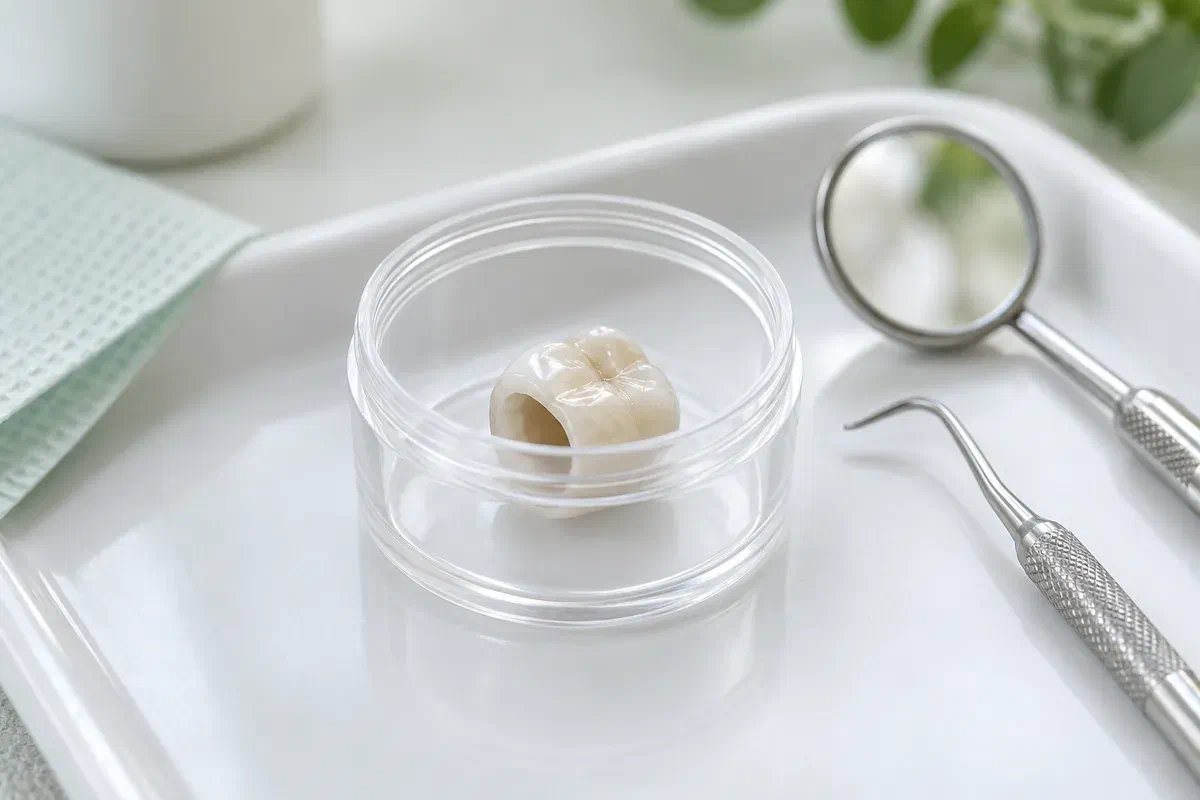
Your crown, safely stored
A small closed container keeps it from being lost or crushed. Don't remove cement or a post from inside it, and avoid any home glue, since its inner surface matters as much as the tooth it came from.


The tooth left behind by a lost crown can look alarming: small, peg-shaped, maybe grey. For people across Halton Hills, our lost dental crown treatment explains what that appearance does and does not mean, then plans protection and a lasting restoration.
Many people are taken aback the first time they see a tooth without its crown. It was filed down to make room for the cap, so it tends to look short and tapered, and older filling or core material can make it look grey, brown, or patchy. Those colours and shapes are common and are not, by themselves, a sign of a dying or broken tooth.
The real questions sit underneath. Did the cement simply wear out? Has the fit changed? Is there decay or a crack in the tooth or build-up? An intact crown can sometimes be refitted once those are answered, while in other cases the tooth needs attention first, or a new crown is the more sensible choice. Hang on to the crown either way.
From Glen Williams, the smaller hamlets, or elsewhere in Halton Hills, a phone call is a good first step. Tell us when the crown came off, whether you saved it, and whether the tooth hurts or reacts to cold. Mention any recent bump or earlier root canal. Then the visit can focus on what the tooth needs, not just how it looks.
Leave the detective work to us. A short account of what happened, the crown or any pieces, and a description of how the tooth feels are what help most.
A small closed container keeps it from being lost or crushed. Don't remove cement or a post from inside it, and avoid any home glue, since its inner surface matters as much as the tooth it came from.
You can still be seen. Tell the team if it came off during a meal or after an injury, and bring any fragments; even small pieces help show what failed.
Symptoms tell more than colour. Note sensitivity, aching, or tenderness, what triggers them, and whether they are increasing. Pain, swelling, or gum changes can change the urgency of your visit.
Call after a lost crown even if the tooth is comfortable. Choking, difficulty breathing, or any worry that the crown was inhaled needs urgent medical attention.
An examination looks past the colour to the structure: how much healthy tooth remains, how the core and old crown have held up, and whether there are signs of decay or fracture. Those findings tell the dentist whether your crown can be reused, whether a new crown is needed, or whether the tooth calls for other care.
It also clarifies the difference between something that protects the tooth for now and the restoration meant to last. If lab work or further treatment is part of the plan, ask what will protect the tooth in between and what that cover is able to withstand.
Patient information: NHS Wales — advice after losing a filling or crown
Core materials, past treatment, staining, and decay can all change how a prepared tooth looks. The dentist interprets the colour in context instead of treating it as a verdict.
Even a flawless-looking crown may no longer seat well. Its fit and the strength of the foundation decide whether reusing it is a reasonable option.
Discuss the visits likely to be needed, interim protection, appearance concerns, and the estimate. When more information is required before deciding, ask what is outstanding and what protects the tooth meanwhile.
Carry the crown or pieces in their container, and any notes about earlier treatment. Feeling self-conscious or nervous about the tooth is normal; tell us, and the dentist will walk you through each part.
You describe what happened, and the dentist examines the tooth, gums, bite, and symptoms. Imaging or tests may be suggested when they would help explain what the colour or shape can't.
The recovered crown, if available, is checked against the tooth for fit and condition. Any post, decay, fracture, or material stuck inside is considered before reuse.
You go over the diagnosis, the options, and the costs. Recementing may be possible during the visit, or the tooth may be covered provisionally until a new crown or further care can be organized.
After the agreed treatment, fit and bite are reviewed. Make sure you know whether the restoration is temporary, how to care for it, and what appointments remain.
Ask for guidance matched to your symptoms and stage of treatment. Advice may differ for an implant crown, a provisional cover, or a crown on your natural tooth.
Avoid hard, sticky, and tough foods on the uncovered tooth and choose what feels comfortable. If heat or cold sets off sensitivity, steer clear of it while you wait rather than repeatedly checking.
Clean around the tooth as comfort allows and ask for advice if it's painful. Don't scrape the surface, pick at the edges, or try to cover the tooth with household products.
If you have interim cover, follow the care instructions and return for the next appointment. A tooth that feels normal under a temporary still needs its planned treatment.
A tooth that suddenly looks different can be upsetting. The examination is what tells an ordinary prepared tooth apart from one with a problem that needs more extensive care.
Reach out to our Bronte Street clinic once a crown has come away or gone missing. We'll examine the tooth, check any crown you saved, and explain what will protect it now and restore it later.
Keep the crown or fragments in a closed container, and call about pain, swelling, or uncertainty over a missing piece.
