The crown is sitting in your hand
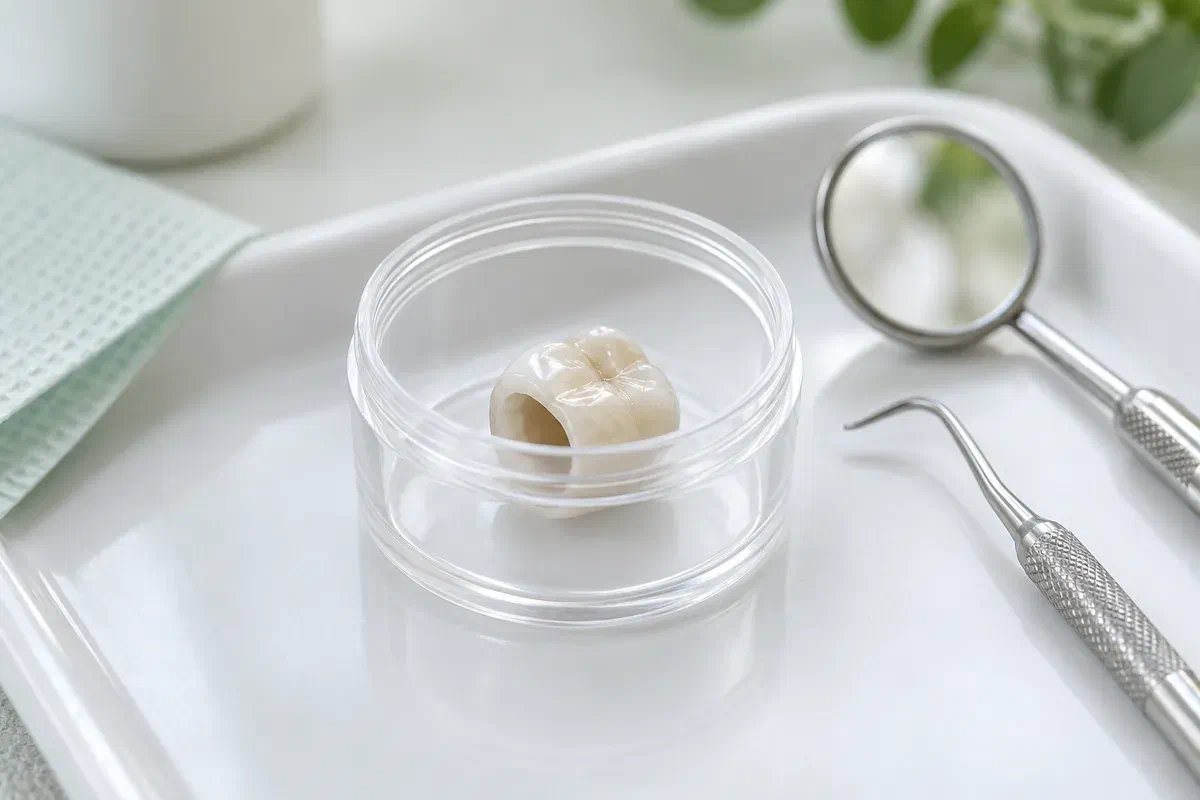
Rinse it gently, put it in a small lidded container, and bring it in. Leave any cement, post, or tooth fragment inside it alone, and skip household glue; the crown and the tooth both need a proper look.


A crown that lets go at the dinner table leaves a prepared tooth that needs checking and covering. Lost dental crown treatment in Milton looks at the exposed tooth, any crown you saved, and whether temporary or lasting restoration fits best.
Most people notice it mid-bite: something hard and hollow in the mouth, then a tooth that feels oddly short under the tongue. What is left is the prepared core the crown was cemented to, and it may look smaller or darker than you expect. That look on its own says little about damage, so an exam is the sensible next move.
Crowns let go for a handful of reasons. The cement may have weakened, the fit may have changed, or the tooth or build-up underneath may have broken down. Some come back intact and can be bonded again; others point to a tooth that needs treatment first or a new crown altogether. Bring yours along even if it looks chipped.
Because you are already in Milton, a same-day phone call is usually the easiest first step. Let us know when it happened, whether you have the crown, and how the tooth feels. Mention an injury or a past root canal on that tooth too. From there we can book the right kind of visit and look at the whole picture before assuming the old crown simply goes back on.
Nobody expects you to diagnose the problem at home. Tell us what happened, keep whatever came out, and describe how the tooth feels so the appointment can be set up properly.
Rinse it gently, put it in a small lidded container, and bring it in. Leave any cement, post, or tooth fragment inside it alone, and skip household glue; the crown and the tooth both need a proper look.
We can still assess the tooth without a whole crown. Say whether it came off while chewing or after a knock to the face, and keep any pieces you found, since they can help explain what gave way.
Note what sets it off, how long it lasts, and whether it is getting worse. Swelling, pain, or a change in the gum can affect how soon you should be seen, and colour alone is not a reliable guide to the tooth's health.
Call even if nothing hurts. If you think the crown may have been inhaled, or there was any choking or trouble breathing, get urgent medical care right away.
At the exam the dentist looks at how much sound tooth is left, the state of the old restoration, and any sign of a deeper problem such as decay or a crack. Those findings decide whether your crown can be used again, whether a new one makes more sense, or whether the tooth needs a different kind of care.
It also separates short-term protection from the finished repair. When more treatment or lab work is needed, ask how the tooth will be covered in the meantime and what that interim covering can and cannot handle.
Patient information: NHS Wales — advice after losing a filling or crown
Looking whole is not the same as fitting well. The dentist checks how the crown seats on the tooth and whether what lies underneath is strong enough to hold it again.
Sometimes a sliver of tooth or core material comes away inside the crown. Finding that matters, because cementing the crown straight back would leave the real cause untouched.
Talk through the likely visits, how the tooth will be protected, any appearance worries, and the estimate. If the plan needs more information first, ask what is still missing and how the tooth is managed until then.
Have the crown or any pieces with you, plus any notes about past work on that tooth. If the exposed tooth makes you nervous, or the exam becomes uncomfortable, say so and each step will be explained.
You describe how the crown came off, and the dentist checks the tooth, gums, bite, and symptoms. An x-ray or other test may be suggested when it would clarify what is going on underneath.
If you brought the crown, its fit and condition are judged together with the tooth. Any post, decay, fracture, or material stuck inside is weighed before deciding about reuse.
You go over the findings, the options, and the costs. Sometimes the crown can be recemented that day; other times the tooth gets interim protection while a new crown or further treatment is arranged.
Once the agreed work is done, the dentist checks the fit and bite. Ask whether what you have now is temporary, how to look after it, and which visits remain.
Ask us for advice that matches your symptoms and where you are in treatment. An implant crown, a temporary crown, and a crown on a natural tooth can each call for different care.
Steer clear of hard, crunchy, or sticky food on the bare tooth and stick with things that feel easy to manage. If hot or cold drinks set off sensitivity, avoid them rather than testing the tooth again and again.
Keep cleaning near the tooth as comfortably as you can, and ask for advice if brushing hurts. Don't pick at the tooth, scrape it, or cover it with anything from the kitchen drawer or toolbox.
If you leave with a temporary or interim covering, follow the instructions you're given and keep the next appointment. Feeling fine does not mean the treatment is complete.
A crown coming off can be startling, especially when the tooth underneath looks unfamiliar. The exam is what tells an ordinary prepared tooth apart from one that needs more involved care.
Call our Bronte Street practice once a crown has come off or gone missing. We'll examine the tooth, look over anything you recovered, and explain both short-term protection and the longer-term options.
Keep the crown or any pieces in a safe container, and call if pain, swelling, or a missing part has you worried.
