If it turns up after all
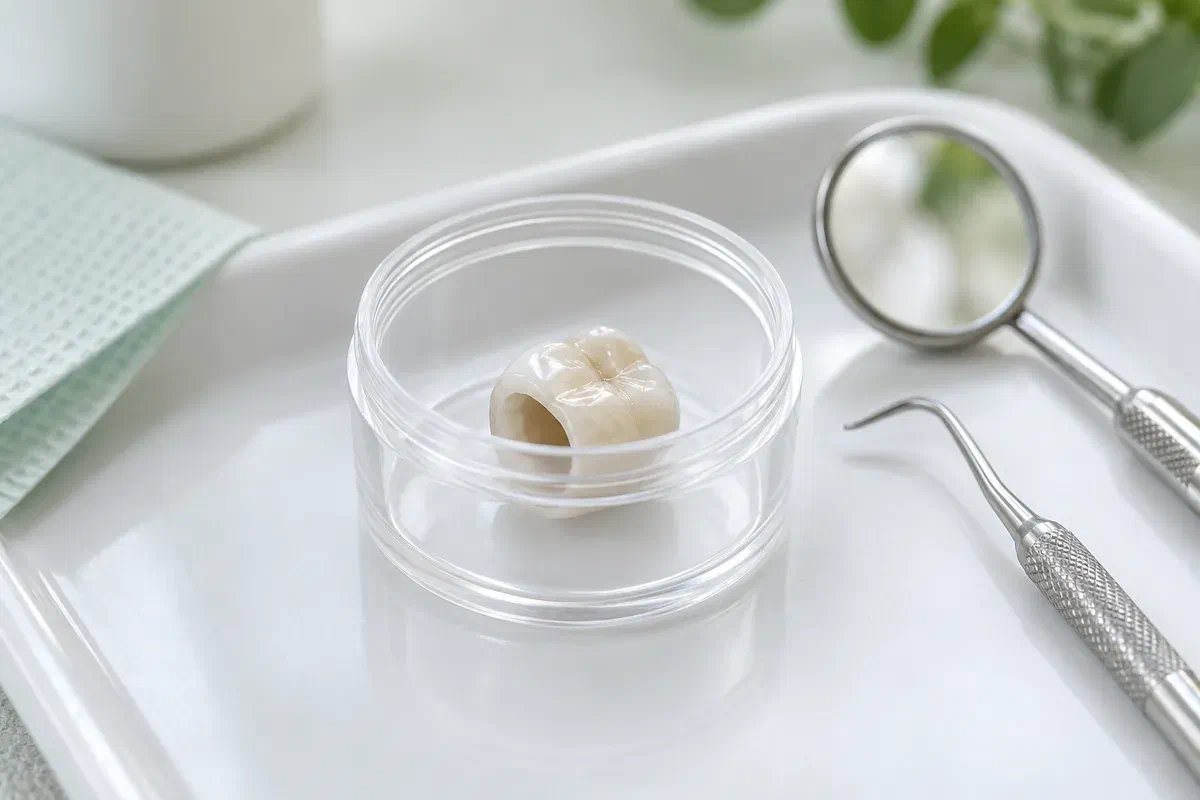
A crown that resurfaces later can still be useful. Rinse it, keep it in a closed container, and bring it along. Leave any post or material inside untouched, and never fix it in with glue from around the house.


Sometimes the crown simply vanishes, swallowed with dinner or lost somewhere in the house. For Mississauga households, our lost dental crown treatment starts with the bare tooth itself and works out how to protect and re-cover it, with or without the original.
A surprising number of crowns are never found. They slip out during a meal and get swallowed, roll under a couch, or disappear down a sink. What remains in your mouth is the prepared tooth, usually smaller and sometimes darker than its neighbours. That look is expected and does not, on its own, show whether the tooth is sound.
Without the crown in hand, the dentist relies more on the tooth: the cement left on it, the shape of the core, the gum around it, and signs of decay or fracture. Crowns usually come off because the cement broke down, the fit changed, or the tooth beneath weakened. The answer guides whether a new crown or other care is needed.
When calling from Mississauga, whether from Meadowvale, Churchill Meadows, or further east, explain when you noticed the gap and whether you think the crown was swallowed. Tell us how the tooth feels, and mention any injury or past root canal. We use that to arrange an assessment focused on the tooth you still have.
You don't have to know why it happened. Share what you can remember, hold on to anything that turns up, and describe any discomfort so the right kind of visit can be booked.
A crown that resurfaces later can still be useful. Rinse it, keep it in a closed container, and bring it along. Leave any post or material inside untouched, and never fix it in with glue from around the house.
Treatment does not depend on having the crown. Let the team know whether it went missing during a meal, overnight, or after a blow to the mouth, and save any small fragments you do find.
Note when it aches, what sets it off, and whether it seems to be worsening. Pain, swelling, or a sore, puffy gum may change how quickly you should be seen. Its colour is not a dependable sign of damage.
Call after any lost crown, even with no pain. If you may have inhaled it, or you are coughing, choking, wheezing, or short of breath, seek urgent medical care immediately.
The dentist examines the remaining tooth structure, any cement or core material still attached, and the gum and bite around it. Those findings show whether the tooth is ready for a new crown, needs foundation work first, or calls for a different treatment.
The visit also makes clear what is short-term protection and what is the final restoration. A replacement crown typically involves more than one step, so ask how the tooth will be covered between appointments and what that temporary cover can manage.
Patient information: NHS Wales — advice after losing a filling or crown
With nothing to refit, attention goes to whether the remaining tooth and core can support a new crown securely, and whether any repairs must come first.
Decay, a fracture, or a loose build-up may explain the lost crown. Identifying that matters, since a new crown placed over an untreated problem may not hold.
Go over the appointments you can expect, how the tooth will be protected, any appearance concerns, and the estimate. If something must be clarified first, ask what is needed and how the tooth is cared for in the meantime.
Bring any fragments that turned up and anything you know about earlier work on the tooth. If the bare tooth or the exam makes you uneasy, say so; the team will explain what they are checking and why.
You describe when and how the crown went missing, and the dentist looks closely at the tooth, gums, bite, and symptoms. An x-ray or another test may be suggested if it would clarify the condition beneath.
Any cement, post, core, decay, or crack on the tooth is assessed. If the crown or pieces did turn up, they are checked as well before reuse is considered.
The diagnosis, choices, and fees are explained. The tooth may receive interim protection while a new crown or other treatment is planned, or a found crown may be suitable to recement.
After the agreed treatment, the dentist checks fit and bite. Confirm whether the covering is temporary, how to look after it, and how many visits remain.
Ask for instructions that match your symptoms and stage of care. Implants, temporaries, and natural teeth that held crowns can each need their own guidance.
Use the other side of your mouth where possible and avoid hard, sticky, or tough foods near the exposed tooth. If temperature causes a twinge, steer around it rather than testing the tooth over and over.
Brush around the tooth gently as comfort allows, and ask for advice if it is sore to clean. Don't scrape or pick at it, and don't try to cover it with household materials.
If interim cover is placed, follow its instructions and return for the next stage. The tooth may feel fine under a temporary long before treatment is actually complete.
It can be unnerving to find a gap where a crown used to be. The examination is what separates a normal prepared tooth from one that needs more involved treatment.
Contact our Bronte Street clinic after a crown comes off or disappears. We'll examine the tooth, check any pieces you did find, and explain how to protect it now and restore it properly.
Keep any fragments that turn up, and call about pain, swelling, or concern that part of the crown is unaccounted for.
