You still have the old crown
Place it in a clean, closed container and keep it safe until your visit. Resist the urge to clean out the inside, tug at a post, or glue it back with anything from the house; both pieces need to be examined.


An older crown that finally loosens tells you something about the tooth it has covered for years. Our lost dental crown care for Old Milton reviews that history, the tooth left behind, and any recovered crown before suggesting how to cover it again.
Plenty of people on the established streets of Old Milton carry crowns that were placed a decade or more ago. When one of those finally comes away, the tooth underneath can look short, oddly shaped, or discoloured. It was trimmed long ago to hold that crown, so its appearance cannot tell you whether it is healthy or whether the old crown is still usable.
Age plays a part, but it is rarely the whole story. Cement wears, gums and bite shift over time, and the core or tooth under the crown can weaken or decay. An older crown sometimes returns in good shape and can be fixed back in place. In other cases the tooth itself needs care first, or a fresh crown is the better choice.
Anything you remember about that tooth helps: roughly when it was crowned, whether it had a root canal, and if it ever gave trouble before. Tell us too when the crown came off, whether you kept it, and how the area feels now. We can then plan the visit around the tooth as it is today rather than how it was years ago.
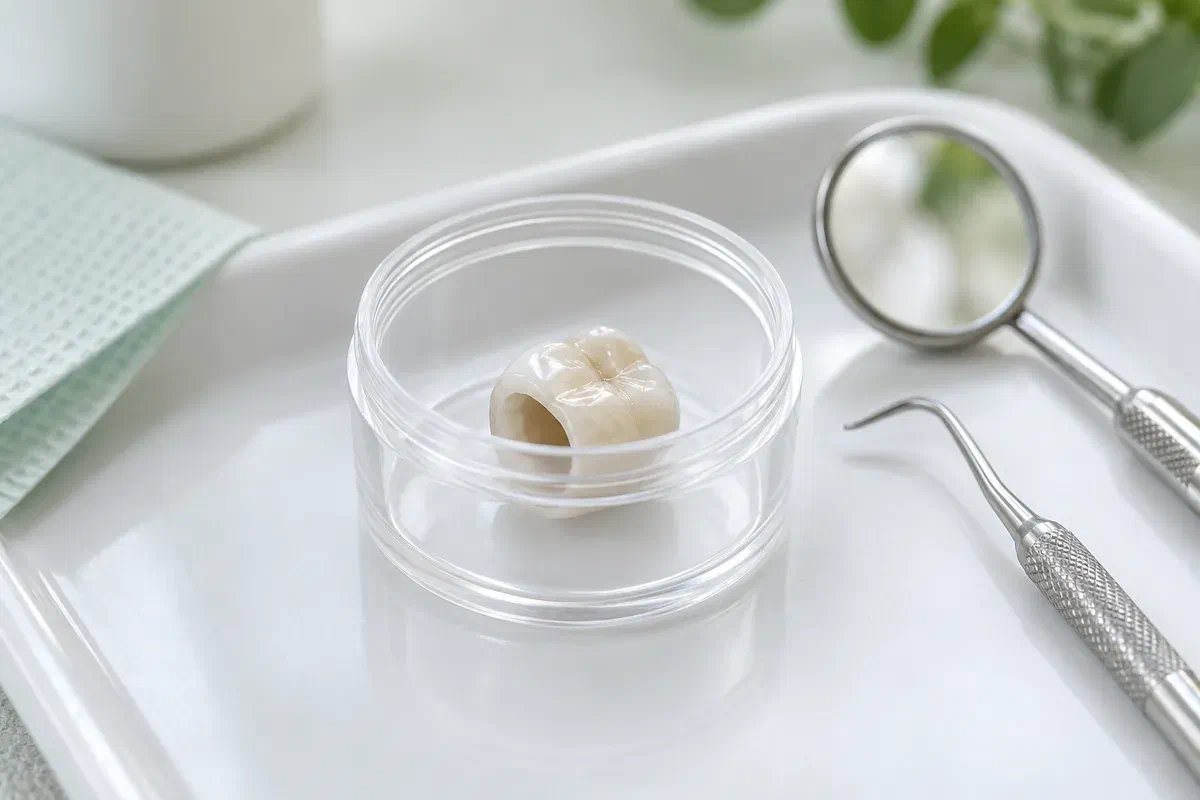
You only need to share what you know. Explain how it happened, hold on to whatever came out of your mouth, and describe any symptoms so the dentist can prepare for the right kind of exam.
Place it in a clean, closed container and keep it safe until your visit. Resist the urge to clean out the inside, tug at a post, or glue it back with anything from the house; both pieces need to be examined.
The tooth can be assessed with or without the crown. Let the team know whether it gave way during a meal or after a fall or bump, and bring along any fragments you managed to collect.
Pay attention to what triggers it, how long it lingers, and whether it is building. Pain, swelling, or a change along the gumline may change how soon you are seen. A tooth that looks dull or dark has not necessarily failed.
Please get in touch after any lost crown, even a painless one. If there is any chance it was breathed in, or you had choking or difficulty breathing, seek urgent medical help.
The dentist weighs how much healthy tooth remains, how the original crown has held up, and whether there are signs of trouble deeper down. From there it becomes clearer whether your crown can be refitted, whether a replacement suits the tooth better, or whether something else should be treated first.
This first appointment also draws a line between short-term cover and the finished result. If more treatment or lab work is part of the plan, ask how the tooth will be guarded until then and what to expect from that interim stage.
Patient information: NHS Wales — advice after losing a filling or crown
A crown can look perfect and still sit poorly after years in the mouth. Fit, edges, and the strength of the foundation all decide whether reusing it is a reasonable idea.
Older crowns sometimes come off with part of the core or tooth still inside. That detail matters, since recementing over it would leave the underlying weakness in place.
Go over the expected appointments, how the tooth will be protected, any concerns about appearance, and the estimate. If a decision needs more information, ask what is outstanding and how the tooth is handled in the interim.
If you can, bring the crown or its pieces and any records you have about earlier work. Feeling uneasy about the bare tooth is common; tell the team and they will talk you through what they are doing.
The dentist asks what happened and what you know about past work, then examines the tooth, gums, bite, and any symptoms. Imaging or testing may be suggested if it would help explain the underlying condition.
Where the crown is available, its condition and fit are checked against the tooth. Decay, a fracture, a post, or material left inside it are all considered before reuse is discussed.
The findings, choices, and costs are laid out. Your crown may be suitable to recement during the visit, or the tooth may be protected for a while as a new crown or other care is arranged.
When the agreed treatment is finished, the bite and fit are checked. Make sure you know whether the covering is temporary, how to look after it, and which visits are still ahead.
Ask the clinic what applies to your symptoms and your stage of treatment. Advice for an implant crown is not the same as for a temporary or for a crown on a natural tooth.
Keep hard, chewy, and sticky foods away from the bare tooth and pick meals that feel comfortable. If temperature brings on sensitivity, skip very hot or icy things for now instead of checking the tooth over and over.
Brush the area gently as far as comfort allows, and let us know if it hurts to clean. Avoid poking at the tooth, scratching its surface, or packing it with any household material.
If you go home with a temporary covering, follow the care instructions and attend the follow-up. A tooth that feels settled under a temporary may still need its definitive treatment.
A long-familiar tooth suddenly looking different can be unsettling. An examination is what distinguishes a normal prepared tooth from one with a problem that calls for more extensive treatment.
Our Bronte Street practice welcomes people from Milton's historic downtown and the streets around it. Contact us after a crown comes off or goes missing and we'll examine the tooth, check what you recovered, and explain the choices for protecting and restoring it.
Keep the crown or pieces somewhere safe, and phone if you notice pain, swelling, or you cannot tell whether part of it is missing.
