Food gathers where it never used to
Say where it builds up and whether you can clean it out. Leave pins and picks aside, and avoid repeatedly pushing anything into the opening to see if the sensation improves.


Your tongue keeps finding a sharp new corner where a filling used to be, and it won’t leave it alone. If you’re travelling from Burlington, our dentist can examine that edge and the tooth around it, explain what broke, and suggest a fitting repair.
It’s remarkable how large a small gap feels. Within hours of a filling coming out, the tongue has explored every ridge of it, and a rough corner may already be catching your cheek. That edge might be leftover filling, or it might be tooth that cracked away at the same moment. Either way, the remaining structure needs to be checked before the space is filled.
Treatment is decided by the tooth: how big the defect is and where, how healthy the surrounding walls are, and whether anything deeper is going on. A new filling is often enough. When the tooth lacks support or the nerve is affected, the dentist may instead talk through a larger restoration or a different kind of care.
When you call from Burlington, describe the edge and whether it is hurting your tongue or cheek. Mention when you first felt it, what the tooth does with food, drinks and brushing, and whether the filling was new, temporary, or tied to other treatment. All of it helps us plan the visit.
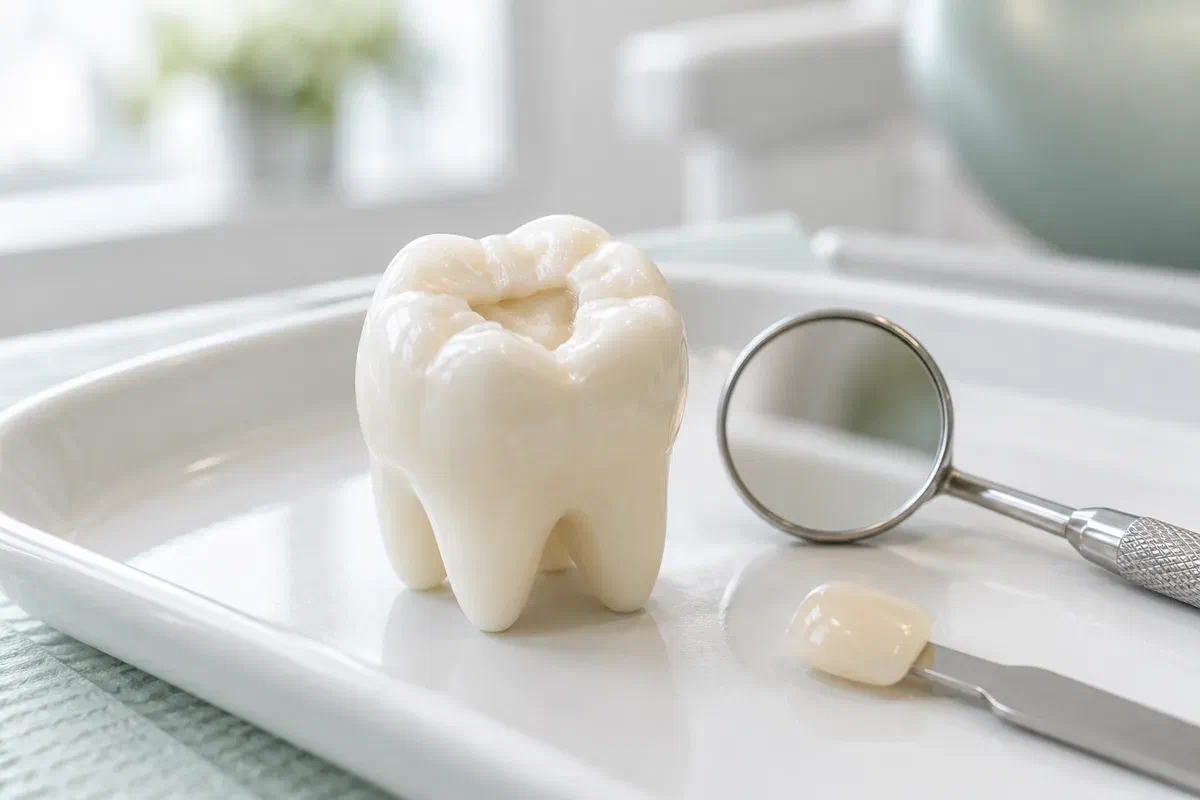
You may honestly not know if the bit that came away was tooth or filling. That is normal and reason enough to arrange an exam. Explain the change in your own words, and the dentist will determine what happened.
Say where it builds up and whether you can clean it out. Leave pins and picks aside, and avoid repeatedly pushing anything into the opening to see if the sensation improves.
The sharpness can come from the restoration that remains or from tooth structure. Call for advice if the soft tissue is becoming sore or cut, and please don’t try to smooth it with a file.
Tell us what sets it off, how long it lasts, and whether it ever throbs without a trigger. Those details help the dentist understand the tooth beyond what the opening shows.
Call promptly about pain that is increasing or not easing, about swelling or fever, or if the damage followed a knock to the mouth. If swelling begins to affect breathing or swallowing, seek emergency medical care at once and don’t wait for dental care.
Relief from a sharp corner matters, but it doesn’t answer why the filling failed or whether the tooth is still strong. The dentist looks at the remaining walls, new decay or cracks, your bite and your symptoms before recommending a repair.
The aim is a surface that is comfortable, cleanable and reliable, along with an understanding of why the old restoration came out when that can be identified. Ask what the findings mean, which materials or restoration types are appropriate, and whether the first step is temporary or final.
Patient information: Cleveland Clinic — fillings and other restorative options
The edge you feel doesn’t show how much support the tooth still has. Finding out whether a wall is missing explains why one tooth is simply refilled and another needs broader coverage.
A deep space that keeps aching is managed differently from a shallow one that only feels rough. The dentist can explain why a test is useful and which findings would change the plan.
Talk about comfort measures, the number of visits and the estimated fee before you proceed. If a temporary step is planned, ask what it protects, what still needs doing, and when.
What happens depends on the findings. Tell the team if you feel anxious or the tooth is tender, and the steps and comfort options will be explained before anything begins.
The dentist examines the open area, the remaining tooth, your symptoms and your bite. You might be offered an X-ray or another check when it could help uncover decay, signs of a fracture, or a deeper issue.
You’ll hear the findings, alternatives and estimated fee. Where a direct filling suits the tooth, the damaged area is prepared, with freezing and isolation used as appropriate for the procedure.
A suitable filling is placed and contoured to the defect and material. If the tooth requires a different sequence, the team explains the temporary protection and how the remaining treatment will be booked.
The new surface and contacts are checked. Ask about eating, cleaning, what you might notice over the next few days, and when to call if the tooth stays tender or the bite feels unusual.
Get advice that fits your symptoms and stage of treatment. Losing a temporary filling mid-treatment may call for a different response than an established filling that has just broken.
Keep hard and sticky foods off the tooth until it has been examined. If hot or cold bothers it, choose comfortable foods and drinks and avoid checking the tooth again and again.
Keep brushing with fluoride toothpaste and clean between teeth as the area allows. Call if it is too sore to clean, and avoid using sharp objects to remove trapped food.
If the area was frozen, don’t chew until feeling returns. Report a bite that feels high, pain that grows, lasting sensitivity, or a new break, and attend any appointment needed to complete temporary care.
Ask about the old filling, your symptoms and the materials available. Advice should be based on the tooth as it is now, with a clear account of how the new repair is meant to work.
Contact our Bronte Street practice about a missing filling or a rough new spot on a tooth. We’ll check the tooth that remains, listen to how it’s been feeling, and explain the ways to restore it.
Call us about strong pain or swelling, and mention it if the filling was part of treatment you haven’t completed.
