Trapped food after eating
Say where it collects and whether it comes out easily. Avoid using sharp household objects to remove it, and don’t repeatedly fill the space with something to see if it improves.


A lost filling leaves you with decisions: how soon to act, which repair to choose, and whether a temporary step is worth it. For households in Caledon, our dentist examines the tooth, sets out the options with an estimate, and helps you weigh them without pressure.
Once the surprise wears off, a missing filling turns into a set of choices. Should you book this week? Will a simple refill do, or will the dentist suggest something larger? Answering those questions starts with one fact you can’t check at home: whether the piece that came out was just filling, or filling plus some of the tooth.
Every recommendation flows from the examination. The dentist judges the size and position of the defect, the strength of the tooth around it, and any signs of a deeper concern. A refill is often appropriate. A bigger restoration or nerve treatment may be advised when the tooth needs more, and you’re entitled to understand why.
Calling from Caledon? Give us a rough date for the loss and describe how the tooth behaves with meals, drinks and brushing. Mention whether it was recent, temporary or tied to unfinished work, and any questions you already have about cost or timing. We’ll use that to plan a visit with room for discussion.
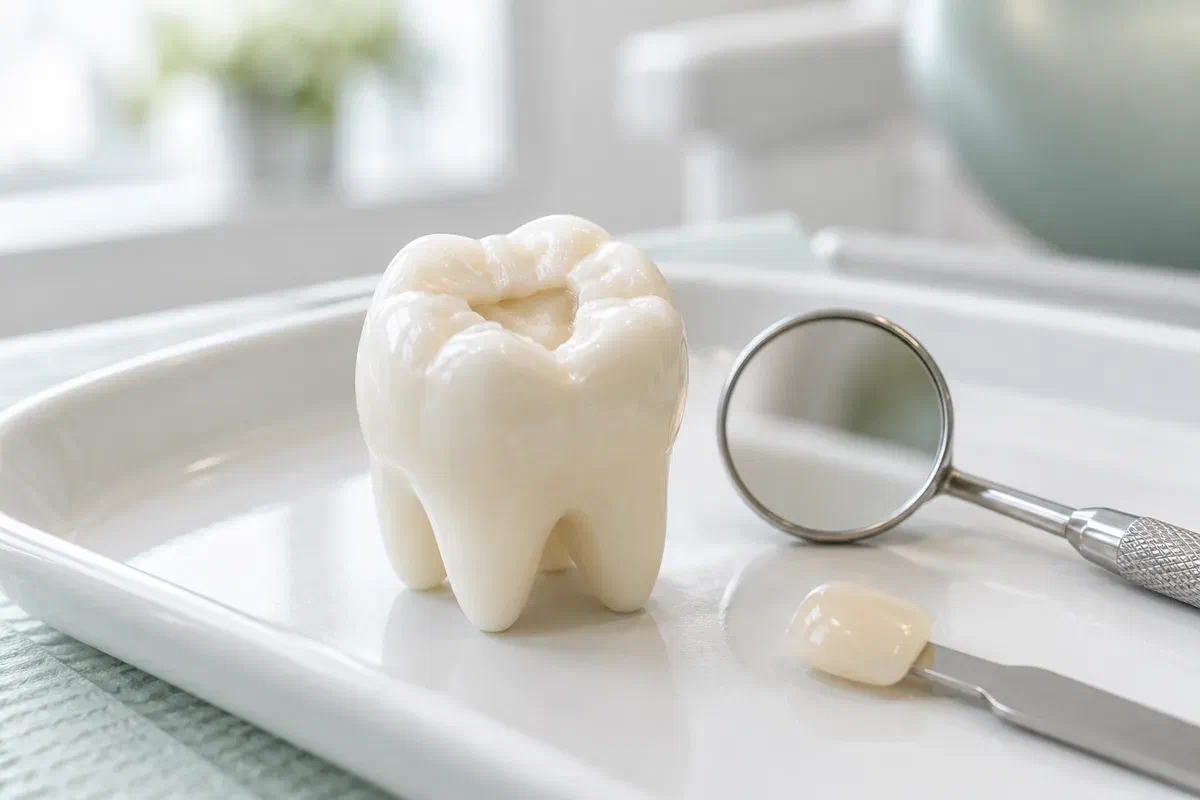
Plenty of people honestly can’t tell what came out. You don’t need to. Tell us what you’ve noticed and the examination will clarify whether tooth, filling or both are missing.
Say where it collects and whether it comes out easily. Avoid using sharp household objects to remove it, and don’t repeatedly fill the space with something to see if it improves.
Roughness can be leftover restoration or exposed tooth. Call if it is scratching your tongue or cheek, and please don’t attempt to grind it down at home.
Let us know the trigger, the duration of the feeling and whether pain ever appears with no cause. That helps the dentist look beyond the opening itself.
Phone if pain is intensifying or not easing, or if you have swelling, fever or an injury to the mouth. If swelling makes it hard to breathe or swallow, go for emergency medical care immediately; that is not something to hold for a dental booking.
It’s tempting to ask for exactly what was there before, but the tooth may not be the same as when the old filling went in. The dentist reviews how much structure remains, whether decay or fractures have appeared, the way your teeth close, and what you’ve been experiencing.
You should leave knowing what the tooth needs, why, and what each choice involves, along with the likely reason the old filling failed if it can be found. Ask whether a proposed step is a holding measure or the lasting repair, and what happens if you wait.
Patient information: Cleveland Clinic — fillings and other restorative options
The opening doesn’t reveal how much support is left. Knowing whether a wall has gone clarifies why a refill might be offered in one case and broader coverage in another.
Deep damage with persistent pain may call for different treatment than a shallow, painless loss. The dentist can explain any test and what result would change the recommendation.
Ask for an estimate for each suitable option, the number of visits it involves and comfort measures. If a temporary is placed, find out what it guards, what it leaves unresolved and when to return.
The order of care is set by the findings. If you’re anxious or the tooth is sore, mention it early, and the steps and comfort choices will be explained before anything begins.
The dentist examines the space, the remaining tooth, your bite and your symptoms. Further imaging or tests may be recommended if they would help identify decay, a crack or a deeper problem.
You’ll go over the findings, each suitable option and its estimated fee, with time for questions. If you choose a direct filling, the tooth is prepared using freezing and isolation as needed.
The chosen material is built up and contoured to the tooth. If you need time to decide, or a different sequence is planned, the tooth can be protected temporarily and the next visit arranged.
The new surface is checked against your opposing teeth. Ask about eating, cleaning and normal sensations afterward, and when to get in touch about lingering soreness or an uneven bite.
Ask us for advice that fits how the tooth feels and what has already been done to it. A temporary lost partway through treatment may need quicker attention than an older filling that has just broken.
Avoid hard, crunchy or sticky foods on that side until it’s assessed. If cold or heat bothers it, choose comfortable foods and drinks and stop testing it.
Use fluoride toothpaste and clean between teeth gently. Phone if the area is too tender to clean, and avoid digging at it with pins or other sharp objects.
If you were frozen, wait before chewing. Report a high bite, increasing pain, lingering sensitivity or a further break, and don’t skip the visit that replaces a temporary with the final restoration.
Bring questions about the old filling, your symptoms and the materials or restorations on offer. Recommendations should reflect the tooth today, with a clear explanation of what each repair is meant to do.
Reach out to the team on Bronte Street once you’ve noticed the missing filling or an unfamiliar gap. We’ll examine the tooth, explain the options with estimates, and give you time to decide what suits you.
Call about severe pain or swelling, and mention if this tooth was already being treated.
