Food tucked into the spot
Show us where it collects and say whether brushing clears it. Avoid working at it with sharp items, and don’t keep pressing things into the opening to see if it feels different.


Feeling uneasy about what the dentist will do is a common reason to put off a lost filling. For anyone travelling from Erin or Hillsburgh, here is what the assessment involves, why tests might be suggested, and how comfort is handled before any repair begins.
Many people delay dealing with a missing filling because they’re unsure what the visit will involve. In short, it begins with looking and talking. The dentist examines the space to see whether only filling came out or part of the tooth broke too, and nothing is done until you understand the findings and agree to a plan.
From there, treatment follows the tooth: how large and where the defect is, the condition of the walls around it, and whether there are signs of a deeper problem. Often a new filling is enough. Sometimes a larger restoration or treatment of the nerve is recommended, and you’ll hear why before deciding.
When you book from Erin, it helps to say when the filling came out and how the tooth feels with eating, drinking and brushing. Say whether that filling was fairly new, a temporary, or linked to work still in progress, and tell us if dental visits make you anxious. We can then allow time to explain each step.
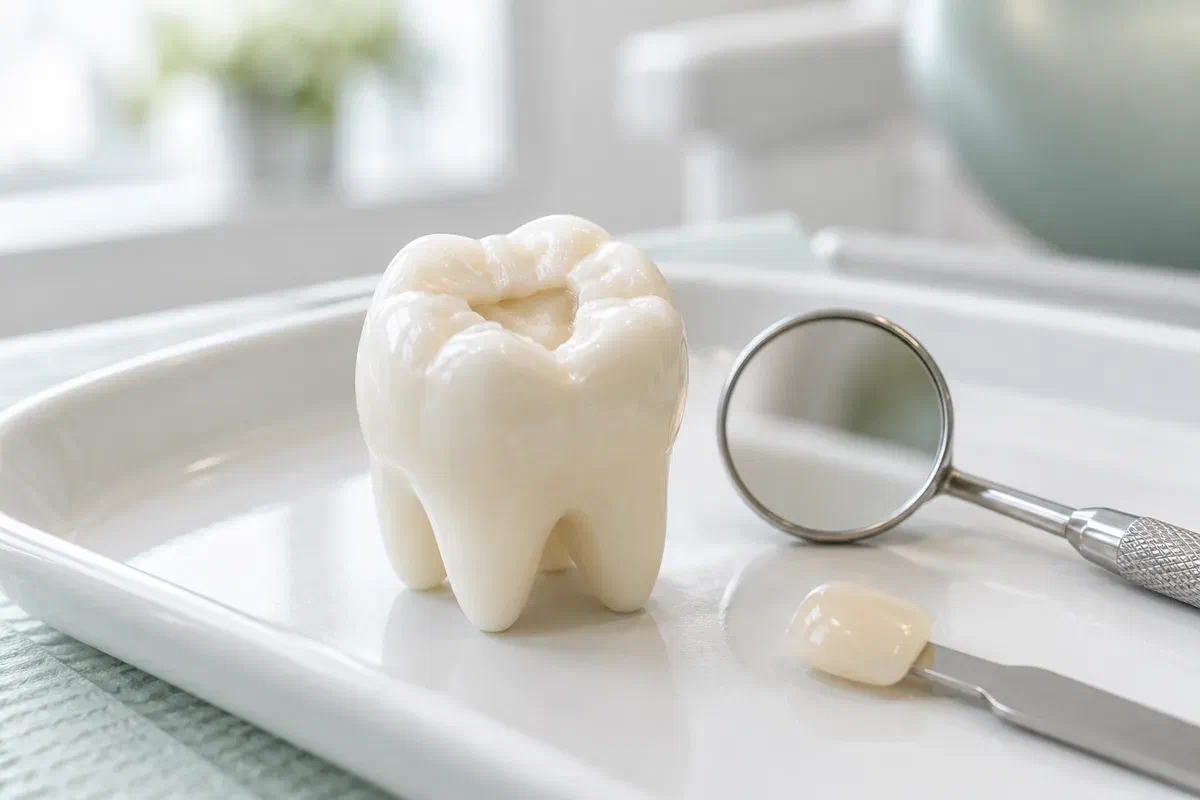
It isn’t your job to know whether the missing piece was tooth or filling, and many people can’t tell. Describe what you feel, and the exam will confirm what happened.
Show us where it collects and say whether brushing clears it. Avoid working at it with sharp items, and don’t keep pressing things into the opening to see if it feels different.
The edge could be leftover restoration or tooth. If it is making your mouth sore, call for advice, and avoid trying to file or grind it yourself.
Is it a brief zing or a dull ache that hangs on? Does it ever start by itself? Your answers help the dentist decide which checks, if any, would be useful.
Call if pain is building or lingering, or if there is swelling, fever or a recent injury. Swelling that affects breathing or swallowing is an emergency, so seek medical care immediately instead of waiting for a dental appointment.
The filling you lost may have suited the tooth well once, but things can change. During the exam the dentist looks at how much of the tooth remains, checks for new decay or cracks, notes how your upper and lower teeth come together, and listens to your symptoms.
The aim is to restore a comfortable, cleanable surface and to explain why the old filling came away when that can be identified. You can ask about every finding, the materials and restorations that would suit, and whether what is done first is temporary or final.
Patient information: Cleveland Clinic — fillings and other restorative options
Ask to be shown the area or any X-ray image. Seeing a broken wall for yourself makes it easier to understand why a crown or onlay might be raised instead of a simple refill.
X-rays, a bite test or a cold test may be suggested to check for decay, cracks or nerve involvement. Ask what each one is for and what result would change the plan.
Talk about comfort, how many appointments are likely and what the fee estimate covers before you agree. If an interim step is used, ask what it protects, what it doesn’t solve, and when to come back.
Everything is explained before it happens. If you’re anxious or the tooth is tender, tell us at the start, and you can ask questions or pause at any point.
You describe what happened, and the dentist examines the space, the surrounding tooth and your bite. X-ray images or a simple cold or bite test may be suggested if they would help find decay, a crack or a deeper issue.
You’ll hear what was found, what the choices are and roughly what each costs. If you go ahead with a direct filling, the area is numbed, the damaged part is prepared, and the tooth is kept dry for the material.
A filling is placed in layers or as one piece, depending on the material, and shaped to fit. If another approach is needed first, the tooth is covered temporarily and the next steps are explained.
You’ll be asked to bite together so the surface can be adjusted. Ask what you might feel as the freezing wears off, what to eat that evening, and when a call back makes sense.
Our team can tailor advice to how the tooth feels and what treatment it has had. Losing a temporary partway through care is handled differently from a long-standing filling that has simply worn out.
Chew on the other side and avoid hard or sticky foods there. If hot or cold makes it twinge, let drinks reach room temperature first, and give your tongue a break from exploring it.
Brush gently with fluoride toothpaste and floss carefully. If cleaning is painful, phone us; please don’t reach for a pin or toothpick to dig food out.
Don’t chew until feeling has returned, and be careful not to bite your cheek or lip. Tell us about a high bite, increasing pain, lasting sensitivity or another break, and keep any follow-up visit.
Bring questions about the old filling, your symptoms and the materials available. The recommendation should be based on how the tooth is now, with a plain explanation of what the repair is meant to do.
Phone our Bronte Street team when a filling has dropped out and you’d like to know what happens next. We’ll explain each step, examine the remaining tooth, and talk you through the options before any treatment.
For severe pain or swelling, call rather than waiting, and say so if this tooth is in the middle of other treatment.
