Debris collecting in the space
Tell the team where food gathers and whether the spot is hard to keep clean. Avoid scraping it out with sharp items, and resist repeatedly filling the space with wax or gum to test it.


Sometimes the filling that drops out is a temporary one, placed to protect a tooth partway through treatment. For anyone coming from Halton Hills, we can check the tooth, work out what stage it is at, and plan the next step with you, whether it is a new filling or more.
Not every lost filling is the same kind of event. A temporary placed during root canal treatment or while waiting for a crown is meant to guard the tooth between appointments, and losing it can leave the inside more exposed. A permanent filling that falls out after years raises different questions: did tooth break with it, and why did it fail now?
In both cases the dentist looks at the size and position of the opening, the soundness of what surrounds it, and any sign of a deeper issue. A replacement filling may be all that is needed. Where the tooth needs more support, or treatment is already under way, the plan may involve a larger restoration or finishing the earlier care first.
When you contact us from Halton Hills, please say whether the filling was temporary and who placed it. Tell us when it came out and how the tooth responds to chewing, temperature and brushing. If another dentist is part-way through treatment, they should usually hear from you as well.
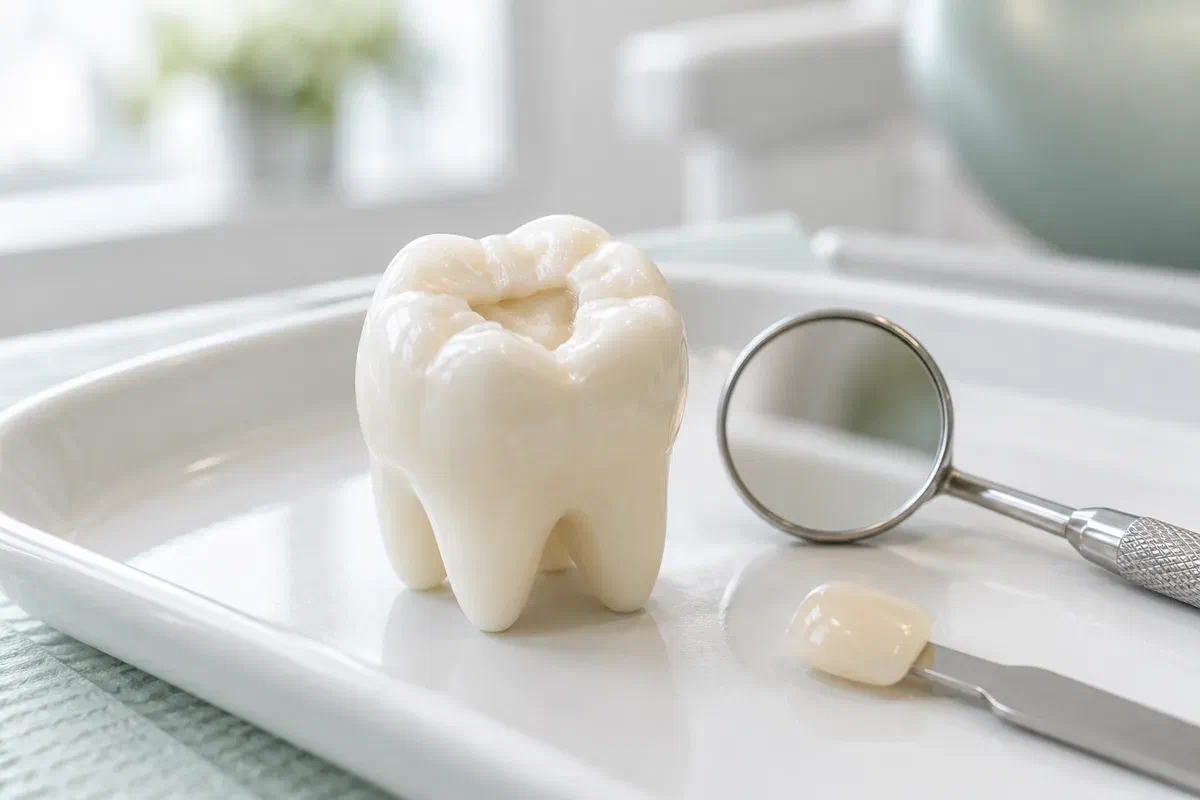
It may be unclear whether the missing piece was filling, tooth or a mix of both. That’s expected, and it’s a perfectly good reason to book. Explain the change and the examination will clarify the rest.
Tell the team where food gathers and whether the spot is hard to keep clean. Avoid scraping it out with sharp items, and resist repeatedly filling the space with wax or gum to test it.
The rough surface may be the remnant of a filling or an edge of tooth. Call if it is irritating your tongue or cheek, and don’t attempt to grind or file it yourself.
Describe what sets it off, how long it lasts, and whether pain starts with no obvious trigger. With a tooth mid-treatment, a new or changing ache is especially worth mentioning.
Call us about pain that keeps building or won’t ease, about swelling, a fever, or an injury to the face. If swelling interferes with breathing or swallowing, treat it as a medical emergency and get help right away instead of waiting.
A temporary is not designed to last, and a permanent filling that once suited the tooth may not suit it now. The dentist reviews the remaining walls, new decay or cracks, your bite and your symptoms before deciding what comes next.
The goal is a protected, cleanable tooth and, where it can be identified, an explanation of why the filling was lost. Ask what the dentist sees, which restoration types or materials make sense, and whether the next step is another temporary or the definitive repair.
Patient information: Cleveland Clinic — fillings and other restorative options
A small opening may hide a weakened wall. Understanding that helps explain why one tooth can be refilled while another would benefit from more coverage.
A tooth partway through root canal care has different needs from one that has simply lost an old filling. The dentist can explain any tests and how the findings shape the plan.
Ask about comfort measures, the number of visits and the estimate before agreeing. If another temporary is placed, find out what it protects, what remains to be done, and when.
The order of care depends on the examination and the tooth’s treatment history. If you’re anxious or the tooth is tender, let us know, and we’ll describe each stage and the comfort options first.
The dentist asks about previous or ongoing treatment and examines the space, the remaining tooth, your symptoms and your bite. Imaging or other assessments may be suggested if they would reveal decay, a crack or a deeper problem.
You’ll go over the results, alternatives and estimated fee. If a direct filling is appropriate, the area is prepared, using freezing and isolation suited to the procedure.
Once the tooth is ready for it, the dentist builds up and sculpts a permanent filling. If the tooth is mid-treatment or needs another approach, a temporary cover may be placed and the remaining stages are explained and booked.
The surface and contacts are checked. Ask about eating, cleaning and expected sensations, and confirm when your next appointment is if treatment isn’t finished yet.
Get advice that reflects your symptoms and your stage of treatment. A temporary that comes out between appointments often needs a faster response than an older permanent filling that has broken.
Avoid biting hard or sticky foods on it until it is seen. If temperature causes discomfort, choose foods and drinks you can manage and avoid testing the tooth repeatedly.
Keep brushing with fluoride toothpaste and use floss or interdental aids where you can. Call if cleaning is too painful, and never use household objects to pick food out of the space.
If you were numbed, wait until sensation returns to chew. Report a high bite, worsening pain, persistent sensitivity or another break, and keep every appointment needed to complete the treatment.
Ask about the filling that came out, how the tooth feels and which materials might suit. Advice should be based on the tooth’s current condition, with a clear explanation of what the next restoration is for.
Ring our Bronte Street team as soon as a temporary or permanent filling lets go. We’ll examine the tooth, ask about any treatment in progress, and explain how it can be protected and restored.
Please call about severe pain or swelling, and tell us straight away if the filling was part of root canal or crown treatment.
