Floss snags or shreds
Tell us which tooth catches floss and whether food stays stuck. Avoid hooking food out with pins or knife tips, and don’t keep plugging the space to see whether it feels better.


After every meal, food packs into the spot where a filling used to sit, and floss shreds on the way out. From Mississauga, you can have that tooth examined, learn whether the space is filling loss or tooth damage, and talk through how to close it properly.
Food trapping is one of the most common complaints after a filling comes out. The tooth now has a hollow or an open side, and anything fibrous finds its way in. Sometimes that space is only missing filling; sometimes a section of tooth wall broke away too. Until someone looks, it’s hard to know how much of the tooth is still there to work with.
Your dentist chooses the treatment based on the size and location of the defect, the health of the tooth around it, and any deeper concern. In many cases a new filling restores the shape and closes the food trap. A wider restoration, or treatment of the nerve, may be raised when the tooth needs extra support.
It’s useful to tell us when the filling came out and how the tooth responds to chewing, temperature and cleaning. Let us know too if it was a recent repair, a provisional one, or linked to treatment you’ve already started elsewhere. That history guides how we set up your first visit from Mississauga.
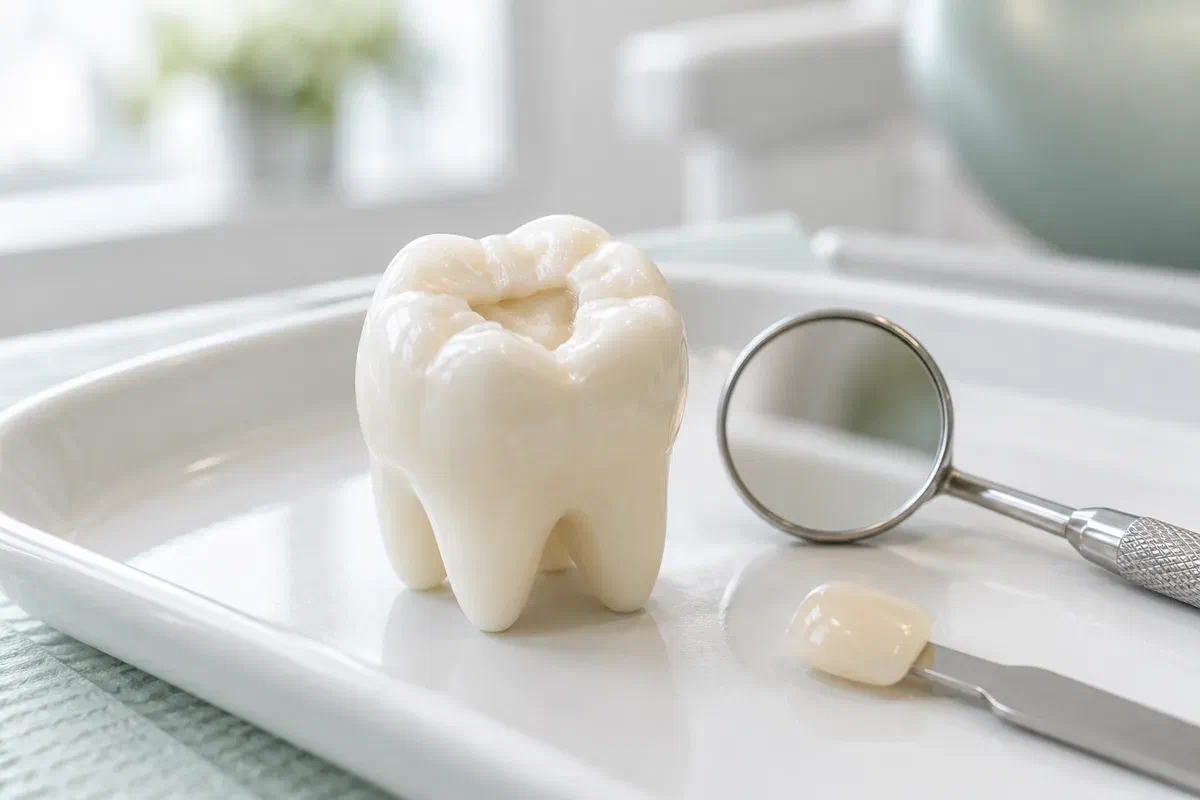
Not being sure whether the missing piece was tooth or filling is normal. It is also a sound reason to book. Share what you’ve noticed, and the examination will sort out the cause.
Tell us which tooth catches floss and whether food stays stuck. Avoid hooking food out with pins or knife tips, and don’t keep plugging the space to see whether it feels better.
The roughness could be remaining filling or a broken tooth edge. Call if it is irritating your tongue or cheek, and avoid trying to sand it down at home.
Notice what triggers the sensation, how long it lasts, and whether pain ever comes on with no trigger. Those observations tell the dentist more than the visible hole can.
Phone us if pain is worsening or lasts, or if you have swelling, fever or a recent injury to the mouth. When swelling interferes with breathing or swallowing, go for emergency medical care immediately rather than holding out for a dental visit.
The old filling may have been the right choice when it was placed, but the tooth is not necessarily the same today. Before suggesting anything, the dentist reviews the remaining walls, any new decay or cracks, how the bite comes together, and the symptoms you mention.
A good outcome is a surface you can clean and chew on, plus some idea of why the previous restoration failed if that can be determined. Feel free to question the findings, the materials or restoration types being proposed, and whether what happens first is a placeholder or the lasting repair.
Patient information: Cleveland Clinic — fillings and other restorative options
The size of the space you feel isn’t a reliable measure of the support left. Whether a wall is gone helps explain why one tooth is refilled and another is offered more coverage.
A deep cavity with continuing pain may need different care from a shallow, painless one. The dentist can explain any tests and which results would shift the recommendation.
Discuss comfort, the number of visits you can expect and the estimate before going ahead. If temporary care comes first, ask what it protects against, what it leaves unresolved, and when to return.
The sequence follows the findings. Tell us if appointments make you nervous or the tooth is tender, and each step and the comfort measures on offer will be explained before treatment starts.
The dentist checks the space, the tooth around it, your symptoms and how your teeth fit together. Imaging such as X-rays might be recommended when it could show hidden decay, a crack, or a problem beneath the surface.
You’ll review the findings, alternatives and fee estimate. If a direct filling is suitable, the damaged part is removed and the tooth is frozen and kept dry as the procedure requires.
An appropriate filling is placed and shaped to suit the space and material. If treatment needs to happen in a different order, you’ll be told what the temporary cover does and how the next stage will be booked.
Contacts with neighbouring teeth are tested, including whether floss now passes cleanly. Ask about eating, cleaning, expected sensations, and when to call if soreness hangs on or your teeth don’t meet comfortably.
The right advice depends on how the tooth feels and where you are in treatment, so phone us. A temporary filling that drops out mid-course is a different situation from a long-standing filling that has just failed.
Avoid chewing hard or sticky foods on the tooth until it is assessed. If temperature sets it off, choose foods and drinks you tolerate and stop testing it repeatedly.
Continue brushing with a fluoride toothpaste and clean between teeth as gently as the area needs. Rinsing after meals can help loosen food. Call if the area is too painful to clean, and avoid sharp objects.
If you were frozen, wait for normal feeling before eating. Tell us about a bite that feels high, increasing pain, lingering sensitivity, or another break, and keep any visit needed to finish temporary care.
Jot down anything you’re wondering about the previous restoration, your symptoms or material choices. Good advice describes the tooth as it stands now and makes clear what the replacement is expected to do for it.
Contact our Bronte Street practice about a filling that has come out or a tooth that now traps food. We’ll examine the remaining tooth, talk about your symptoms, and explain how the area can be restored.
Please call about significant pain or swelling, and tell us if the missing filling was part of unfinished treatment.
