Bits of food lodge in the same place
Mention the spot and whether you can clean it easily. Steer clear of picking at it with anything sharp, and avoid jamming material in to test whether the gap feels better filled.


A filling can fall out and leave a tooth that feels perfectly fine, which makes it tempting to wait. For people coming from Oakville, an assessment shows what the empty space means for the tooth, why the repair let go, and how it could be rebuilt.
Quite often a lost filling causes no pain at all. You notice the hollow with your tongue, maybe some food catching, and otherwise life carries on. The trouble is that comfort says little about what is happening underneath. Filling material may be all that is gone, or a sliver of tooth may have broken off with it, leaving thinner walls than you’d guess.
A dentist decides on treatment by looking at the defect’s size and position, the state of the tooth around it, and any sign of a deeper problem. Many teeth simply need a replacement filling. Others need more support from a larger restoration, or care for the nerve, before the surface is rebuilt.
Give us a sense of when you first noticed the gap and how the tooth behaves when you eat, drink or brush. Say whether the filling was recent, temporary, or connected to unfinished work. That background helps us decide how soon to see you from Oakville and what to look at first.
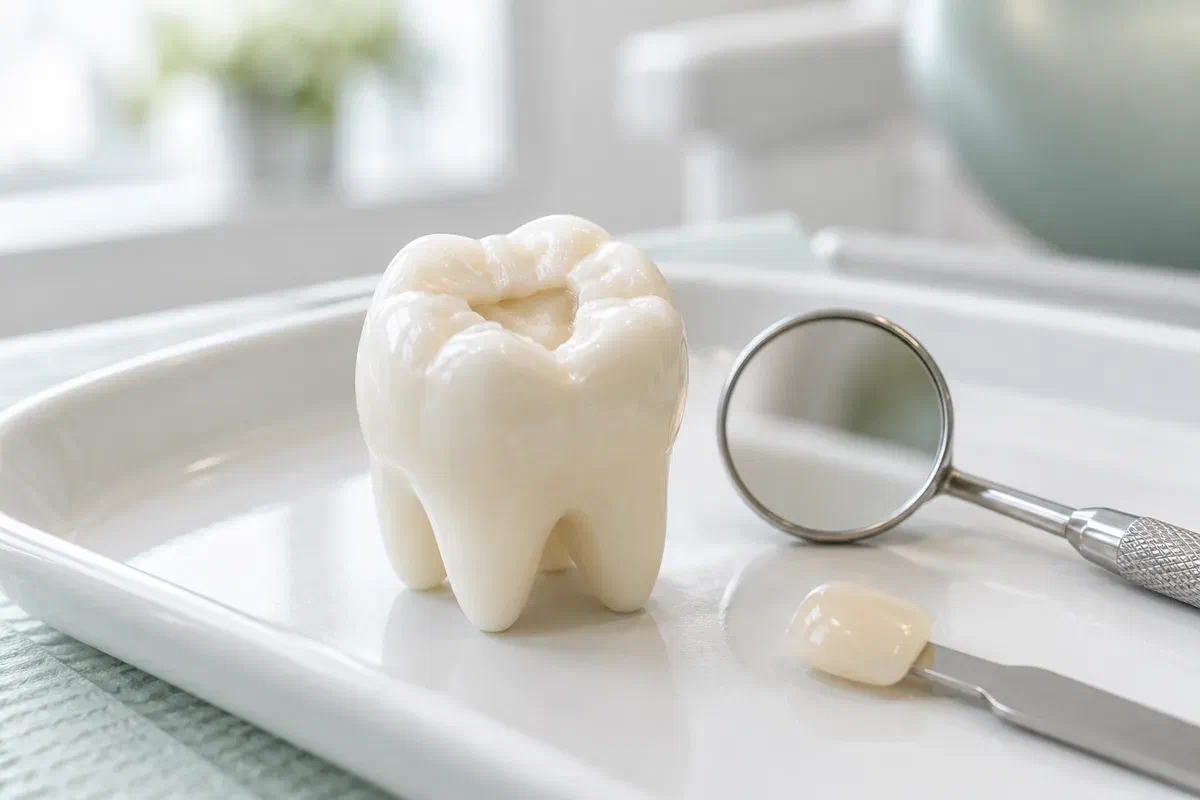
From the outside you may not know whether the piece was filling or tooth. That is perfectly normal and a good reason for an exam. Tell us what you’ve felt and let the dentist work out the rest.
Mention the spot and whether you can clean it easily. Steer clear of picking at it with anything sharp, and avoid jamming material in to test whether the gap feels better filled.
The roughness may come from what is left of the filling or from the tooth edge. Call if it is causing a sore inside your mouth, and don’t try to grind it smooth at home.
Track what triggers it, how long it lingers, and whether it ever aches by itself. That record gives the dentist information about the tooth that a glance at the gap cannot.
Contact us if pain worsens or persists, or if swelling, fever or an injury is involved. Should swelling start to affect your breathing or swallowing, get emergency medical attention immediately instead of waiting for a dental slot.
A filling that suited the tooth when it was placed won’t automatically suit it after it fails. The dentist reviews the walls that are left, any new decay or cracks, your bite, and your symptoms before suggesting a repair.
What you want is a dependable, cleanable surface and, where it can be found, the reason the old filling came away. Ask about the findings, which materials or restoration types fit, and whether the first step is a short-term measure or the definitive repair.
Patient information: Cleveland Clinic — fillings and other restorative options
How big a gap looks doesn’t reveal how much support remains. Whether a wall has gone helps explain why one tooth is refilled while another is offered more coverage.
A deep space with lasting pain calls for different care than a shallow, painless one. Ask what any test is for and which results would change the advice you’re given.
Go over comfort options, the expected number of visits and the fee estimate before agreeing. If interim treatment is part of it, ask what it guards, what it doesn’t fix, and when the next appointment should be.
The plan follows the findings. If you feel anxious, or the tooth is already tender, tell the team at the start so the steps and available comfort measures can be explained before any work.
The dentist checks the empty space, the surrounding tooth, your symptoms and how your teeth meet. X-rays or other tests may be advised if they would help spot decay, a possible fracture, or something deeper.
You review what was found, the alternatives and the estimated fee. If a direct filling is the right fit, the damaged part is prepared, using freezing and moisture control suited to the treatment.
An appropriate filling is placed and shaped to match the defect and material. If another sequence is needed, you’ll learn what the temporary protection does and when the remaining care will happen.
The finished surface and its contacts are checked. Ask about eating, cleaning, normal sensations afterward, and when to call if the tooth stays uncomfortable or your bite feels wrong.
Ask the clinic for advice that reflects your symptoms and stage of care. A temporary filling lost partway through treatment may need a different response than a long-standing permanent filling that just broke.
Avoid crunchy, hard or sticky foods on the tooth until it’s been assessed. If temperature bothers it, choose comfortable foods and drinks and resist testing the tooth over and over.
Keep brushing with fluoride toothpaste and clean between teeth in whatever way the area tolerates. Call if it is too painful to reach, and skip sharp household items for removing trapped food.
If you had freezing, hold off chewing until feeling comes back. Tell us about a high bite, rising pain, sensitivity that lasts, or a new break, and keep any appointment needed to finish temporary work.
Bring questions about the previous filling, how the tooth feels now, and the materials on offer. The advice should reflect the tooth today, with an explanation of how the new repair is meant to function.
Get in touch with our Bronte Street practice about a filling that has fallen out or a hole you can feel in a tooth. We’ll examine the remaining structure, ask how it feels, and explain the ways it can be restored.
If you have severe pain or swelling, please call, and let us know if the filling was part of treatment still in progress.
